In the lead up to our forthcoming sale Works from the Charles Blackman Estate, I had the pleasure of speaking with the artist’s daughter, Christabel Blackman. Christabel has devoted herself to preserving and sharing her father’s remarkable artistic legacy and is the author of Charles & Barbara Blackman: A Decade of Art and Love. In this conversation, she reflects on his creative life, lesser known bodies of work, distinctive personality, and his exploration of the human psyche.
Having spent years researching your father’s life for your book, did you come to see any particular period or series of his work differently than you had before?
A Decade of Art and Love deals with Charles’ creative life in the 1950s. Both he and Barbara were intrinsically involved in the burgeoning art scene around Melbourne and especially with the Heide circle of artists. They lived in a tiny coach house and Charles painted continuously. During this time, he exhibited his paintings however it was not until the end of that decade that he started to be recognised and collected. He worked as a chef to support his family.
His most famous paintings from that era are the Schoolgirls and Alice in Wonderland series. When they were first exhibited, there were very few sales. They were complex and sophisticated artworks and the public was still not ready for the strength of these images.
His work visited different subject matters during that decade, including musicians, hoardings, streetscapes, cats, and his Women and Flowers series. Charles drew obsessively, portraits, street scenes and behavioural observations. Often the drawings were complete works in themselves and not considered just as sketches.
Many collectors know the iconic Schoolgirl and Alice paintings, but are there themes or bodies of work that you feel remain under appreciated and deserve a fresh look today?
Charles was an explorer with images and searched for new subject matters that inspired him. He was never an artist who repeated the same picture. He had an ability and vision to always come up with something new. Often he painted a series around the same theme, like his writers and musician portraits, London paintings, Nudes or Garden series. He was incredibly versatile as an artist, moving into different areas like printmaking, ballet scenography, tapestries, and sculptures.
His portraits give an insight to the soul of the sitter and in this collection there are several interesting drawings of his wife Barbara, the poet Judith Wright, philosopher Max Nicolson, art patron John Reed, and Joy Hester. They form a part of history that went on to define our cultural identity in Australia.
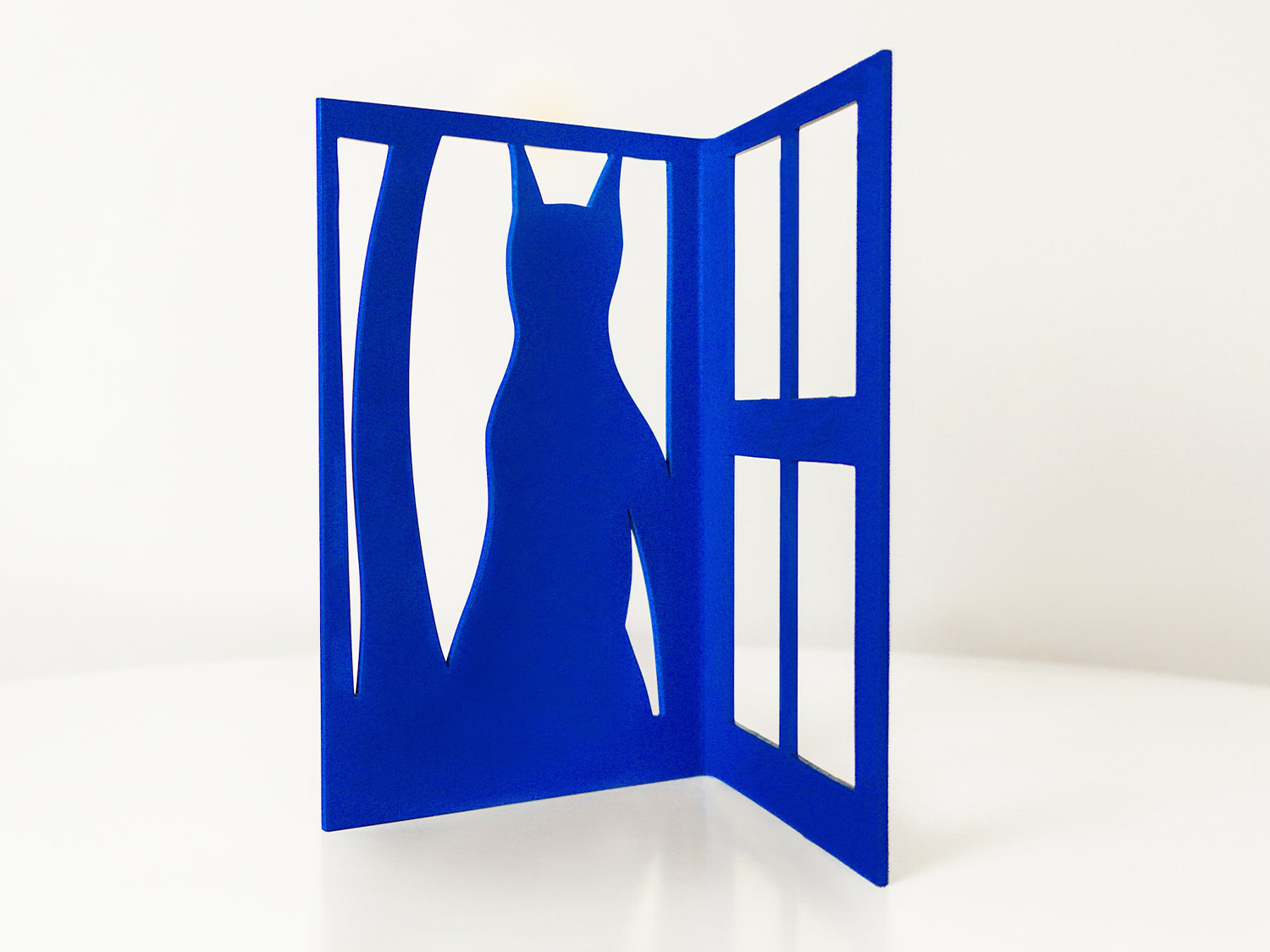
There are some of his extraordinary sculptures which were conceived in the 1960s. He used to say that it was as much what is left out as what is put in the image and his cut out sculptures illustrate that perfectly.
As someone who knew Charles both as a father and as an artist, what do you think collectors often miss when they look at one of his paintings? Is there something about his personality or creative process that changes how we should read the work?
He had a strong message in his artworks, often psychological. Many paintings are about the opposites that we confront, fear and innocence, fragility and boldness, frustration and triumph, abandonment and hope. Charles had a wicked sense of humour which is often missed. There is always more to the image than what we first encounter.
When people acquire a Charles Blackman painting today, what do you hope they see beyond the image itself? What legacy do you think your father would most want his works to leave with future generations?
I have met many collectors over the years and have seen how much they love my fathers’ pictures, and they hold on to them. Perhaps it is best defined by a collector when he explained to me “Every single day I sit and stare at your father’s painting. It brings me incredible joy, especially in my bleakest moments. Sometimes I just stare at it and weep.” The best aspect of a Blackman painting is its ability to draw in the viewer because it will always have something new to say to us. The legacy Charles Blackman leaves with us is in his relentless curiosity about the human psyche and that is always relevant.
By Wiebke Brix, Head of Art
Top Image: Blackman Family, Seated Cat At the Window SCW2, Bronze Powder Coloured, 25 x 18.5cm. $2,400-3,000. © Charles Blackman/Copyright Agency, 2026
October 2026