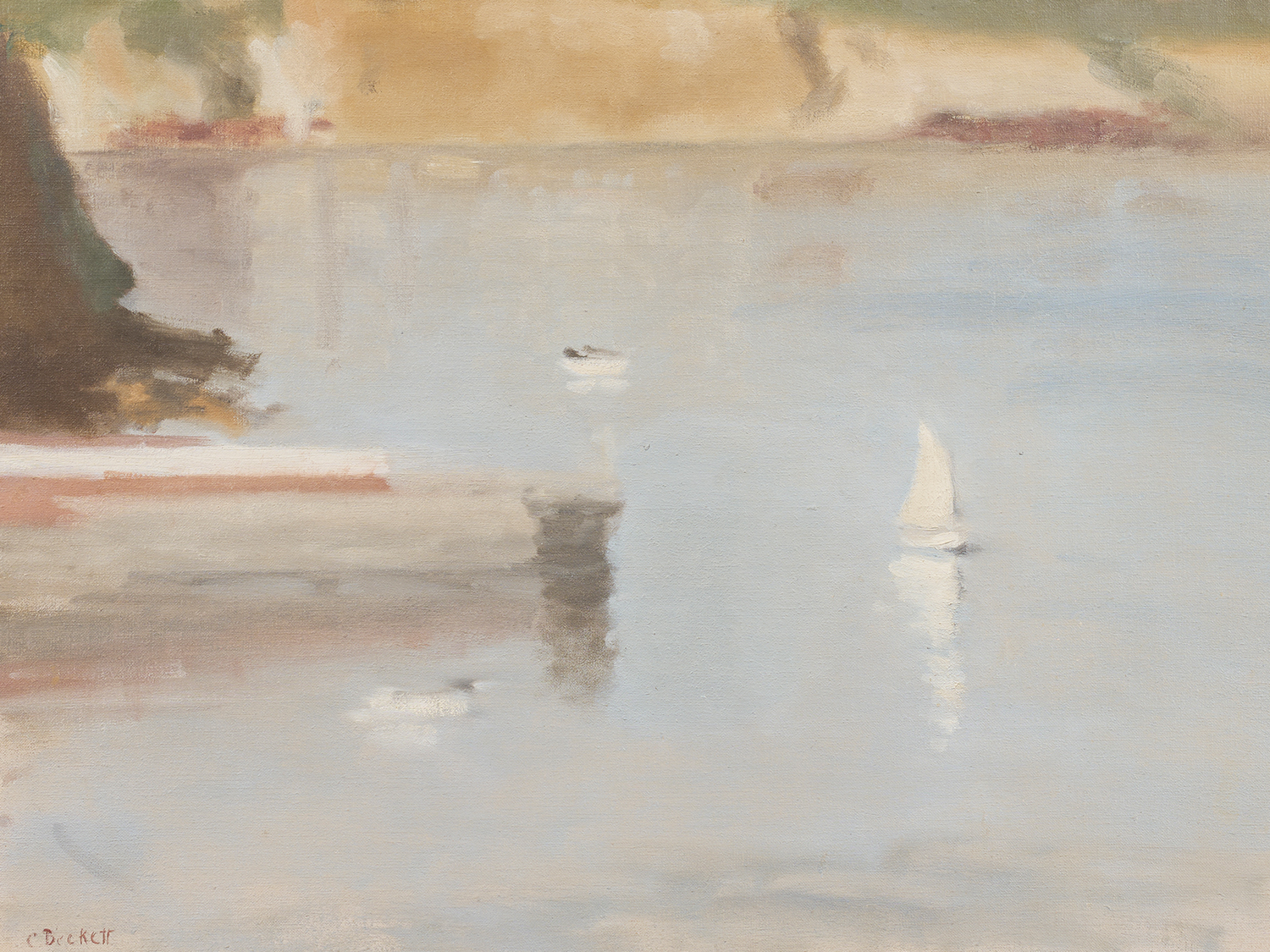
Clarice Beckett is today regarded as one of the most important Australian painters of the interwar period, however she was very nearly forgotten entirely after her death. Beckett’s current recognition is largely due to the tireless efforts of Dr Rosalind Hollinrake, following a chance encounter with the artist’s sister. Here, our Head of Fine Art, Dr Wiebke Brix, chats with Rosalind about her dedication to ensuring Clarice Beckett received the acclaim she always deserved.
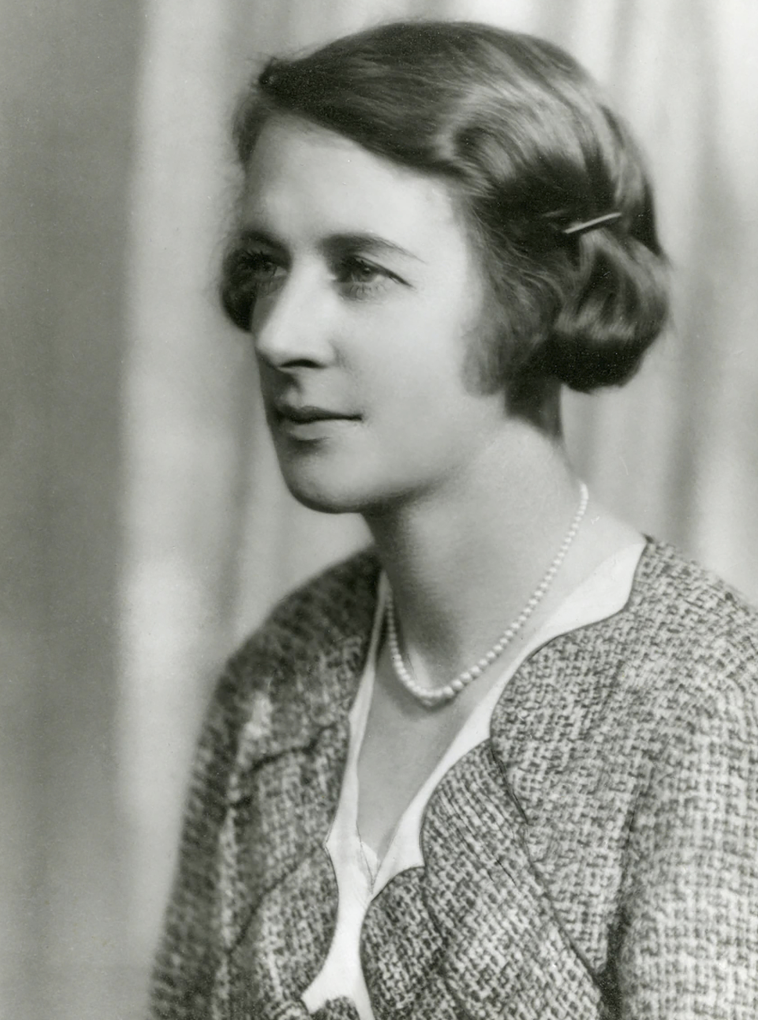
Rosalind, you are widely recognised for your pivotal role in the rediscovery and reassessment of Clarice Beckett, now regarded as one of Australia’s most important modernist painters. Through decades of research, advocacy, and careful stewardship, you transformed Beckett’s posthumous reputation, bringing her work into the centre of Australian art history. Your commitment extends far beyond scholarship, encompassing the curation of exhibitions and an unwavering dedication to ensuring Beckett’s legacy is accurately understood and documented.
Could you take us back to the moment you first encountered Clarice Beckett’s works, what did you see, how did the discovery unfold?
In 1965, my first encounter with two small landscape paintings by an unknown artist, ‘C. Beckett’, was an evocative and uncanny experience, one that would ultimately alter the course of my life. They hung in the august company of Russell Drysdale, Arthur Boyd, and Arthur Streeton, yet it was Beckett alone who drew me in. Through them, I saw and felt the Australian landscape in a powerful, contemporary new way. They were unique.
In 1971, I opened a small gallery in Melbourne to promote women and forgotten artists. A mention in The Sun newspaper brought Hilda Mangan to my door, carrying six small, exquisite unsigned paintings. Having faced rejection with them before, she offered no information, only asking if I knew the artist. I did, ‘C. Beckett’. Her shock was palpable. C. was Clarice, her sister, who had died in 1935. Thousands more paintings, she told me, remained at her daughter’s farm.
An open-sided shed revealed a devastating sight: rows of rotting paintings, ravaged by weather, rodents, and possums, a violation of a lifetime’s work. Yet on the concrete floor lay a few hundred pieces in fine condition, and in the daylight their atmospheric beauty was spellbinding.
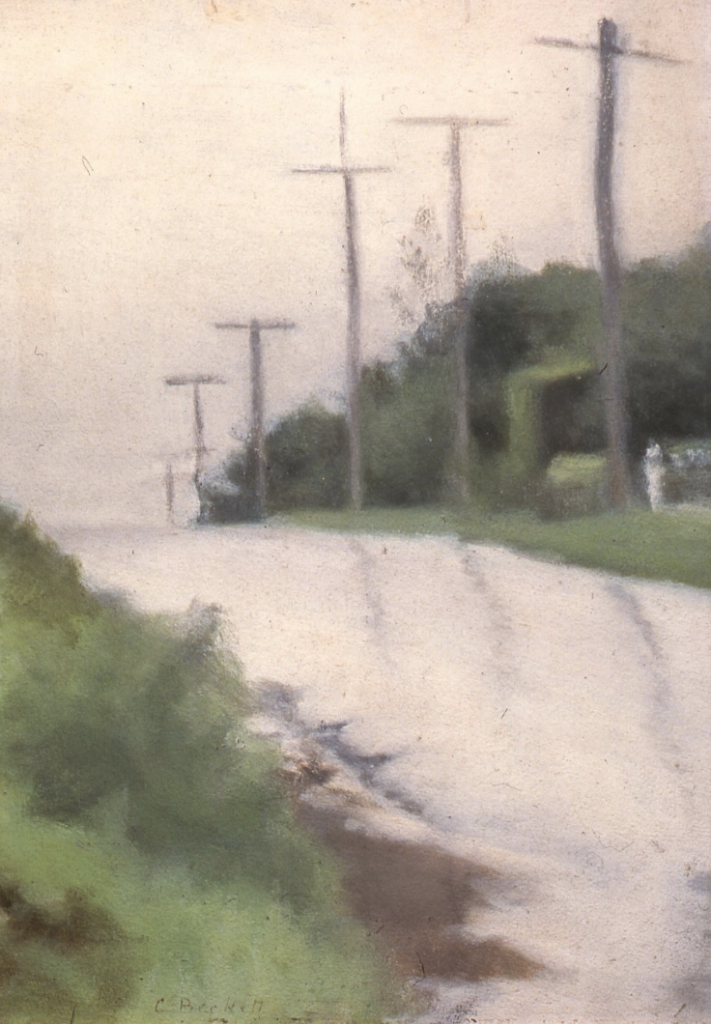
After careful cleaning and modest pricing, I mounted an exhibition. Selling women’s art and an unknown Beckett was a considerable financial risk. Yet every painting sold and art critic Patrick McCaughey felt her work deeply and recognised its Modernism in his writing.
Your relationship with Beckett’s work has spanned decades. What has driven your continued dedication to researching, preserving, and advocating for her practice, what compelled you to recognise her significance when others had overlooked them?
The sublime capture of a transient moment in the natural world stirred in me a deep, intense emotional response and forged a quiet but enduring connection to the artist. Like all great art, these works left footprints on my mind. I felt deeply compelled by this artist.
When I first met you, I sensed an extraordinary commitment to Clarice Beckett’s art, one that reflects the devotion and clarity of a true art purist. On a personal level, what does it mean to you to ensure that Clarice Beckett is represented with care, accuracy, and integrity, particularly as her work continues to gain wider attention in both institutional and market contexts?
My dedication had been sealed from that first moment of encounter. Had the works later proved to be by a male artist, my resolve would have remained unchanged: to secure recognition for this singular Australian voice.
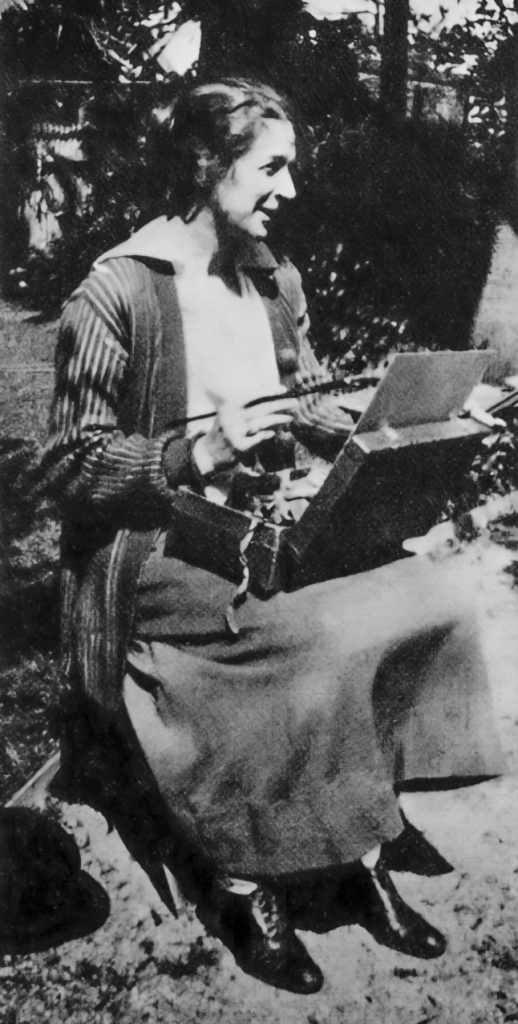
I was not alone in perceiving her significance. During her lifetime, a few recognised in her work something new, yet as beautiful as a Manet or a Rembrandt. But in a misogynistic environment, such recognition held little weight, and her early death consigned her to obscurity. My task, then, was to begin again.
As an early reflective feminist, I sought to challenge the status quo for women artists, leading to the first monograph on an Australian woman artist, Clarice Beckett and her Circle (Macmillan, 1979). Beckett became my spearhead.
I place her, without hesitation, alongside the Heidelberg artists’ impressionist 9×5 paintings and Fred Williams’ celebrated new vision of the landscape. Williams himself acknowledged that Beckett had arrived there before him, in her own modernist language.
Today, Beckett’s recognition is secure. Alistair Hunter (AO) generously gifted 22 of her paintings to AGSA, and their inclusion in the 138 paintings hung in the exhibition, The Present Moment (2021), brilliantly curated by Tracey Lock, elevated Beckett’s profile even further and drew international admiration. All state and most regional galleries now own and treasure Clarice Beckett’s paintings.
With thanks to Dr Rosalind Hollinrake
By Wiebke Brix, Head of Fine Art
Top Image: Clarice Beckett (1887-1935) (Mentone Cliffs) c.1932, oil on board, 44.5 x 54cm. $80,000-100,000
June 2026