In the late 19th to early 20th centuries, Australian art underwent a significant transformation. Moving beyond the Nationalism of the Heidelberg School, artists began to embrace cosmopolitan influences, decorative arts, and more intimate, stylised forms. Among the most intriguing expressions of this shift are fan shaped artworks.
The artist Charles Conder has become synonymous with his watercolour on silk fan shaped paintings. Conder began making these works relatively late in his career in the 1890s, a period that marked the transition from Historicism to Art Nouveau in the arts.1 Fan shaped artworks exemplify this artistic shift through their combination of historical Rococo motifs and Art Nouveau elements within the same composition.
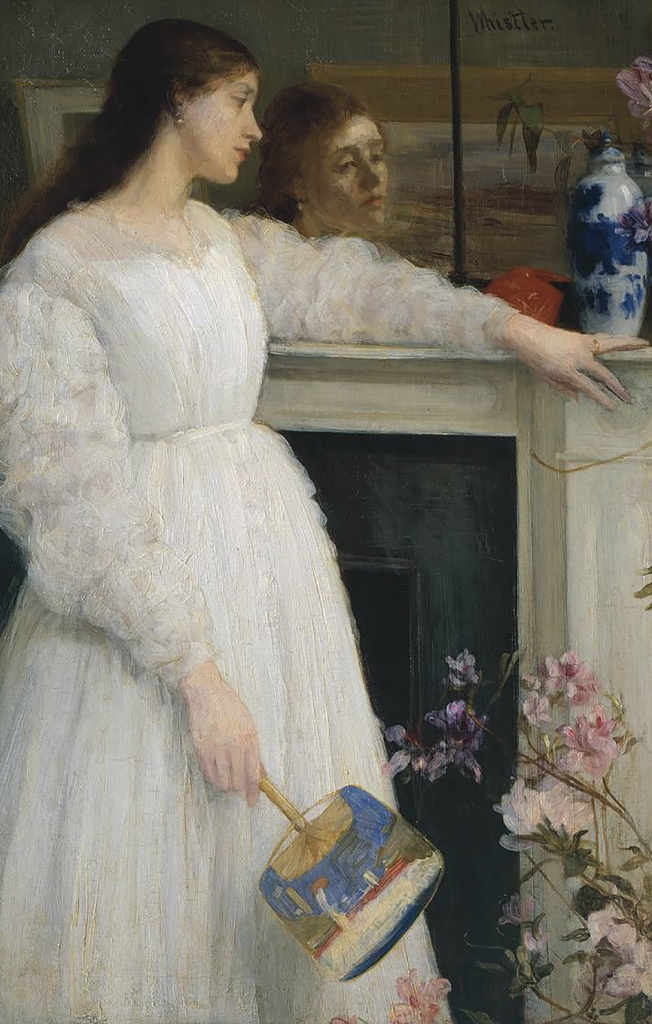
The fan shaped composition in art was inspired by the physical form of handheld fans that became fashionable again during the late Victorian and Edwardian periods. The fan, which was previously associated with cultural status as personal adornment and a feminine icon, became prominent in fine art following the rise of Japonisme, which led it towards becoming a symbol of early 20th century modern art and avant-gardism.2 First appearing in 12th century Japan, it was not until the 1580s that fans arrived in Europe.3 With the emergence of Japonisme in Europe in the late 19th century, the fan became a device of experimentation. Following Paris trends, artists such as James McNeill Whistler often inserted an ornate fan in the hands of his sitters, seen in his artwork Symphony in White, No. 2: The Little White Girl 1864 for example. Fan shaped paintings were therefore an extension of this growing interest in the fan generally, moving beyond merely a decorative novelty, and offering artists a chance to experiment with unconventional formats.
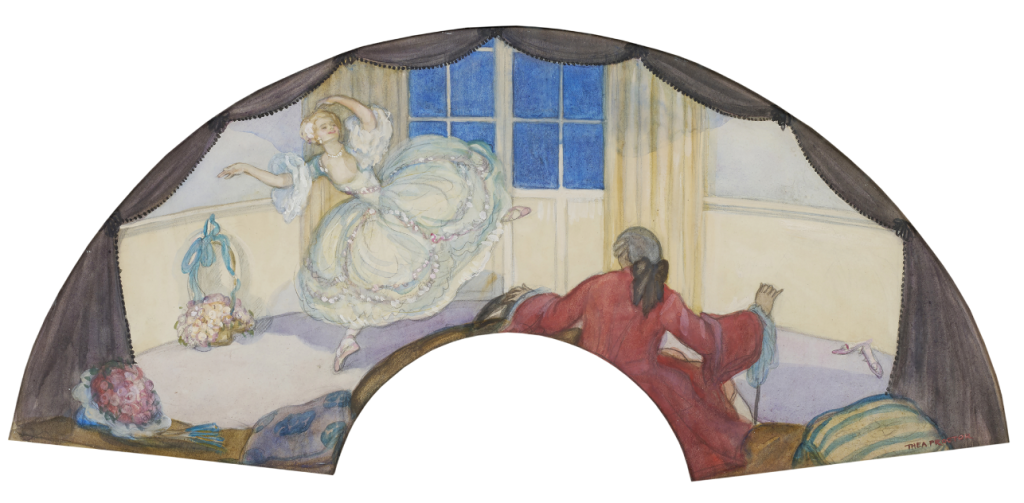
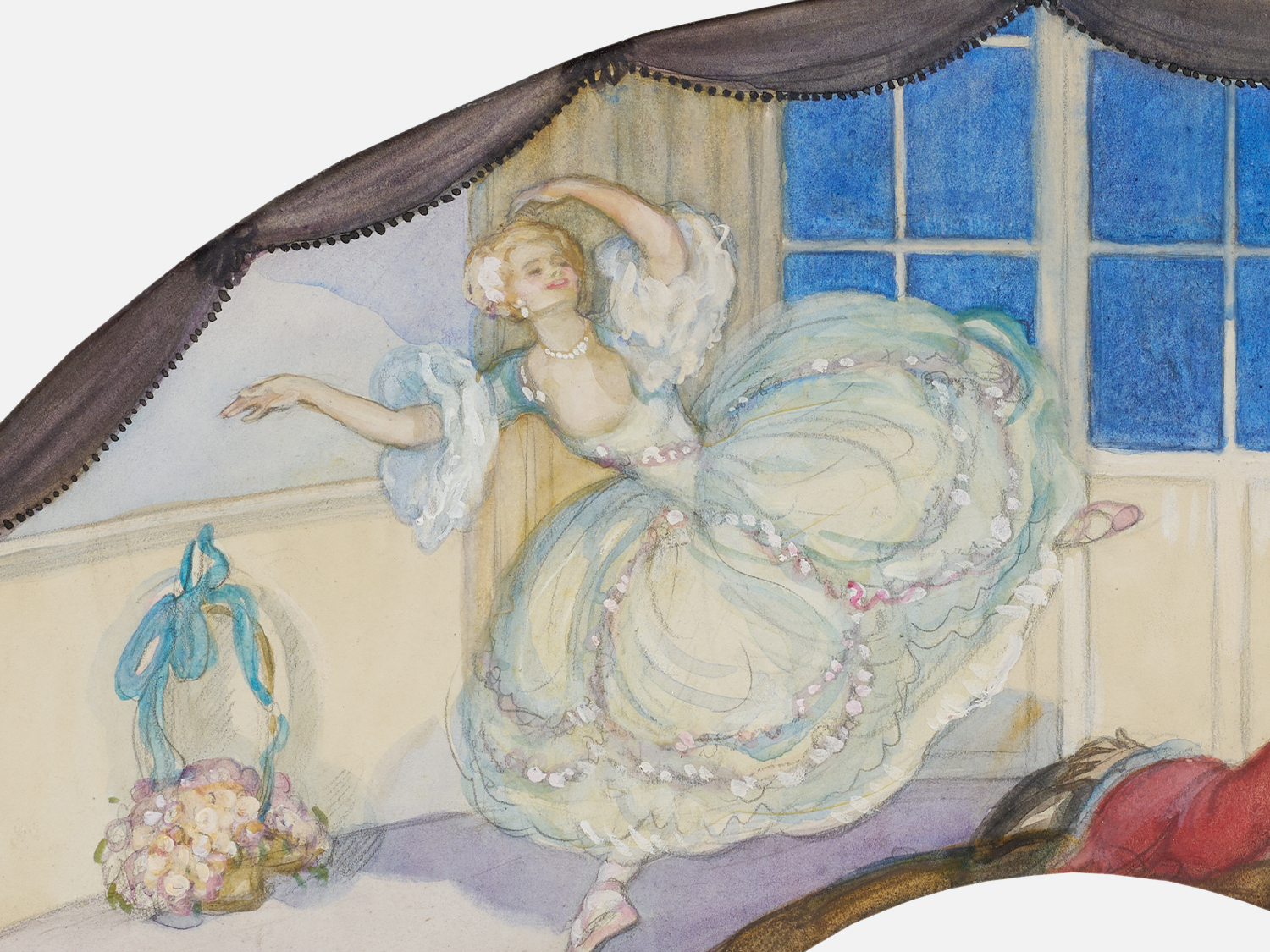
Two compelling examples of fan paintings are Thea Proctor’s The Dancer c.1910 and Arthur Streeton’s work Decoration: Emerald Fan. Though different in mood and execution, both works reflect a moment when Australian artists looked towards European and Japanese aesthetics, while redefining their own visual language. Proctor was particularly attuned to such developments. Having spent time in London between 1903 and 1921 and moving within avant-garde circles, she absorbed the influence of James McNeill Whistler, Charles Conder, and George Lambert. Proctor successfully exhibited some of her fan paintings in London at the Royal Academy, while also sending works to Australia to be included in the Australian Exhibition of Women’s Work in 1907 in Melbourne.4 Proctor’s fan shaped works adeptly capture a romantic, idealised world, conveying her interest in historical costume and the influence of Japonisme.5 The Dancer exemplifies her refined sensibility. The composition presents a graceful ballerina caught mid-motion, her voluminous dress swirling outward as if animated by music. The setting, a softly rendered interior with drapery and a window, simultaneously suggests a stage and a private salon, collapsing the boundary between performance and everyday life.
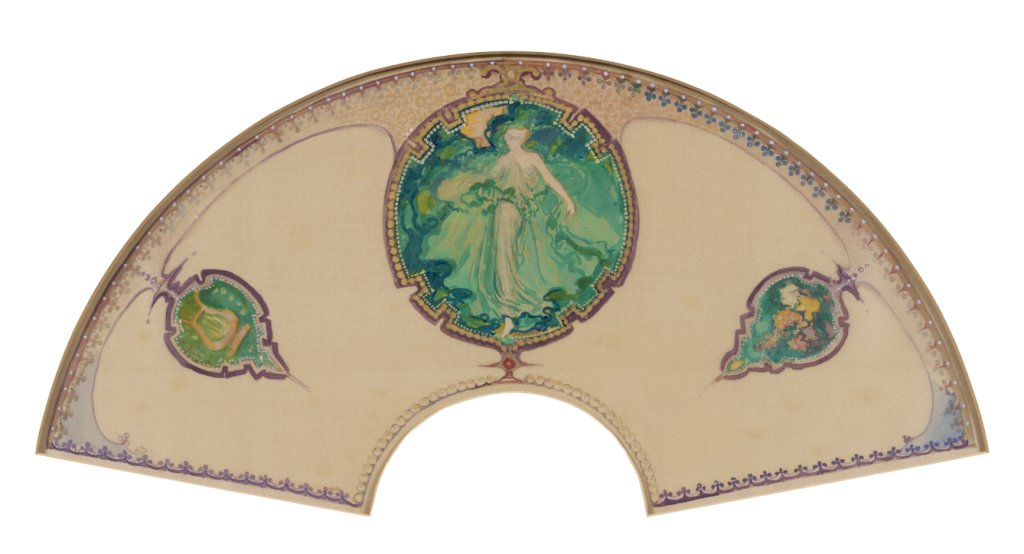
Arthur Streeton was another Australian artist who spent time overseas, equally seeking out the opportunities London offered to aspiring artists. Best known for his Australian landscapes, Streeton approached the fan format from a different perspective to Thea Proctor. Rather than depicting a narrative scene, his work Decoration: Emerald Fan, embraces abstraction and ornamentation. The central figure is a stylised female form enveloped in flowing green drapery and surrounded by intricate patterns and jewel-like motifs, creating a richly decorative surface. Streeton’s engagement with this format may seem surprising given his association with en plein air and the Australian bush, however, it reflects the broader versatility of artists at the time and their European influences.
In reviving and reimagining the painted format in the early 20th century, artists explored the potential of art as a domain no longer confined to traditional canvases, but rather something that could take on new shapes, literally and conceptually.
1. The Metropolitan Museum of Art, Painted fan with a design of feathers and three medallions, accessed on 16 April 2026: http://www.metmuseum.org/art/collection/search/847020.
2. Nunn, Pamela Gerrish., Fine Art and the Fan 1860-1930, Journal of Design History, vol. 17, no. 3, 2004, pp. 251–66. Accessed 16 April 2026: JSTOR, http://www.jstor.org/stable/3527116.
3. Nunn, Pamela Gerrish., Fine Art and the Fan 1860-1930, Journal of Design History, vol. 17, no. 3, 2004, pp. 251–66. Accessed 16 April 2026: JSTOR, http://www.jstor.org/stable/3527116.
4. Nicholls, Lara., Thea Proctor in N Bullock, K Cole, D Hart & E Pitt (eds), Know My Name, National Gallery of Australia, Canberra, 2020, pp. 302–303.
5. Art Gallery of New South Wales, Fan Design, Thea Proctor, accessed on 19 April 2026: https://www.artgallery.nsw.gov.au/collection/works/WA6.1959/#about.
By Amanda Hayward (née North), Senior Fine Art Specialist
Top Image (Detail): Thea Proctor (1879-1966) The Dancer c.1910, watercolour on paper, 22.5 x 50.5cm (fan shaped) $6,000-8,000
June 2026