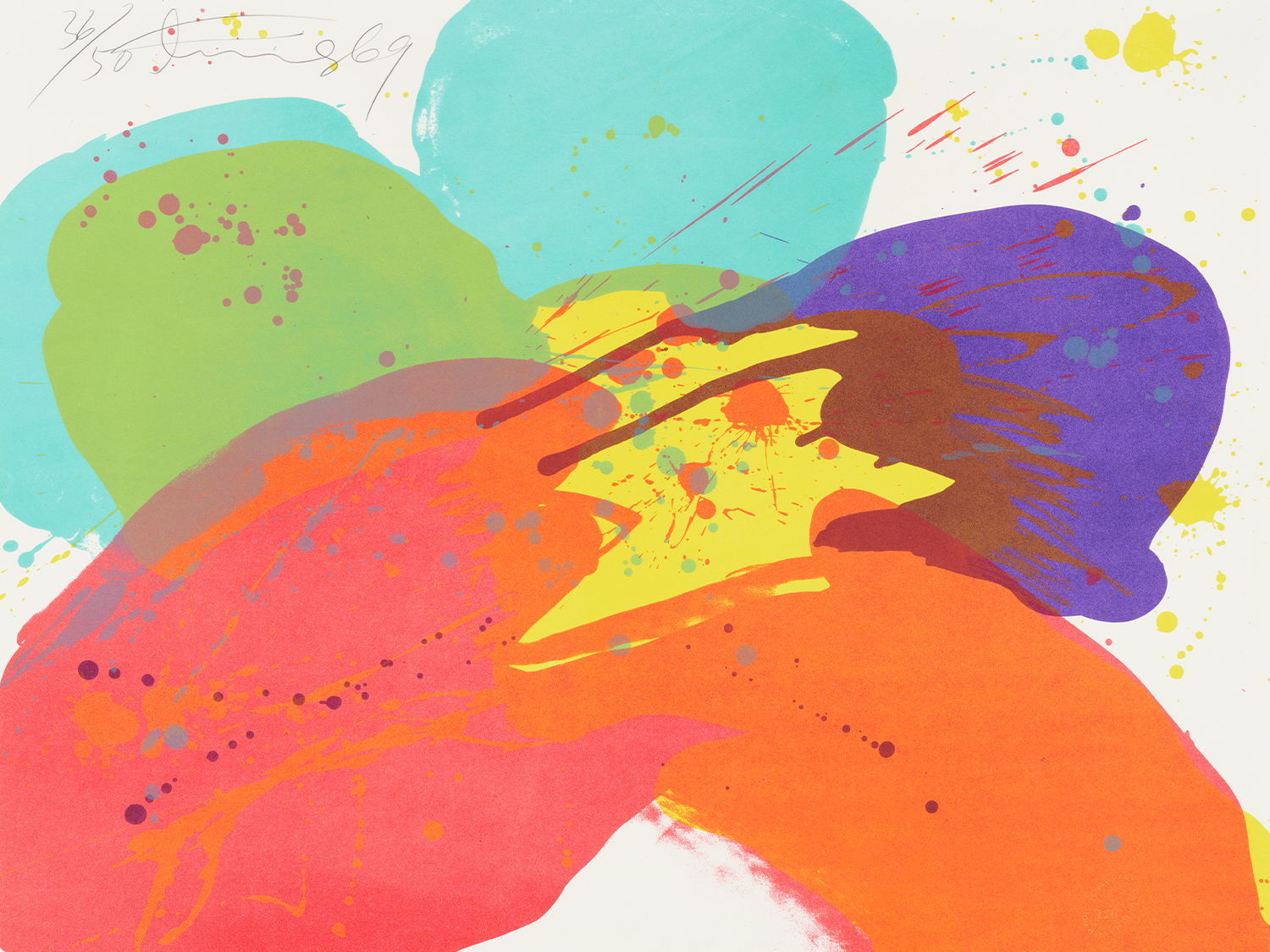
The making of a print can often involve more than one pair of hands, and one of the things that I have always loved about prints is discovering the relationships behind them. Who printed the work, where it was made, and the relationship that developed between artist and printer can reveal another side to an artwork and its history. So, when works from the Estate of master lithographer Fred Genis came to Leonard Joel, I quickly became a little obsessed.
Genis made a name for himself through his technical skill and collaborations with some of the most significant artists of his time and has been described as Australia’s first ‘celebrity printer’.1 His work took him through some of the great print workshops of the United States and Europe, before he settled permanently in Australia in 1979 and established his own studio in Sydney. This December, Leonard Joel is pleased to present Important Works from the Collection of Fred Genis in our Prints & Multiples auction.
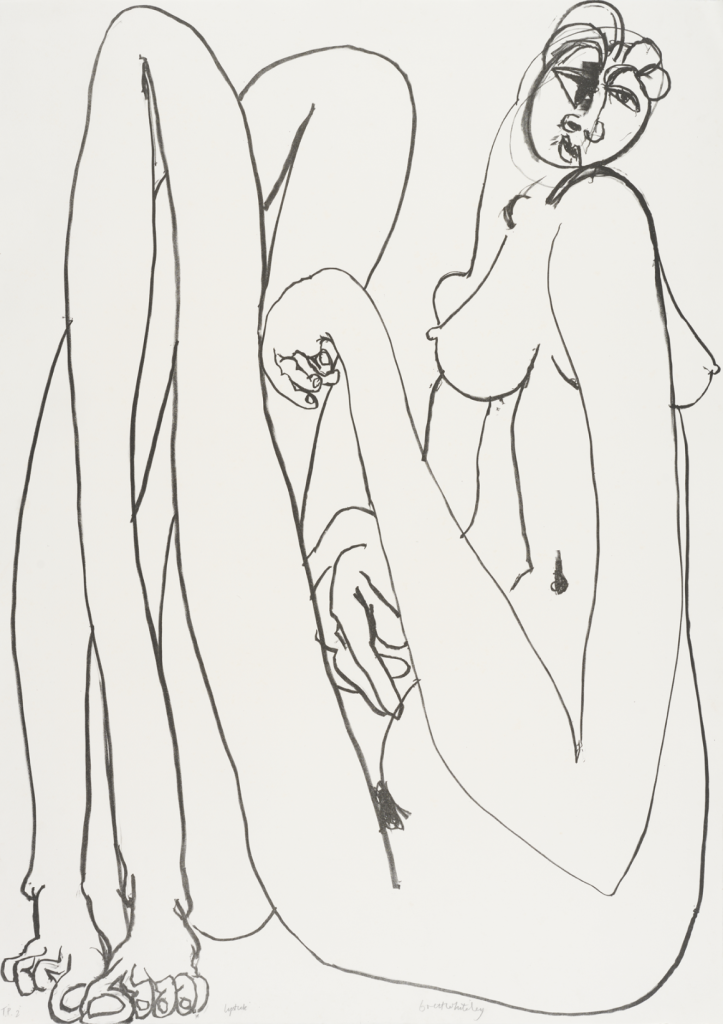
The relationship between artist and printer has long been an important part of printmaking. Lithography in particular is a technically demanding process, requiring specialist materials, equipment, and knowledge, with the two working closely together. The artist brings their ideas and individual approach, while the printer brings an intimate knowledge of the medium, allowing the artist to explore printmaking in new ways.
Genis described the printer as being ‘like water’,2 able to adapt to the artist and respond to what was needed. He believed that no two artists’ prints should look alike simply because they had been made alongside the same printer. Each should remain true to the artist – ‘like the artist, not like the printer’.3
In the 1960s, Genis became part of a period of renewed interest and experimentation in American printmaking. In 1966, he joined Kenneth Tyler at Gemini Ltd in Los Angeles, before moving to New York, where he became a master printer at Universal Limited Art Editions and later a partner at Hollander’s Workshop. These studios brought leading contemporary artists together with master printers, whose technical knowledge allowed artists to explore new possibilities in printmaking.
During these years, Genis worked with Robert Rauschenberg, Willem de Kooning, Jasper Johns, Robert Motherwell, Sam Francis, Helen Frankenthaler, and James Rosenquist. Working with such different styles required more than technical skill, as Genis needed an instinctive understanding of how each approached their art and how his knowledge could be used to realise their ideas in print.
After returning to the Netherlands and running his own lithographic workshop for several years, Genis settled permanently in Australia in 1979, establishing a studio in Sydney. Here, he formed close relationships with John Olsen, Brett Whiteley and Tim Storrier, and later Guan Wei. They came to Genis with their own talents and ideas, while he brought decades of international experience and an intimate knowledge of the lithographic process.
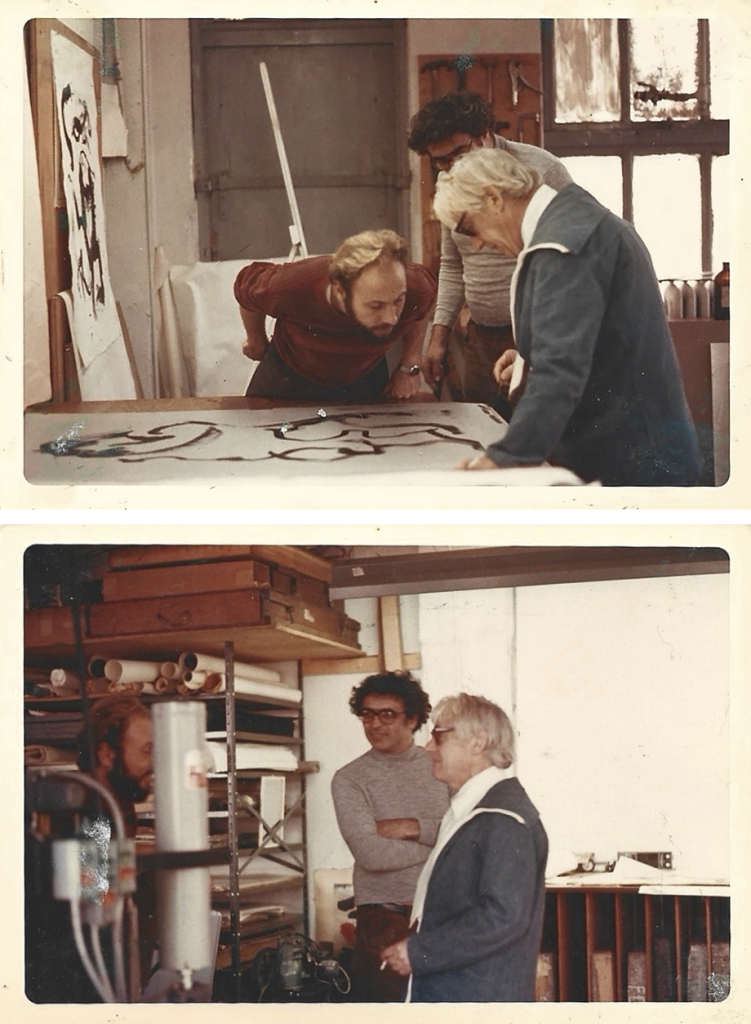
Genis’s contribution to printmaking was recognised by the National Gallery of Victoria in 1982 with The Artist and the Printer, an exhibition drawn from his collection of American printer’s proofs, which the Gallery acquired two years later. His Australian collaborations were also celebrated by the Art Gallery of New South Wales in the 1993-94 exhibition From the Lithographer’s Workshop, which brought together fifteen years of prints made with Australian artists.
The range of artists Genis printed for is perhaps the best reflection of his approach. From de Kooning and Rauschenberg to Whiteley and Olsen, their individual styles remained entirely their own, while Genis adapted his technical knowledge and approach to each artist.
Important Works from the Collection of Fred Genis at Leonard Joel this December gives us the chance to celebrate not only the finished prints, but the relationships behind them, and the important part Genis played in bringing each artist’s ideas to print.
1. Butler, R., Printed Images by Australian Artists 1942–2020, National Gallery of Australia, Canberra, 2021
2. Dean, S., The Artist and the Printer: Lithographs 1966–1981 – A Collection of Printers Proofs,
National Gallery of Victoria, Melbourne, 1982
3. Ibid
By Hannah Ryan, Senior Art Specialist
Top Image: Walasse Ting (Chinese, 1929-2010) Flower 1969, Lithograph, ed. 5/50, 59 x 76cm. $600-800. © Walasse Ting/Copyright Agency, 2026
October 2026