One of the great pleasures of collecting is discovery. Sometimes it is the discovery of an artist. More rarely, it is the discovery of a story.
I was fortunate enough to visit the Dangerously Modern exhibition in Sydney recently, and it was wonderful to see so many important works brought together in one exhibition. Many of these paintings had spent decades in private collections or remained largely overlooked, making the exhibition feel as much a rediscovery as a celebration.
Through Leonard Joel’s annual Women Artists auction, we have been able to help place rediscovered works into major public collections. I was delighted to see Hilda Rix Nicholas’ The Arab Sheep Market, Tangier, a work we previously handled, included in the exhibition following its acquisition by the Art Gallery of New South Wales. Moments like these are a reminder that the story of Australian art is still evolving, and that there are always new discoveries waiting to be made.
As much as I enjoyed seeing these works in person, it was the story behind them that stayed with me. It wasn’t only about the paintings themselves, but about the women who travelled overseas, embraced entirely new ways of thinking about art, and returned home to help shape the future of Australian art.
When we think about Australian art, landscape painting often comes to mind first. The golden paddocks of Hans Heysen, the sunlit vistas of Arthur Streeton, and the bush scenes that have become part of Australia’s visual identity are familiar to many collectors.
Yet at the same time as these artists were defining an Australian vision, another story was beginning to take shape. A generation of artists were travelling to Europe, encountering new ideas and returning home with a very different way of seeing the world.
At the time, travelling abroad was considered an essential part of an artist’s education. Paris and London sat at the centre of the art world, attracting artists from across the globe and new ideas were emerging at a remarkable pace. Cubism had challenged traditional notions of perspective. Abstraction was beginning to gain momentum, and artists were experimenting with colour, design and form in ways that would have seemed radical only a decade earlier.
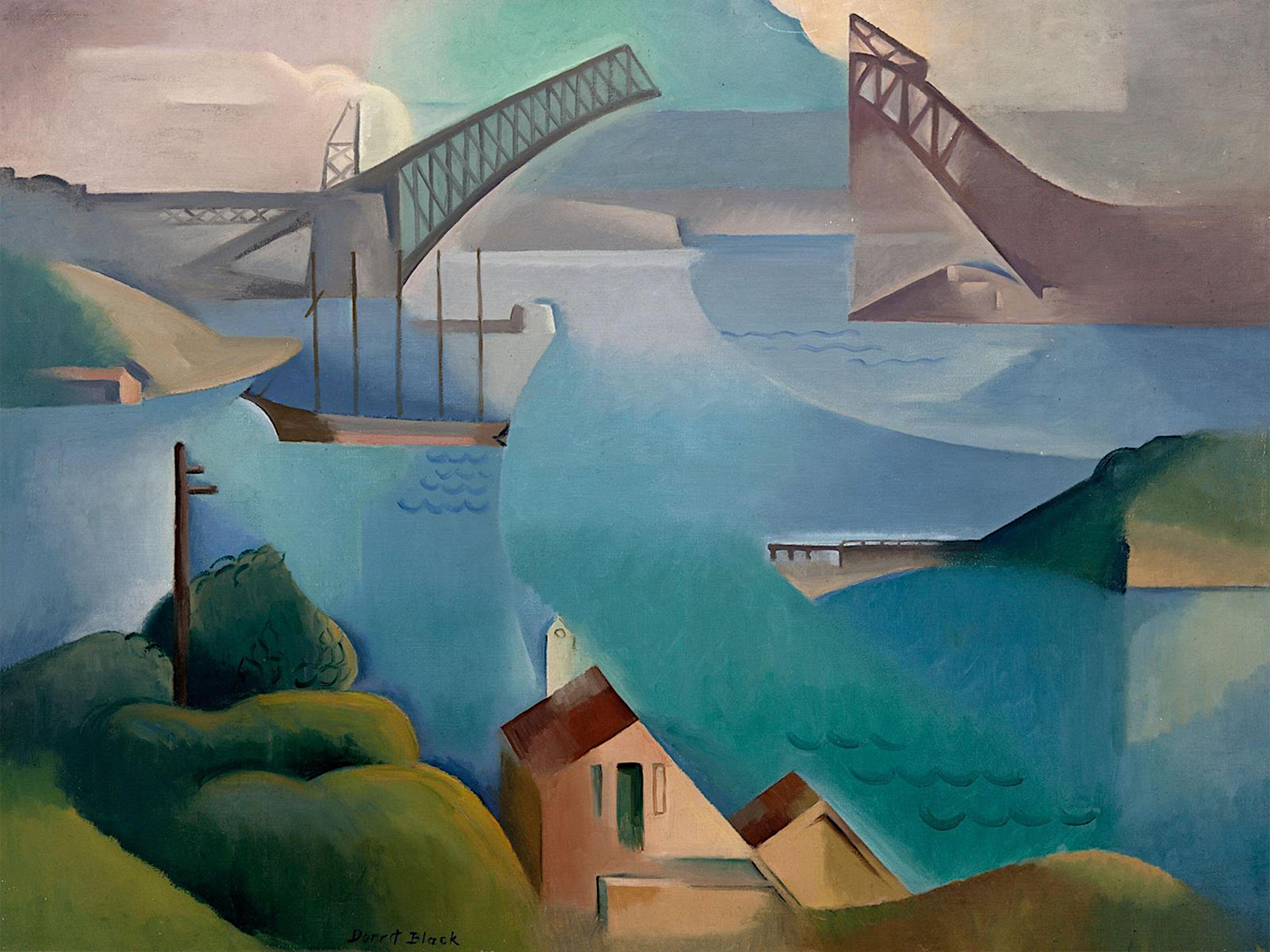
Among the Australians drawn to this environment were Dorrit Black and Grace Crowley. Today, both artists are recognised as key figures in Australian Modernism. Yet the most interesting part of their story began when they returned home.
Both Black and Crowley studied in Paris under the French artist and teacher André Lhote. His school attracted students from around the world and encouraged a new way of thinking about art. Rather than simply painting what was in front of them, artists were encouraged to consider structure, composition, and design. These ideas were reshaping artistic practice across Europe and offered a striking contrast to much of what was being taught in Australia at the time.
Returning home, Black and Crowley quickly set about sharing what they had discovered overseas. In 1930, Black established the Modern Art Centre in Sydney, a school dedicated to modern art. Crowley joined her the following year to teach and exhibit, helping create a space where artists could engage with contemporary international developments and experiment with new approaches to their work.
Alongside fellow artist Rah Fizelle, Crowley established the Crowley-Fizelle School, which became one of the most important centres for modern art education in Australia. The school encouraged students to think critically about composition, structure, and colour, helping foster a generation of artists who would continue to develop and expand these ideas.
One of the most rewarding parts of being an Art Specialist is that every artwork has a story to tell. In recent years, that has become especially apparent through a renewed focus on female artists and their contribution to Australian art. Exhibitions such as Dangerously Modern have helped bring overlooked female artists back into the spotlight, recognising the vital role they played in introducing international modernist ideas to Australia.
Today, nearly a century later, interest in both Dorrit Black and Grace Crowley continues to grow. Major exhibitions have introduced their art to new audiences and encouraged a reassessment of their place within Australian art. For collectors, the appeal lies not only in the historical significance of their work, but in its enduring freshness. Whether through Black’s bold linocuts or Crowley’s refined exploration of form and colour, both artists produced works that remain engaging today. Their work reminds us that some of the most important chapters in Australian art began with artists willing to look beyond what was familiar.
By Hannah Ryan, Senior Art Specialist
Top Image: Dorrit Black, The Bridge 1930, oil on canvas on board, (the collection of the Art Gallery of South Australia, Adelaide) / Alamy
August 2026