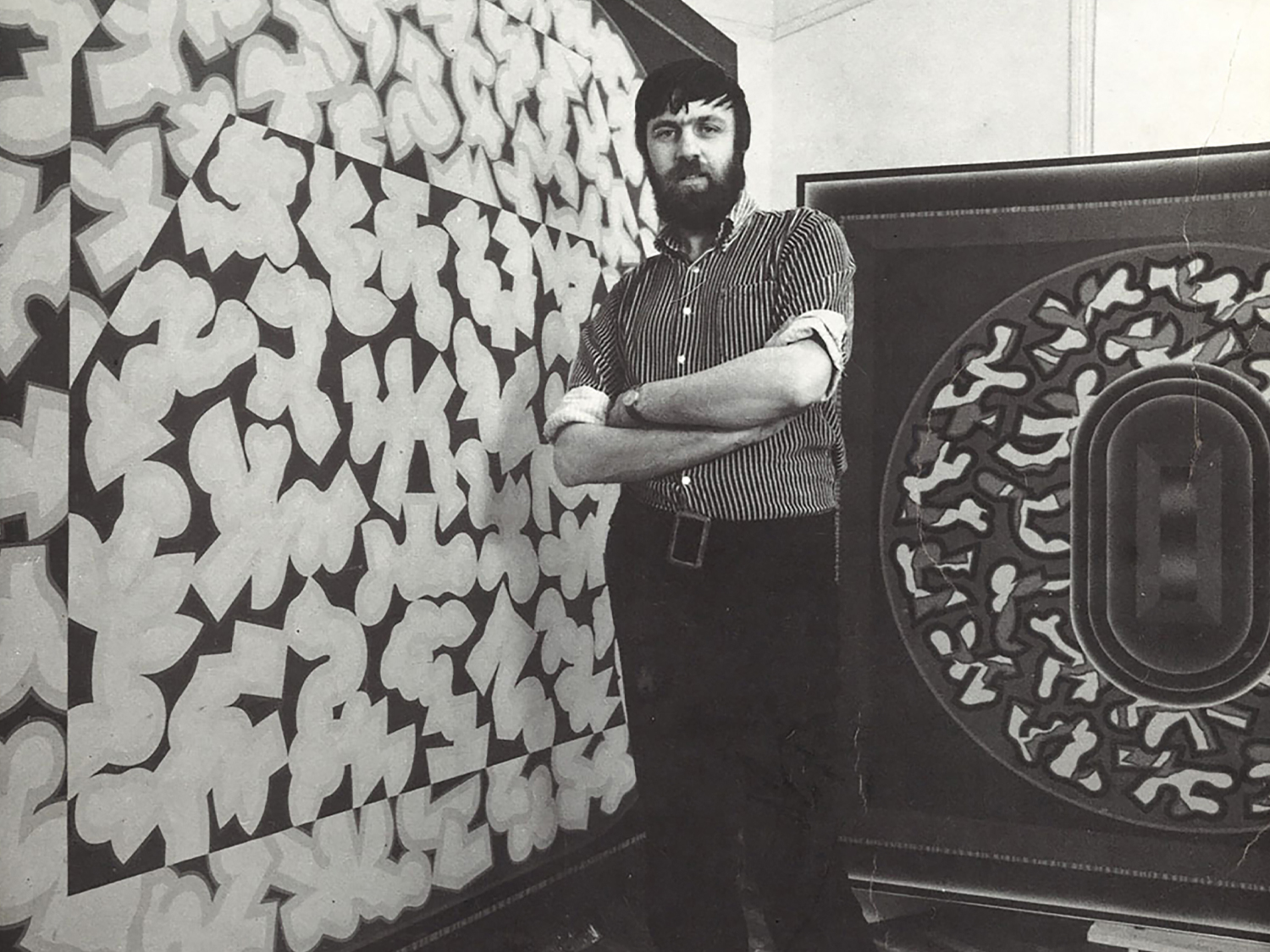
Alun Leach-Jones’ prints are easy to respond to. Bold, graphic, and confident, they hold attention without pushing too hard. In our recent Prints & Multiples auction, that clarity translated into strong results, with collectors drawn to works that feel resolved and visually immediate. They don’t require much explanation, which is part of their appeal.
Born in Lancashire in England in 1937, Leach-Jones arrived in Australia in 1960 and quickly immersed himself in what was, at the time, one of the most active printmaking environments in the country; the South Australian School of Art. He studied under Udo Sellbach, developing a grounding in lithography and an early appreciation for the technical discipline of printmaking.
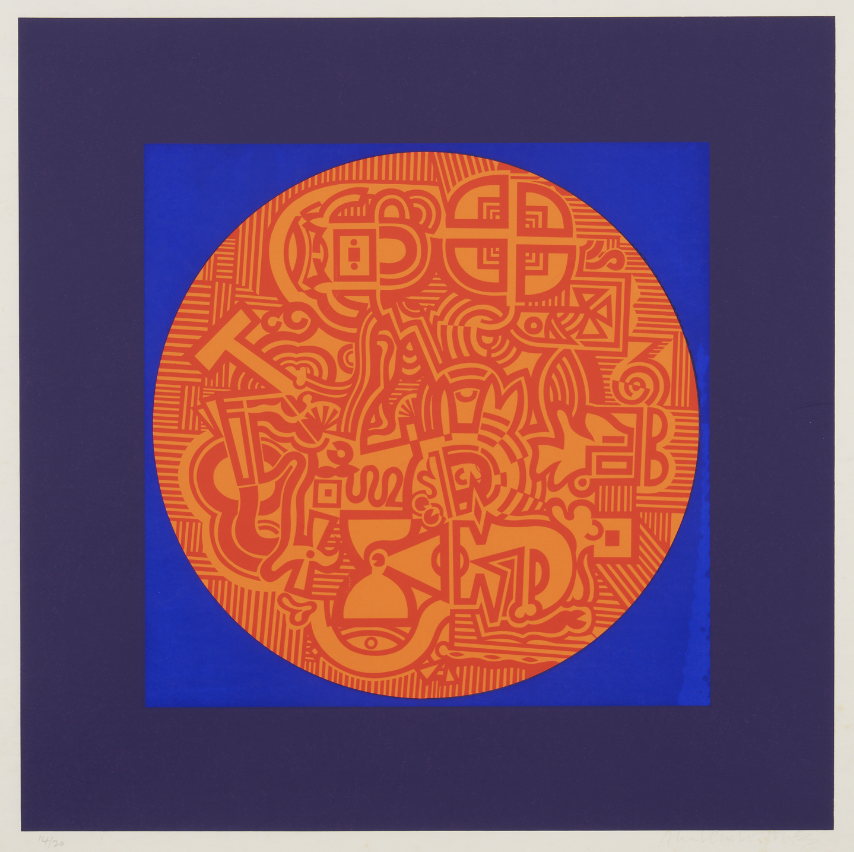
It was during a return to London in 1964 that his understanding of the medium shifted more decisively. There, he encountered a different model of printmaking. Artists such as Patrick Caulfield and Eduardo Paolozzi were producing bold, graphic screenprints through collaborative studio processes, often working with master print technicians rather than executing every stage themselves. The scale, clarity, and visual confidence of these works had a clear impact, opening up a new way of thinking about print production that aligned with his increasingly conceptual approach.
Back in Melbourne, that shift found its perfect counterpart in his meeting with print technician Larry Rawling in 1966. Rawling, then at the beginning of what would become a highly influential career, provided the technical expertise to translate Leach-Jones’ ideas into print with precision. Their collaboration would span decades and, in many ways, set a benchmark for artist-printer relationships in Australia. Rawling’s technical precision allowed Leach-Jones to fully explore screenprinting, particularly in relation to colour and clarity. Together they produced flat planes of colour and sharply defined edges, often built through complex layering. These prints incorporated multiple individual colours, yet the result always feels controlled and resolved.
Leach-Jones described printmaking as a space where his “focus is narrowed to the technical possibilities and how they can be broadened”1, noting that this engagement with process could take the pressure off the conceptual demands of painting. You can see that thinking play out clearly in the prints. There is a sense of resolution, even when the compositions themselves are complex. Areas of colour sit alongside sharp, controlled lines, giving the works structure without making them feel rigid.
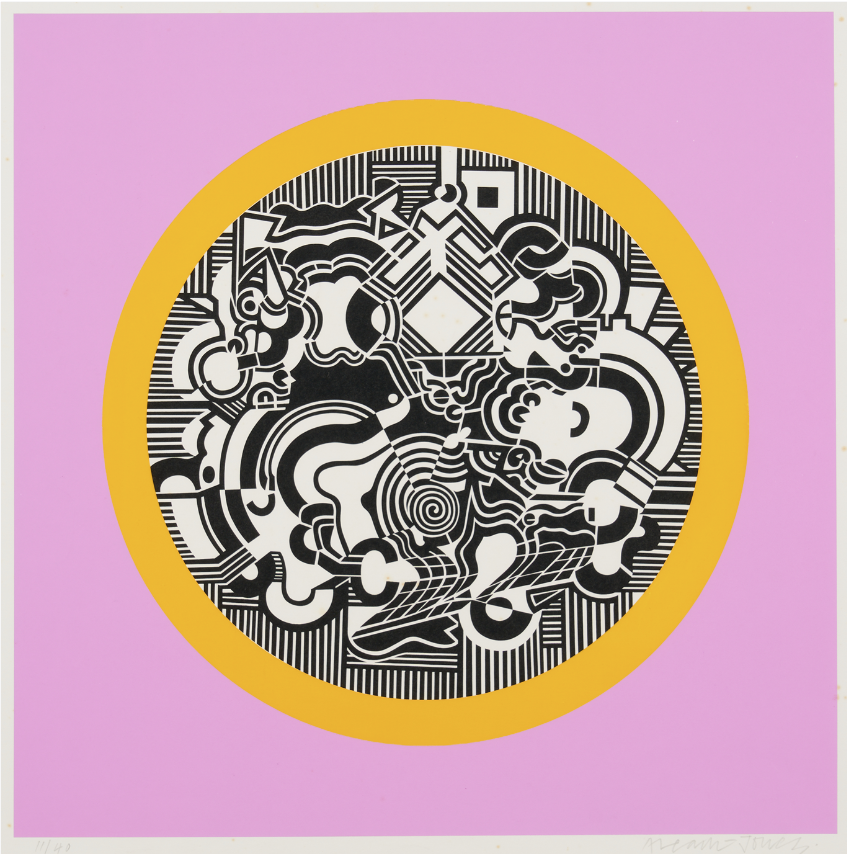
While he is often described as a painter and sculptor, printmaking sits firmly at the centre of his practice. It is not secondary, nor simply a means of reproduction. The relationship between mediums moves both ways, with ideas shifting between prints and paintings rather than remaining fixed. At times, prints anticipate later works in paint. At other times, they revisit and refine existing compositions. Either way, they stand on their own.
His significance as a printmaker was recognised early. In 1967, he was named a Print Patron of the Print Council of Australia, and later, in 1990, he was made an Honorary Life Fellow of the Royal Society of Painter-Printmakers in the UK. These acknowledgements speak not only to the scale of his output, but to his influence in shaping how printmaking has been understood in Australia.
What keeps drawing people back to his work is its immediacy. The colour, the rhythm, and the sense that each element has been tested and resolved through process. They are works that are simply enjoyable to live with.
That was certainly evident in the recent auction. Collectors responded instinctively, drawn to pieces that feel as fresh now as they did decades ago. There is a timelessness to Leach-Jones’ prints. Not in a static sense, but in the way they continue to feel active, alive, and relevant.
1. Burke, J., ‘Alun Leach-Jones’, Imprint, Print Council of Australia, Melbourne, 1976, p. 2
By Hannah Ryan, Senior Art Specialist, Manager of Speciality Auctions
Top Image: Alun Leach-Jones, 1970, by an unknown photographer. Source: Watters Archive, Art Gallery of New South Wales Archive
June 2026