There may be many matters up for debate in the world of horology, but one proposition on which everyone would likely agree, is that the foundational influence and horological achievement of one Abraham-Louis Breguet (1747-1823) is the standout of the ages, and many have gone that one step further in naming him the ‘GOAT’.
What is it about the name Breguet that immediately commands reverence and awe? The Swiss watchmaker was born in Neuchatel in 1747 and by the age of 15 had moved to Versailles where he would work for a decade under two acclaimed watchmakers, Ferdinand Berthoud and Jean-Antoine Lepine. Not long after, in 1775, he set up his workshop in the Ile de la Cite in Paris which would provide entrée to the French Court and royalty, and before long – voila! – his list of clients would include Queen Marie Antoinette and King Louis XVI. A clientele of that calibre is an indicator of the level of genius we are dealing with here.
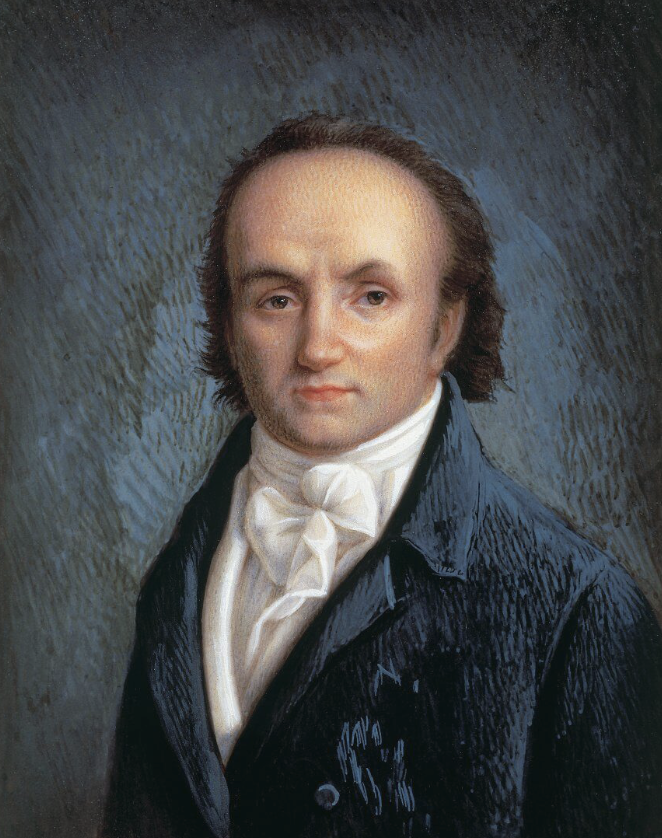
To describe Breguet merely as a watchmaker is like describing Leonardo da Vinci as only a painter. His innovations reshaped the craft from within and without. Outwardly, guilloche dials, pomme hands (or Breguet hands), welded lugs, and secret signatures continue to define classical watchmaking. Internally, the self-winding Perpétuelle, the Breguet overcoil, the pare-chute shock protection system, the sympathetic clock, and numerous advances in repeating, calendar, and astronomical complications are all innovations that can be traced back to Breguet’s fertile imagination. Though horologists generally view many of these breakthroughs as the more functionally transformative for watch accuracy, the tourbillon is Abraham-Louis Breguet’s most famous horological contribution.
By the closing years of the eighteenth century, one persistent problem continued to weigh heavily upon watchmakers. Pocket watches of the era spent much of their time sitting vertically in a waistcoat pocket. In this position, gravity exerted a constant influence upon the escapement and balance, the delicate regulating organs responsible for keeping time. Small imperfections could produce variations in rate, causing a watch to gain or lose time depending upon its position. Enter Breguet; where others before him saw an obstacle, he would see an opportunity and literally turn the problem on its head.
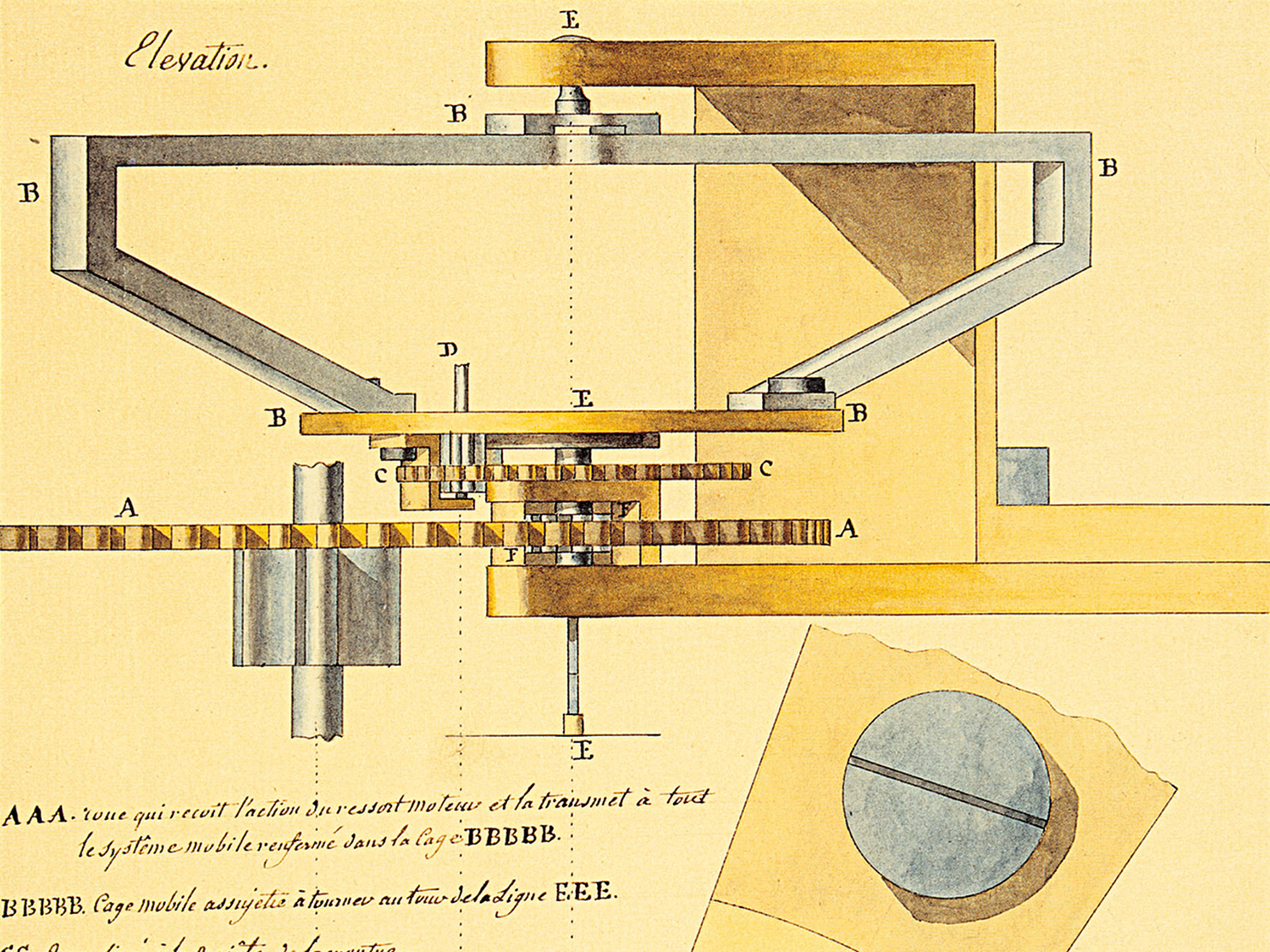
Breguet’s ingenious solution was to place the escapement and balance inside a mobile cage that rotated upon itself, traditionally completing one revolution every minute. Rather than allowing gravity to act continually upon the mechanism from one direction, the rotation carried it through a succession of vertical positions. The resulting variations did not disappear but were averaged out through what Breguet described as a process of mutual compensation. He was not defeating gravity so much as taking it for a ride.
In June 1801, Breguet claimed a ten-year patent for his completely “new type of regulator” which he poetically called the tourbillon, French for whirlwind. It was a dramatic, if not ironic, title for an invention that turned chaos into calm and bound it into a delicate, controlled motion. Yet as previously witnessed, the course of horology rarely runs smoothly. Brilliant in theory, the tourbillon was extraordinarily difficult to execute. Its tiny rotating carriage had to remain light, perfectly balanced, and sufficiently robust, while receiving enough energy to maintain its constant motion. The innovation remained rare, expensive, and demanding to make. And unlike calendar or chronograph complications, it offered little practical information and nothing to display. In fact, tourbillons were produced in small numbers and largely confined to observatory chronometers and precision competition watches. Even Breguet himself made relatively few during his lifetime.
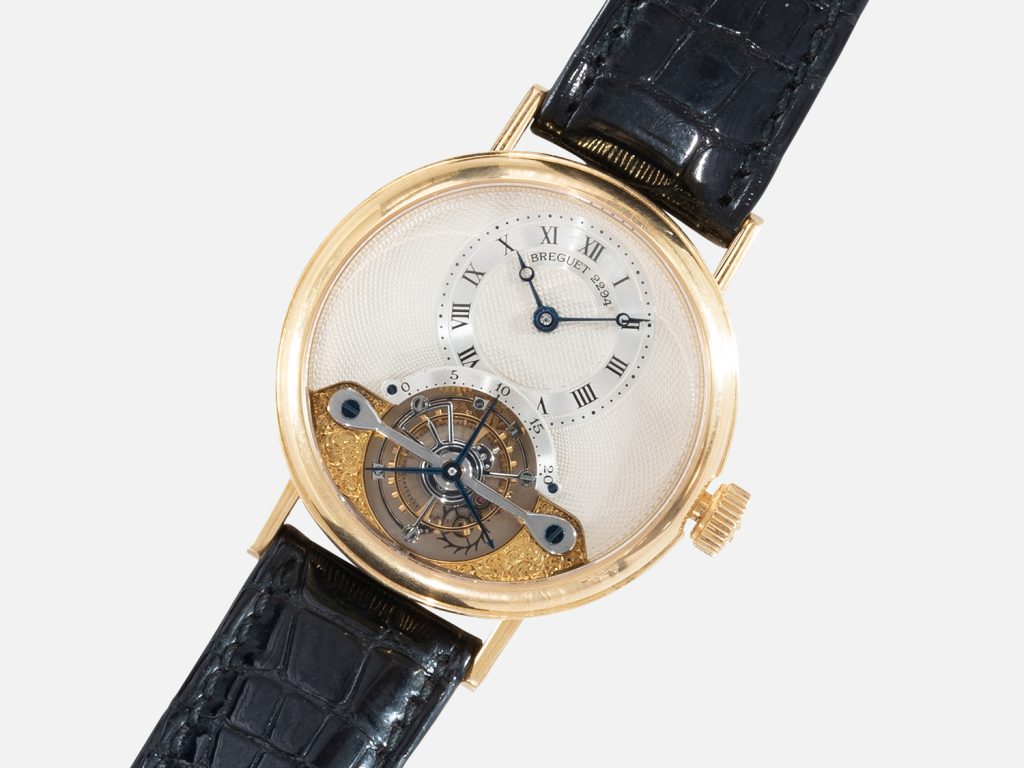
The late twentieth century however saw one of watchmaking’s most fascinating reversals of fortune. As quartz technology rendered mechanical watches obsolete from a purely practical standpoint, collectors began to value them for different reasons. Craftsmanship, history, ingenuity, and beauty increasingly became the measures by which fine timepieces were judged. Under these criteria, the tourbillon was perfectly positioned for revival. What was once seen as a highly specialised precision device was now the trophy complication in high end watches.
As the twentieth century progressed, instead of fading into obsolescence, the mechanism underwent an artistic evolution in the mid-1980s. Master watchmakers like Audemars Piguet and Vacheron Constantin realised that the value of the tourbillon lay in its incredible micro-engineering. By cutting an aperture directly into the dial side of the watch face, they transformed a hidden piece of chronometric utility into a hypnotic display of haute horlogerie.
Two centuries later, and the tourbillon remains a controlled whirlwind and a monument to watchmaking. This mechanism encapsulates Abraham-Louis Breguet’s enduring genius. It reveals why his name is surrounded by an undeniable aura and explains why to this day Breguet serves as the definitive benchmark against which all master watchmakers are measured.
By Patricia Kontos, Senior Jewels & Timepieces Specialist
Top Image (detail): Tourbillon, original drawing by Abraham-Louis Breguet for patent request, 1801 / Institut National de la Propriété Industrielle, Paris
November 2026