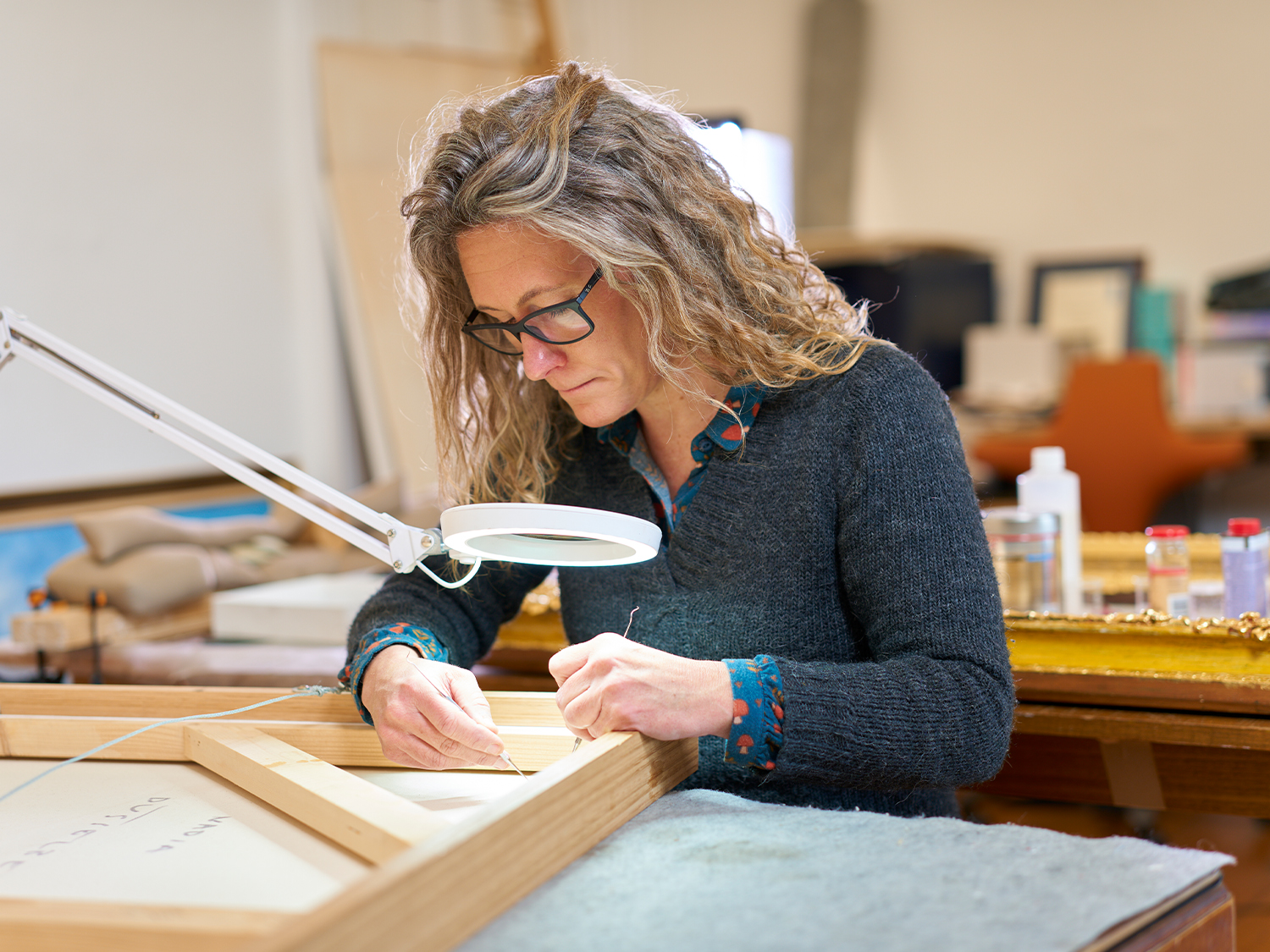
In this series, we visit the ateliers of skilled artisans to learn more about interesting, rare trades and crafts. This issue, we chat to art conservator, Helen Gill. Helen has worked with major institutions in Australia and overseas, including the NGV and National Gallery of Denmark, as well as private practice, restoring works from sentimental pieces to major paintings by renowned artists.
What inspired you to become an art conservator, and how did you learn the craft?
I don’t remember being aware of conservation as a profession until I travelled to Europe in 2001 after completing my Creative Arts undergraduate degree. I came across an exhibition in the Netherlands that had paintings displayed next to their x-ray images and paint cross-section studies. I was drawn to the focus on surface and materials and techniques in an applied scientific approach, in contrast to the theoretical approach to looking at art. I already had a good technical training in art practice, but I had to brush up on my organic chemistry with a bridging course before undertaking the Masters of Cultural Materials Conservation at the University of Melbourne. The Masters set me up well with the ethics, history, and theory of conservation and then I further developed my technical skills through internships and fellowships where I was mentored by experienced senior conservators.
What does a typical day at your studio look like? (If there is such a thing!)
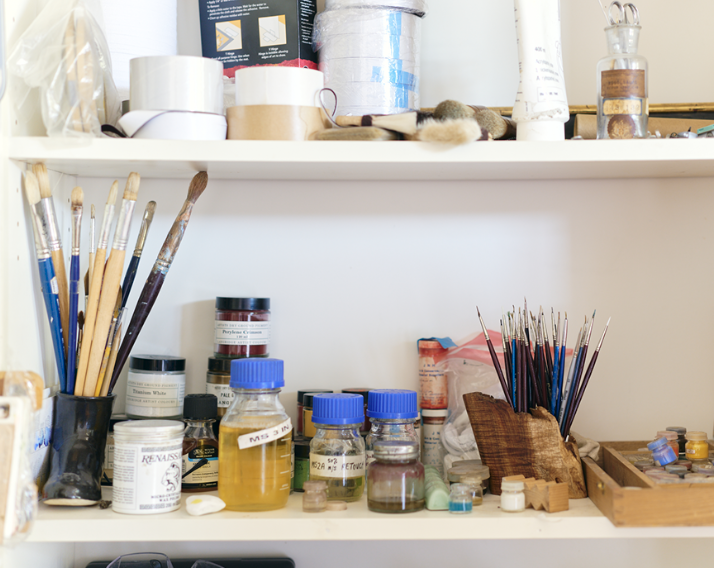
What I enjoy about my job is that there isn’t really a typical day in the studio, my working days can really vary. Sometimes I will spend the whole day responding to emails and quoting or writing treatment reports, broken up with the odd hour or two treating an artwork. Some days I will be focussed on a single treatment all day, particularly if it is a nice satisfying treatment that is a pleasure to work on. Other days I have clients coming and going delivering and collecting artworks, and some days I am out of the studio all day condition reporting on paintings or assessing a work in a collection for treatment.
Is there a particularly memorable project that you have worked on that has stayed with you?
I would have to say the most memorable project I’ve worked on was also the most obscure, but also one of the best experiences of my life. I had the opportunity to help a Danish colleague on a project in a tiny village in Greenland. We were there to restore the painted canvas ceilings of a mid-18th century harbour master’s house which was being restored by heritage architects and converted into a restaurant. The ceilings were lined with canvases which we found were actually old, recycled cloth sails which had been painted green and nailed up to function I guess like wallpaper. They were covered in centuries of soot and grime, they were really, really dirty and our brief was to essentially get them clean and looking like something people would want to eat under. It was hard, dirty, physical work in a construction site environment but we had icebergs and whales floating past the windows as we worked. It was also arctic summertime so we had hours of sunshine and a lovely community of Greenlandic people and their warm culture to experience.
What advice would you give to collectors on caring for artworks, and what are some common mistakes to avoid?
Preventive conservation is not to be under-estimated; making sure artworks are securely housed in their frames, and that hanging systems are adequate is so important to prevent the many types of damage I see from artworks falling out of their frames and off walls. I would recommend collectors have any artwork they have just purchased get a basic assessment from an accredited conservator to identify any active instability so that it can be addressed before further damage occurs. I also recommend really considering where paintings are hung – are they hung low in a thoroughfare, or too near chair backs, swinging doors, and entrances where bags are brought in? Are they hung too close to a heating or cooling source? Can the new puppy, or child with texta reach it? Avoid humid environments like bathrooms, or overly hot, bright sunlit locations.
Is there something you wish more people understood about art conservation?
I wish more people understood that sentimental value is equal to monetary value as far as I’m concerned. I get clients saying, “oh it means a lot to me, but it’s got no financial value, so it’s not worth spending the money on”. Some of the most satisfying treatments that come through the studio are the sentimental artworks that need some love and care, and I get to see the happiness it brings the owners when they see their much-loved artwork looking stable and cared for.
With thanks to Helen for her time.
Top Image: Helen Gill in her studio
October 2026