Guy Grey-Smith was born on 7 January 1916 in the wheatbelt of Western Australia, the second son of Francis Edward Grey-Smith and Ada Carr, whose scandalous union had exiled them from Melbourne’s elite society — a family with deep establishment roots, including a great-grandfather credited with steering the National Bank of Australia through the depression of the 1890s. Guy grew up in modest, rural circumstances during the Depression, and by his own admission showed little early artistic promise, with sport his primary interest.
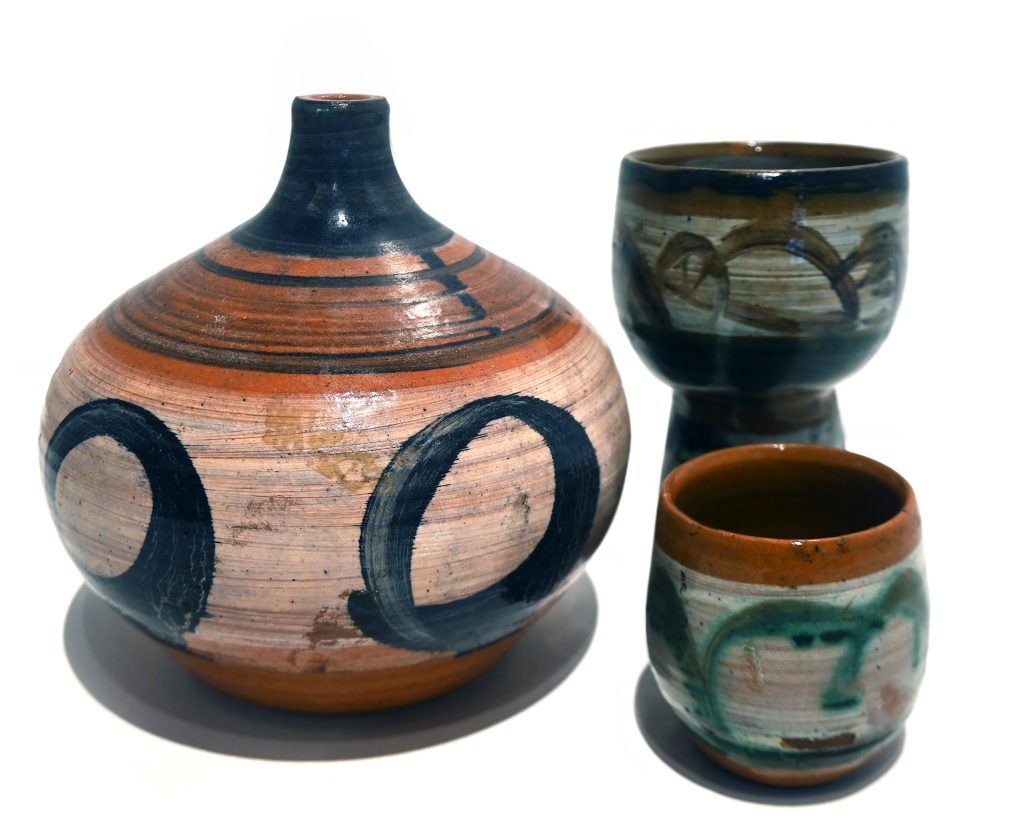
Guy Grey-Smith, Vase, glazed terracotta, initialled at base, 17.5 x 18cm. $800-1,200
Guy Grey Smith, Cup, glazed terracotta, initialled at base, 7.5 x 6.5cm. $300-500
His life changed dramatically through the Second World War. Joining the RAAF and seconded to the RAF, he was shot down and spent four years as a prisoner of war in Poland and Germany — where, by remarkable coincidence, fellow West Australian artist Howard Taylor was a cellmate. It was in those camps that Guy began teaching himself to draw. His wife Helen, whom he met and married in Britain, played a pivotal role in his artistic awakening, sending him art books including Eric Newton’s European Paintings and Sculpture, which sparked a lifelong conviction that art is a deeply personal, almost spiritual response to the world.
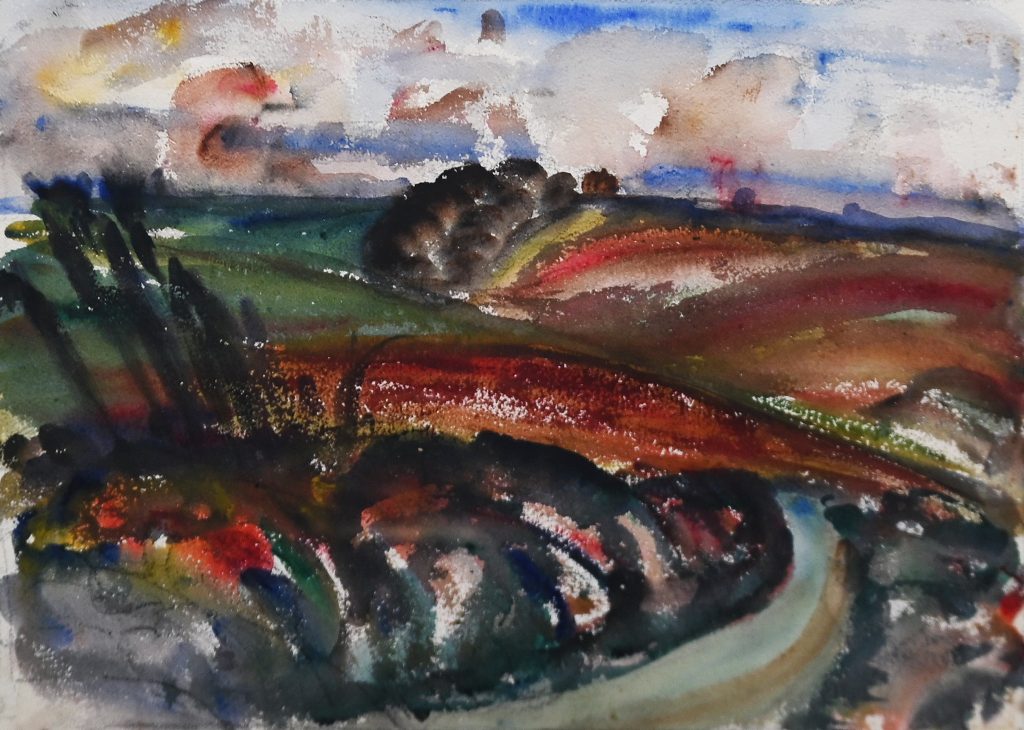
Before returning to Western Australia in 1947, Guy studied at the Chelsea School of Art and set about developing a modernist vision shaped by Cézanne, Matisse, and later the Russian painter Nicolas de Staël. Working alongside Helen — herself a textile designer and printmaker — they built studios, raised animals, made ceramics, and grew their own food, living with a self-sufficient integrity that matched their committed socialist values. By the late 1950s, Guy had fully liberated his palette, stripping landscapes back to their most elemental forms through great slabs of beeswax-infused paint in saturated colour. He became, in the words of curator Barry Pearce, as particular to Western Australia as Cézanne is to Provence — the first non-indigenous artist to successfully convey the physical, psychological, and spiritual monumentality of the state’s landscape.
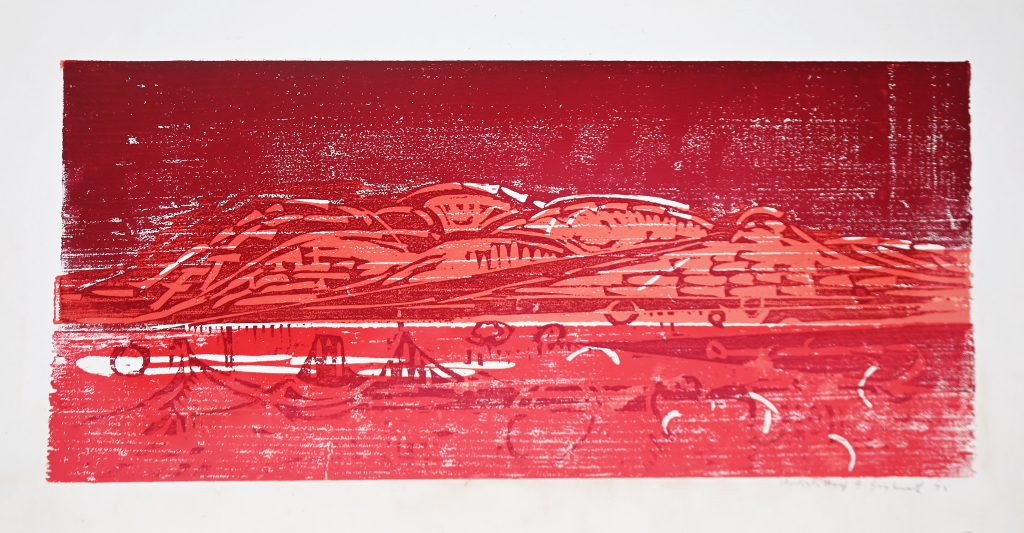
His practice was remarkably cross-disciplinary. A 1953 trip to Britain introduced him to fresco technique, which fed directly into his painting and printmaking. Travel to Bali, Ceylon and Cambodia in the 1960s brought Southeast Asian influence into his work, though his 1969 professorship in Phnom Penh ended in disaster when a coup triggered a nervous collapse rooted in suppressed wartime trauma. The recovery was slow, but his subsequent move to Pemberton in the mid-1970s — escaping both suburban encroachment and what he saw as artistic pretension in the hills — produced some of his most vital work: forest images shimmering in cadmium reds and sage greens.
Despite a touring retrospective in 1976, an Order of Australia, and a career spanning every state and major international exhibition, Guy died in 1981 feeling, in Helen’s words, like a broken man — worn down by ill-informed criticism and the lingering weight of his breakdown. Guy Grey-Smith
In the 2014 retrospective Guy Grey-Smith: Art as Life at the Art Gallery of Western Australia — the first full retrospective since his death, featuring more than 120 works — marked a turning point in his public recognition. Since then, his work has been gaining significant exposure beyond Western Australia, with growing interest from collectors, institutions, and audiences across the eastern states, bringing long-overdue national attention to one of Australia’s most distinctive post-war painters.
By Leigh Grey-Smith
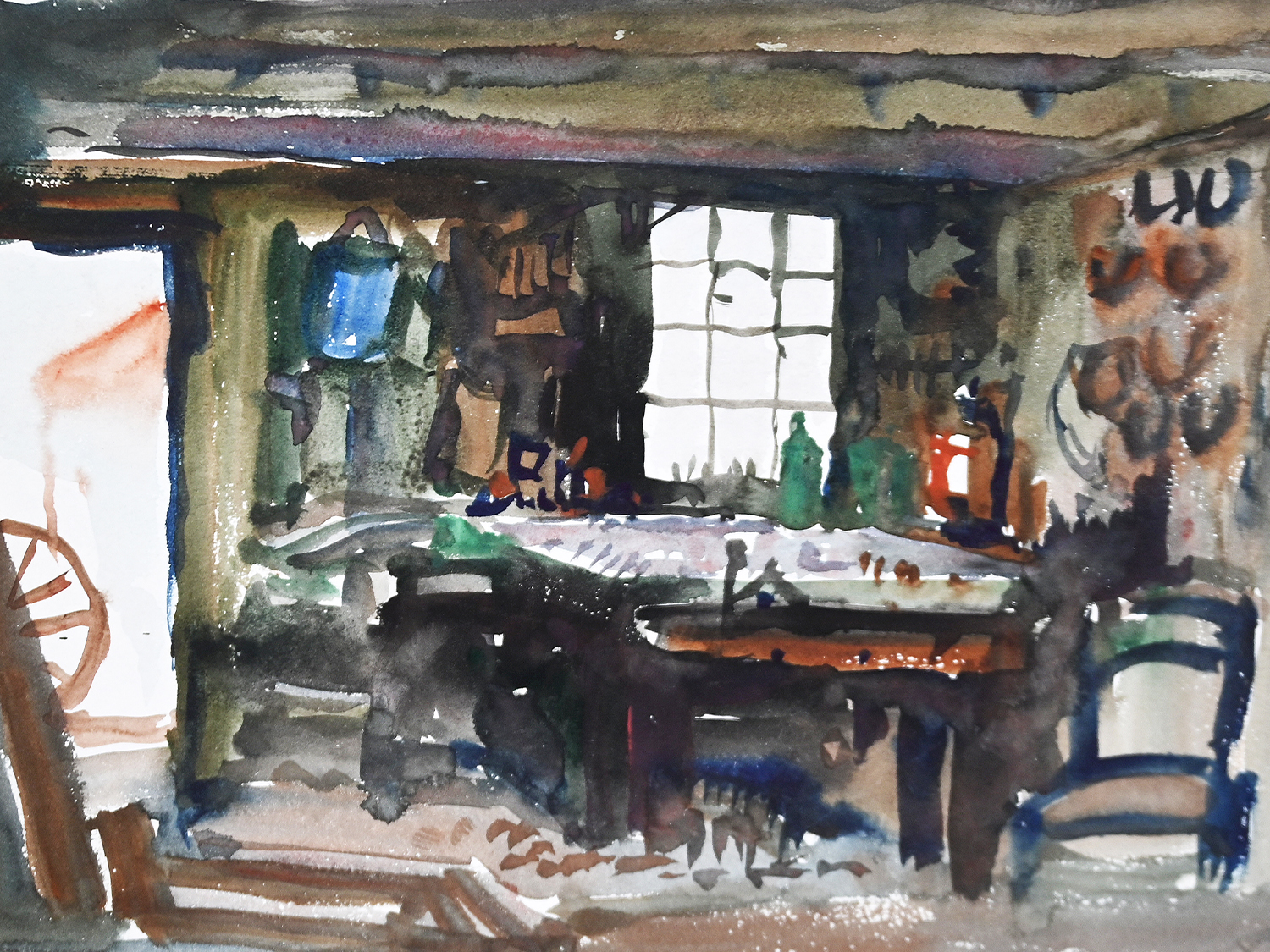
Top Image: Guy Grey-Smith, Untitled, watercolour on paper, 28 X 41cm, unframed. $2,000-3,000
June 2026