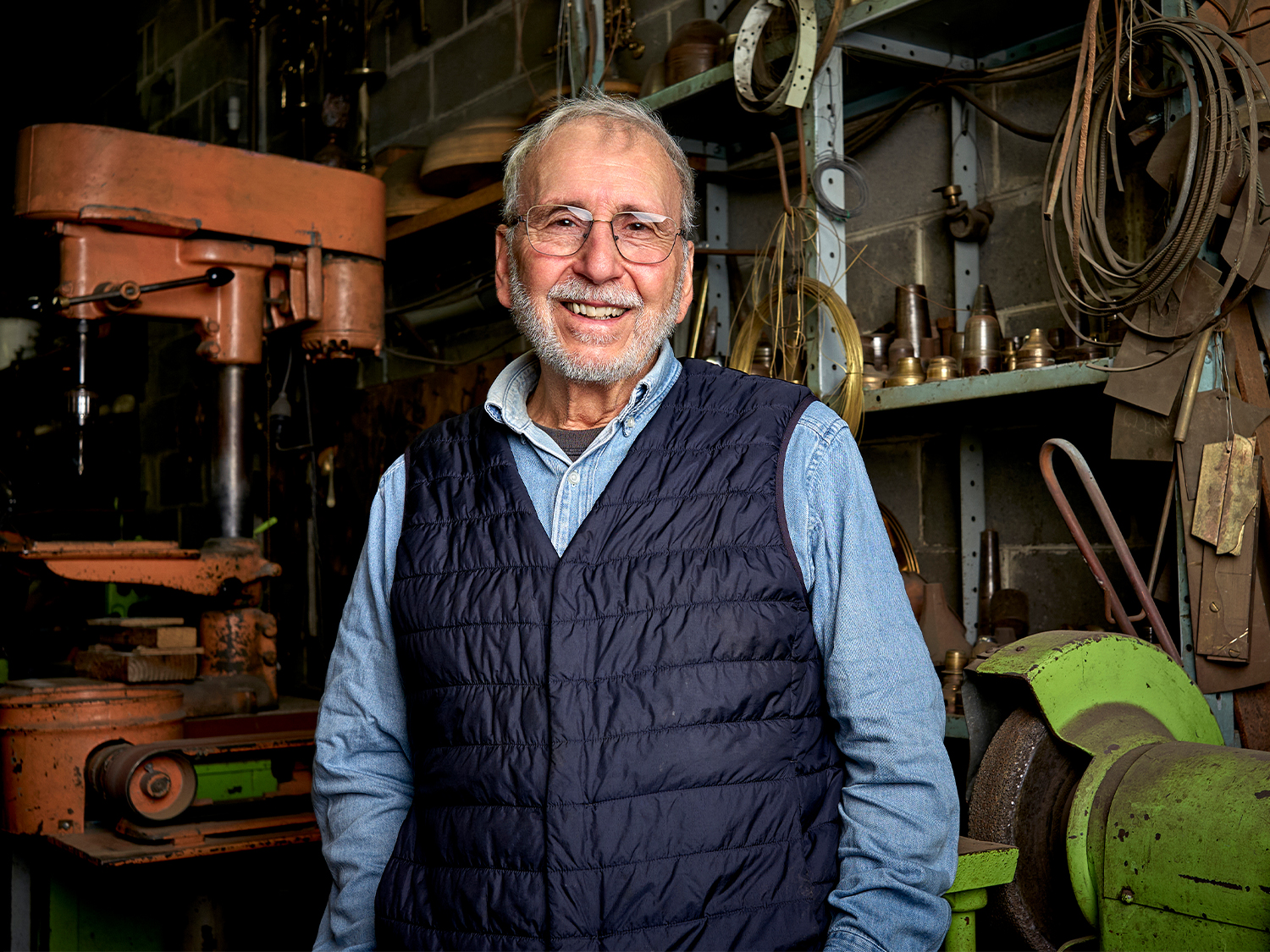
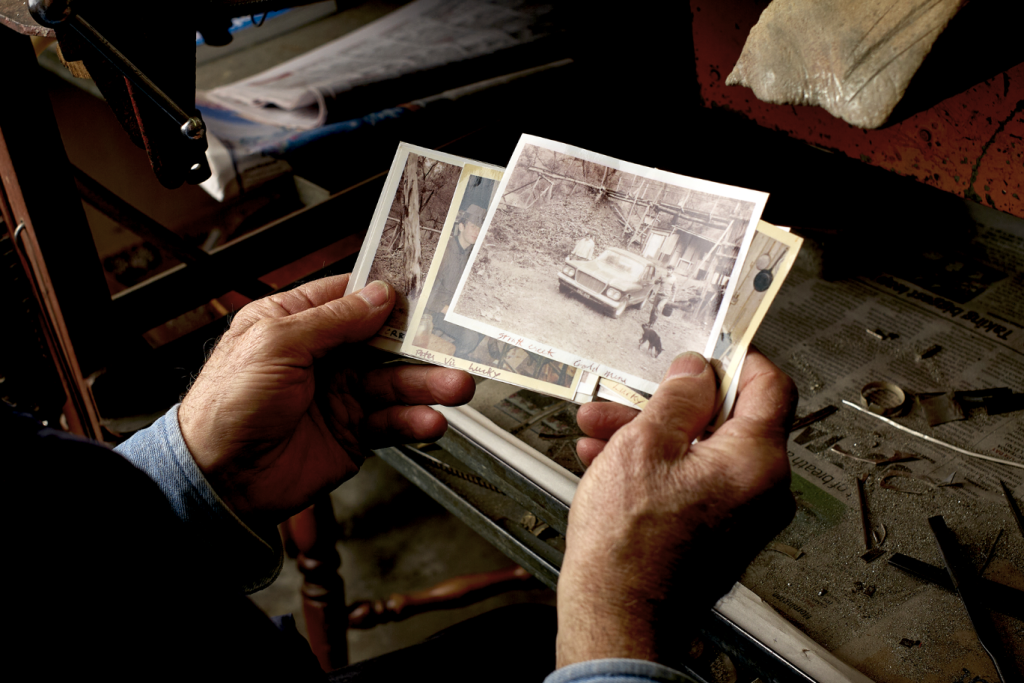
In this series, we visit the ateliers of skilled artisans to learn more about interesting, rare trades and crafts. This issue, we chat to silver and goldsmith, Fortunato “Lucky” Rocca, at his workshop on Elgin Street in Carlton, where he has worked since the early ‘70s crafting chalices, ceremonial maces, trophies – including the Melbourne Cup – and more. His workshop speaks to an incredible life and career; there are old photos, newspaper articles, mementos, even keys to an old gold mine!
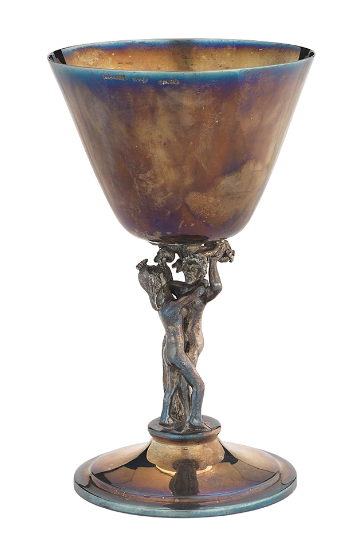
You started making the Melbourne Cup at just age 24 and continued each year for 30 years. What was the process of making the trophy?
Well, when we got an order from the racing club, we’d source the materials. When they came in, the racing club would send a representative around and we’d check everything to make sure it was what was needed.
We started with around 34 pieces of metal. It was either 9 carat or 18 carat gold at the time, it depended on the price and what was available when we ordered it. The first thing we’d make was the bowl because that was the major part of the operation. We’d hammer it up into shape and work to our patterns. Then we’d make the stem and the base, and from there we’d make the handles. The handles were made up of four parts each, plus clips to hold them onto the bowl. The handles weren’t soldered because if you soldered the whole thing, the heat could distort the top part of the bowl and it wouldn’t stay perfectly round. So, they were pinned at the top and fixed at the bottom.
After that we’d file it, polish it, and finish it off. The base was made separately and fitted in. Then it would be sent away for engraving. The process took around 200 hours.
How did it feel to be entrusted with such a historic commission?
Well, when I first started working on it, I was an apprentice. I was a young bloke, and I thought, “Listen, I reckon I could do something like this.” My boss (Maurice Steeth) said, “Well, if you can make one, I’ll give you a raise.” So, I started – I made bits and pieces of it, but I never actually finished the whole trophy in those early years. So I never got the raise!
Then he passed away, and when I got the commission in 1971, I already had a bit of a head start, I knew I could do it. It was pretty special. When you read the newspapers and everyone is talking about the Melbourne Cup, and everyone has a holiday for it – it’s a big thing.
To be a young bloke and already doing something like that, you think, “Gee, I’m doing something pretty good here.” I was proud. You can’t help but be proud.
Can you tell us about some other meaningful commissions that you’ve worked on over your career?
One thing that stands out was when Princess Anne got married, we made a rose bowl that was commissioned by the state government and presented to her for the wedding. We’ve also made ceremonial pieces, the last one that really stands out was the mace we made for the Welsh Parliament when it was established.
We’ve made some important bits and pieces over the years. Sometimes you forget because you do them, finish them and move on. Then later you think, “Oh yeah, we did that job.”
What advice would you give to a young silversmith starting today?
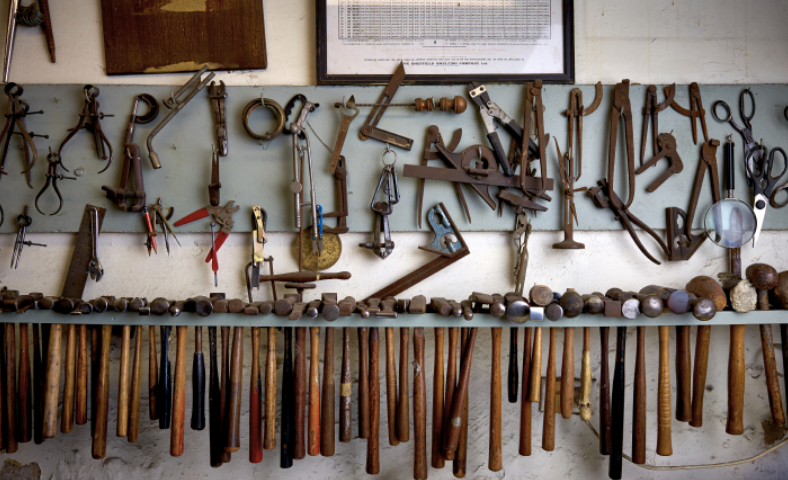
If you like making jewellery and you like the work, find a way to learn. If you can’t get an apprenticeship, take classes and learn the basics. You need to learn how to solder, how to finish something properly, and how to put things together. Once you know that, you’re on your way.
I can’t work without a drawing, and I still have them all. You need to know what you’re making, what materials you need, how thick everything has to be. You can’t just start, especially with gold. If you get it wrong, it costs you.
You don’t need too much to start. You just need a few tools and you can set up a little workshop. Learn your trade and look after what
you make.
Can you describe a favourite memory from your workshop?
The classes we taught were probably some of the best memories. We started back in the ‘60s and did them for about 40 years. We’d have 10 people at night, two nights a week. It became more than just a class, it became a social thing. Before class we’d meet at the local pub, have a counter lunch, then after class we’d go for a drink. People really enjoyed it.
We had doctors, nurses, house mums, young kids, all different sorts of people. The important thing was making sure everyone achieved something every night. Because if you’re learning, you want to go home and say, “Look what I made.”
With thanks to Lucky for his time.
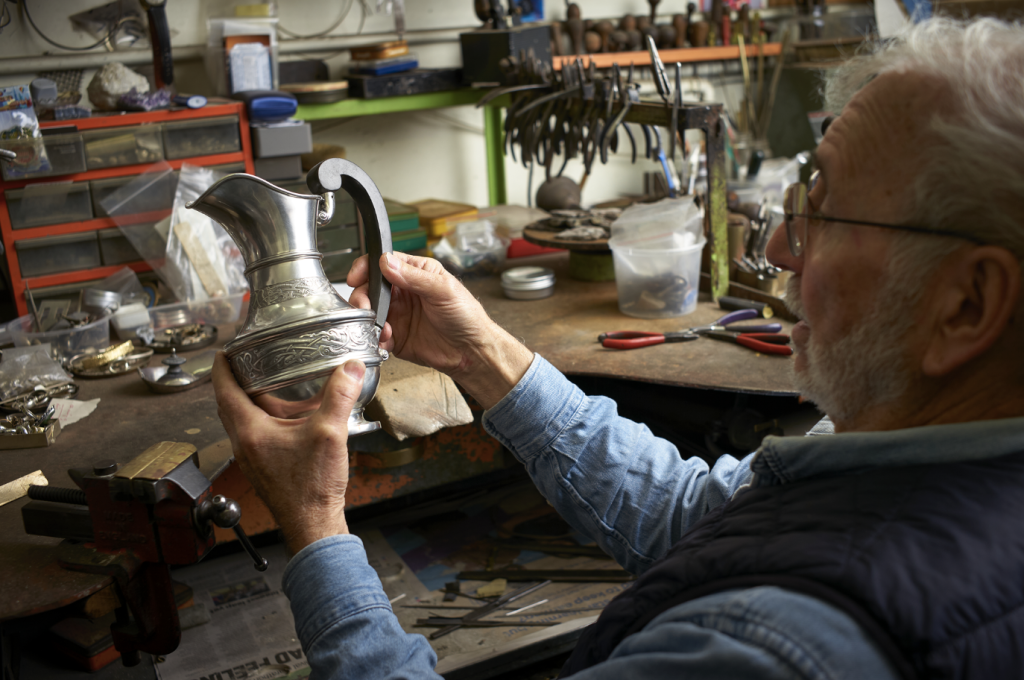
Top Image: Lucky Rocca in his Carlton studio
August 2026