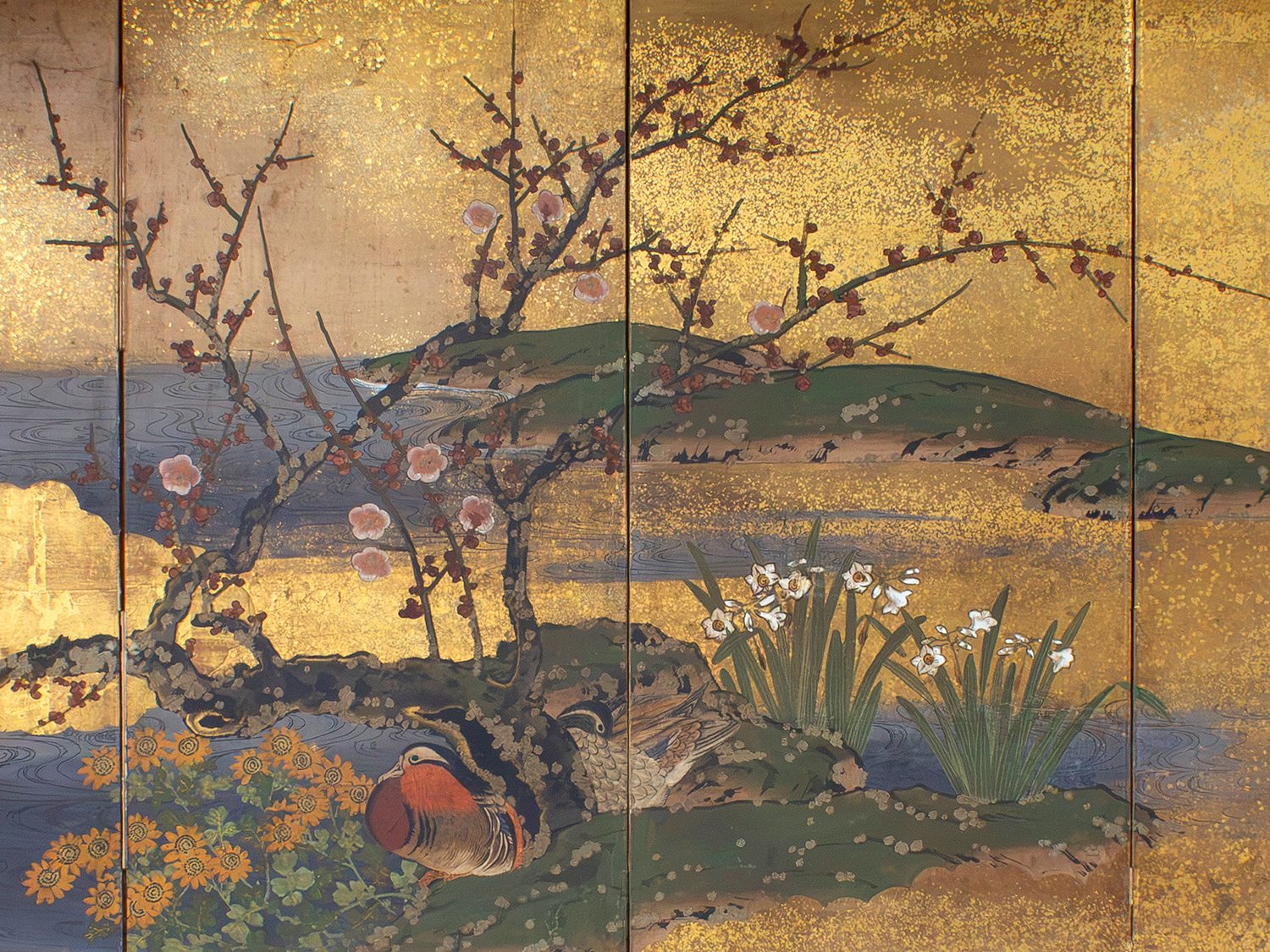
Amongst the 199 lots comprising The Collection of Dr Lee Price, it’s the dense cluster of almost 90 Japanese works that speak most clearly to a collector’s commitment to quality. A concentrated, single-owner holding of screens, satsuma, cloisonne and metalwork, a breadth and quality that rarely surfaces on the local market.
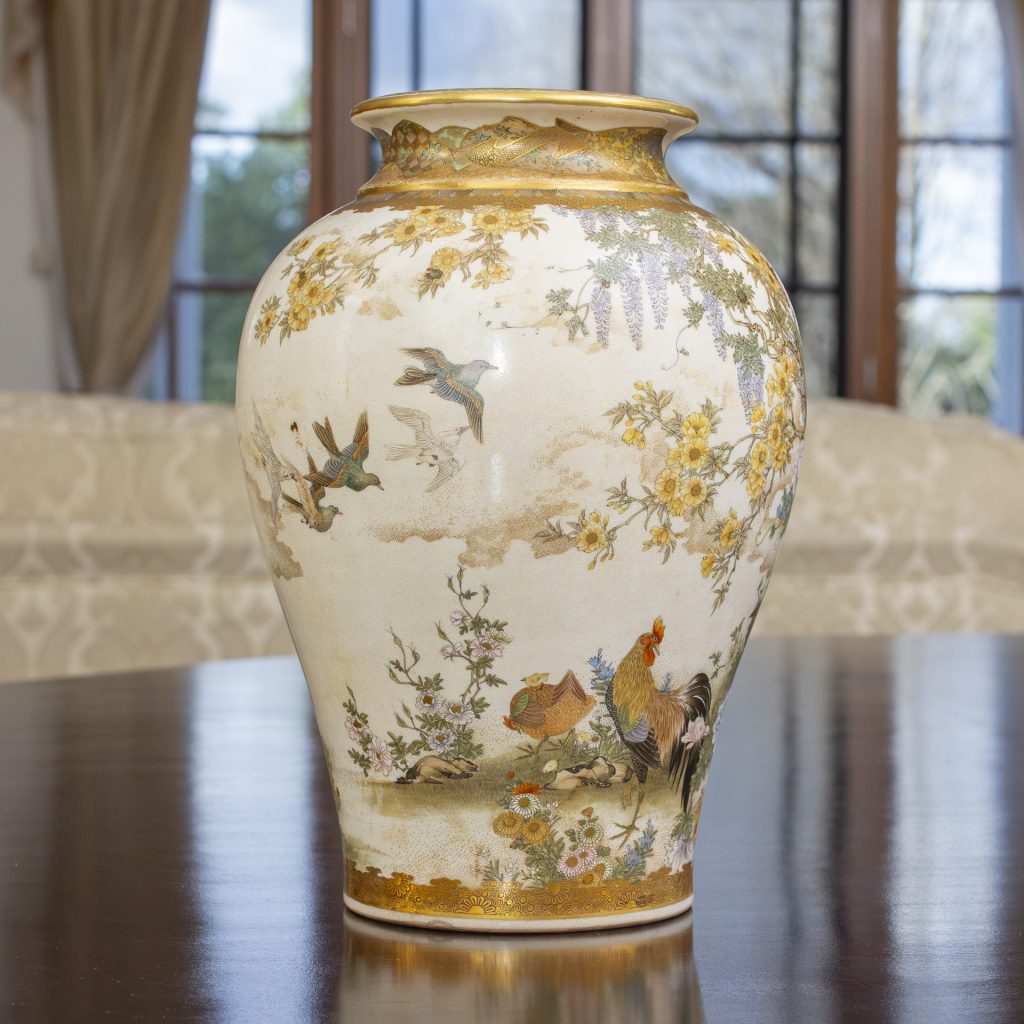
The bulk of the run is Satsuma, with its cream-crackled stoneware, fine polychrome enamels and gold that has come to define Japanese decorative art in since the great expositions of the 1870s. Lots 34 & 66 are particularly fine example of the most well-known studio in Kyoto, Kinkozan. The first is finely potted for a vase of this size, with spectacular and honest painting of high-ranking courtesan selecting kimono and, on the reverse, a pair of pheasants on rocks among peonies and cherry blossoms. And I couldn’t stop returning to the elegance of the well-sized baluster vase (lot 66) with birds in flight amongst wisteria and summer flowers. In addition, lot 45 transports us to the sankin-kotai which was the Tokugawa shogunate’s system requiring regional daimyō to spend alternating years in Edo (Tokyo), leaving their families there as hostages, and subduing thoughts of rebellion! Works from the Yabu Meizan studio (Osaka) are known for incredible painting, this bowl is no exception and a great opportunity to buy locally.
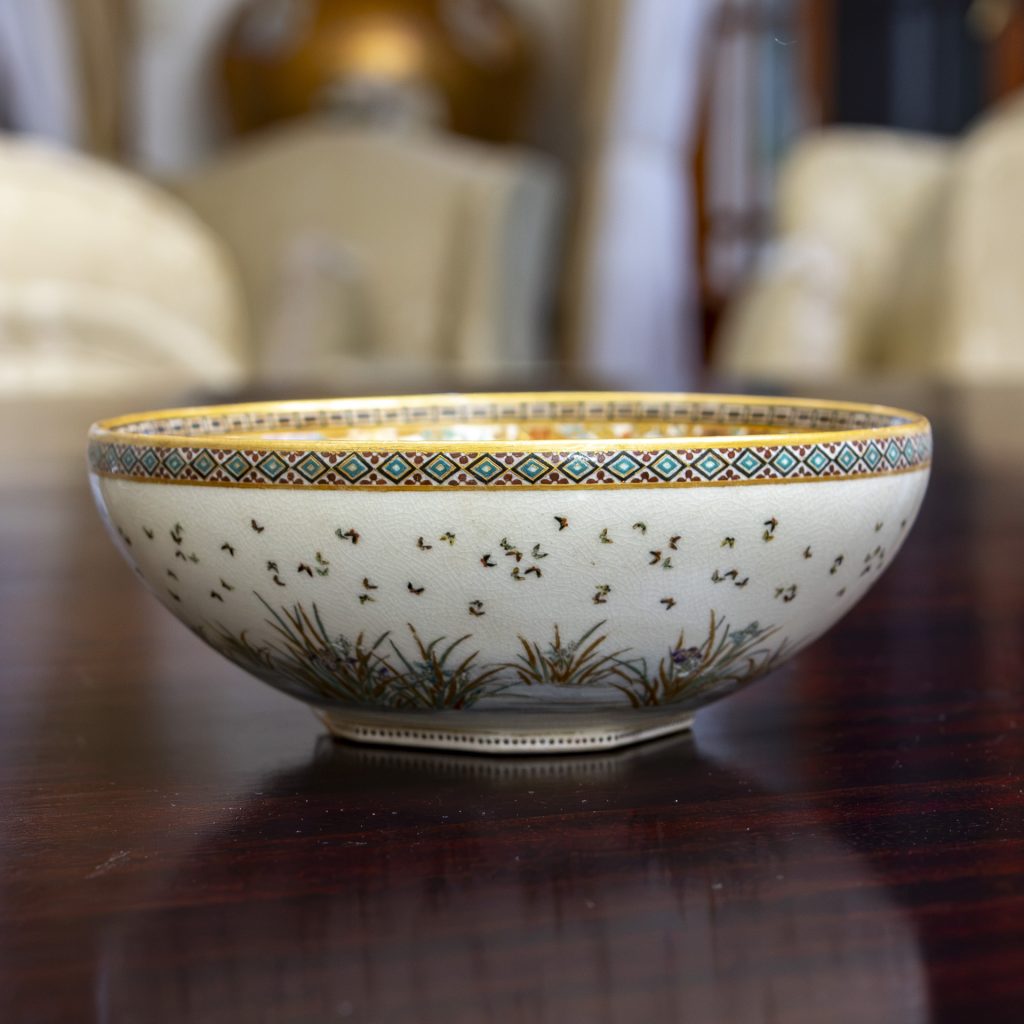
It is worth noting that Satsuma has spent the last few decades out of critical fashion, with prices sitting well below their 1980s & 90’s peak but as we know, good things always find their rightful position and the artistry of quality satsuma will certainly endure.
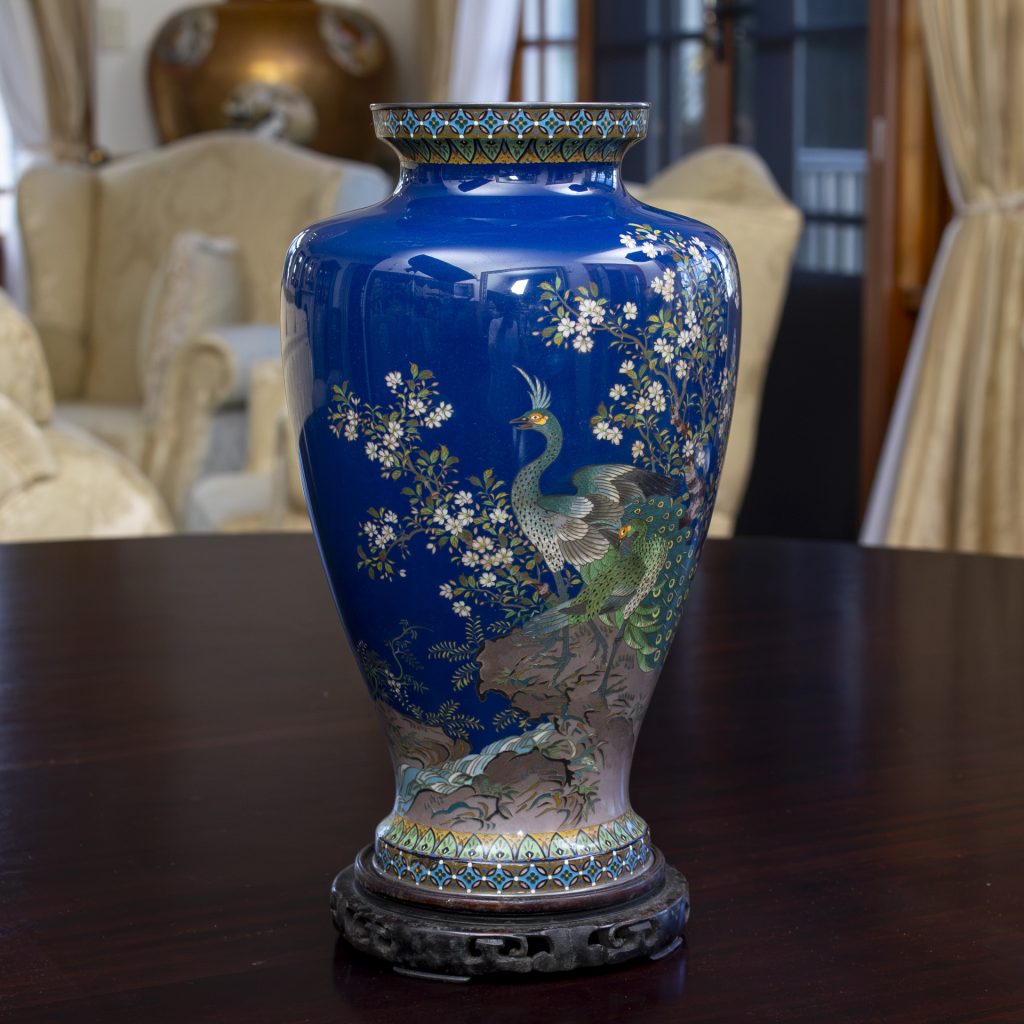
Running alongside the Satsuma works are a smaller, yet equally accomplished group of cloisonné, several in the striking wireless ginbari technique with its foil-backed glow, and multiple pieces from the celebrated Ando workshop of Nagoya. Lot 47 at more than 30cm height is a tour-de-force of enamel work with an intricate design and plenty of negative space as well. Lot 70 also features fine floral designs in silver wire as well as manchurian cranes, which if you didn’t know, bond for life, so a perfect marriage motif. Don’t go past lot 77 either – Just beautiful wire-work with dynamic pheasants, symbols of spring and abundance, as well as delicate spring flowers. And a word on signatures – this is one isn’t signed and it really doesn’t matter if its Hayashi or Ando, the work is brilliant.
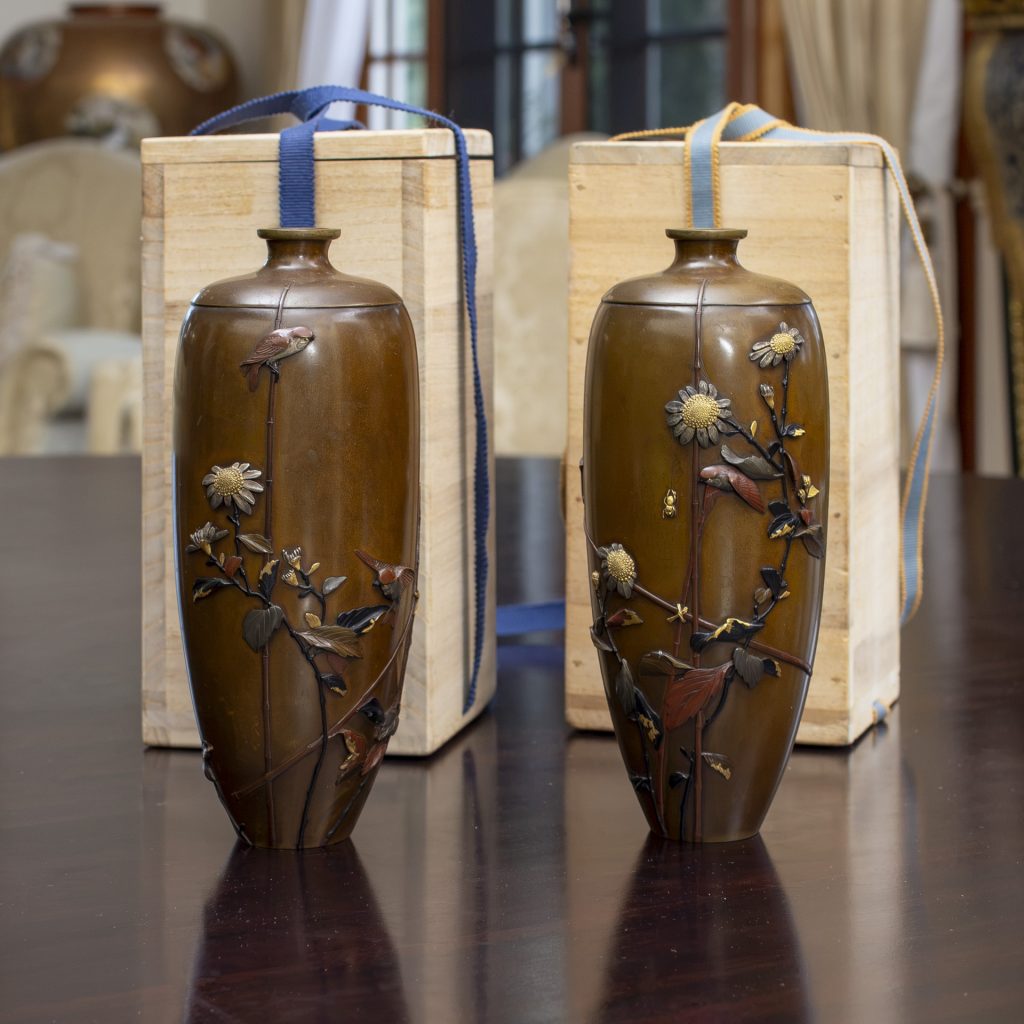
A handful of bronzes and folding screens complete the picture: fabulous quality inlaid vases signed by makers such as Yoshimine (lot 37) and Miyabe Atsuyoshi of Kyoto (lot 39) whose mixed-metal work sits at the more scholarly end of Meiji metalcraft. Lot 49 is a classic shaped bronze vase with the most gorgeous inlaid silver and shakudo wisteria and would be a perfect addition to a Meiji cabinet. Finally, Lot 157, the four panel screen of mandarin ducks, whilst an early 20th century work, retains an aura of earlier screen design with large gold foil pieces, sprays of spring flowers and a classic meandering river design – it presents in great condition and worthy of a close look.
By Trevor Fleming, Sugoku Japanese Art
@sugoku.mono
Top Image Detail: A 20th century four panel screen of Mandarin ducks. $1,000 – $1,500
September 2026