Seven years ago, the Australian government promised to ban the domestic trade in elephant ivory and rhinoceros horn, but it never did. Today, Australians are sending a clear message: it’s time to deliver on that commitment.
New YouGov polling commissioned by the International Fund for Animal Welfare (IFAW), Humane World for Animals Australia and the Born Free Foundation shows overwhelming public support for ending Australia’s domestic ivory and rhino horn market.
An extraordinary 95% of Australian voters want the federal government to fulfil the promise it made following a federal parliamentary inquiry in 2019, which recommended stronger action to address the domestic trade in these wildlife products.
The poll also found that almost all Australians (97%) think it is important for Australia to introduce the ban, including 59% who say it is extremely important, 25% who say it is very important and 13% who say it is slightly important.
One of the most striking findings from the poll is that 95% of Australians surveyed believe or assume that buying and selling elephant ivory and rhinoceros horn within Australia is already illegal.
Why domestic markets matter
Elephants and rhinos continue to face serious threats from poaching and wildlife trafficking. Since Australia’s commitment seven years ago, 197 tonnes of ivory have been seized globally, equivalent to an estimated 29,500 elephants1. While international trade restrictions play a critical role in protecting these species, domestic markets provide loopholes that enable trafficked products to enter legal supply chains. They can also help sustain demand for ivory and rhino horn, creating incentives for poaching and organised wildlife crime.
In 2017, IFAW worked with Leonard Joel to pioneer an industry-leading policy to end the auction of elephant ivory and rhinoceros horn items. As a result, Leonard Joel no longer sells objects made entirely of ivory; including ivory netsuke, chess pieces and dinnerware. They advocate for all Australian auction houses and antique dealers
to do the same. By closing these markets, Australia can remove a pathway that allows illegal wildlife products to circulate and demonstrate its
commitment to protecting some of the world’s most iconic and threatened animals.
A promise seven years in the making
The call for action is not new. A federal parliamentary inquiry recommended stronger measures to address Australia’s domestic ivory and rhino horn trade, leading the government to commit to a ban. Yet seven years later, that commitment remains unfulfilled.
Meanwhile, many countries around the world have strengthened protections by restricting or closing their domestic markets.
The time to act is now
Australians have spoken. They want stronger protections for
elephants and rhinos, and they want the government to honour its commitment. Closing Australia’s domestic ivory and rhino horn market would align national policy with public expectations, strengthen global efforts to combat wildlife trafficking, and help protect elephants and rhinos from the pressures that continue to threaten their survival.
Notes:
• All figures, unless otherwise stated, are from YouGov Plc. Total sample size was 1503
Australian voters. Fieldwork was undertaken between 14th July – 21st July 2026.
The survey was carried out online. The figures are representative of the voting population
by age, gender, region, income, education, 2025 Federal Election vote and 2023
Voice Vote.
• Other countries which have implemented domestic bans and strict regulations include
China, United Kingdom, United States, Canada, France, Taiwan, Luxembourg,
the Netherlands, the European Union, Singapore and Hong Kong.
1. Environmental Investigation Agency; Global Environmental Crime Tracker
https://eia-international.org/global-environmental-crime-tracker/
By Dominica Mack, IFAW Oceania Communications Manager
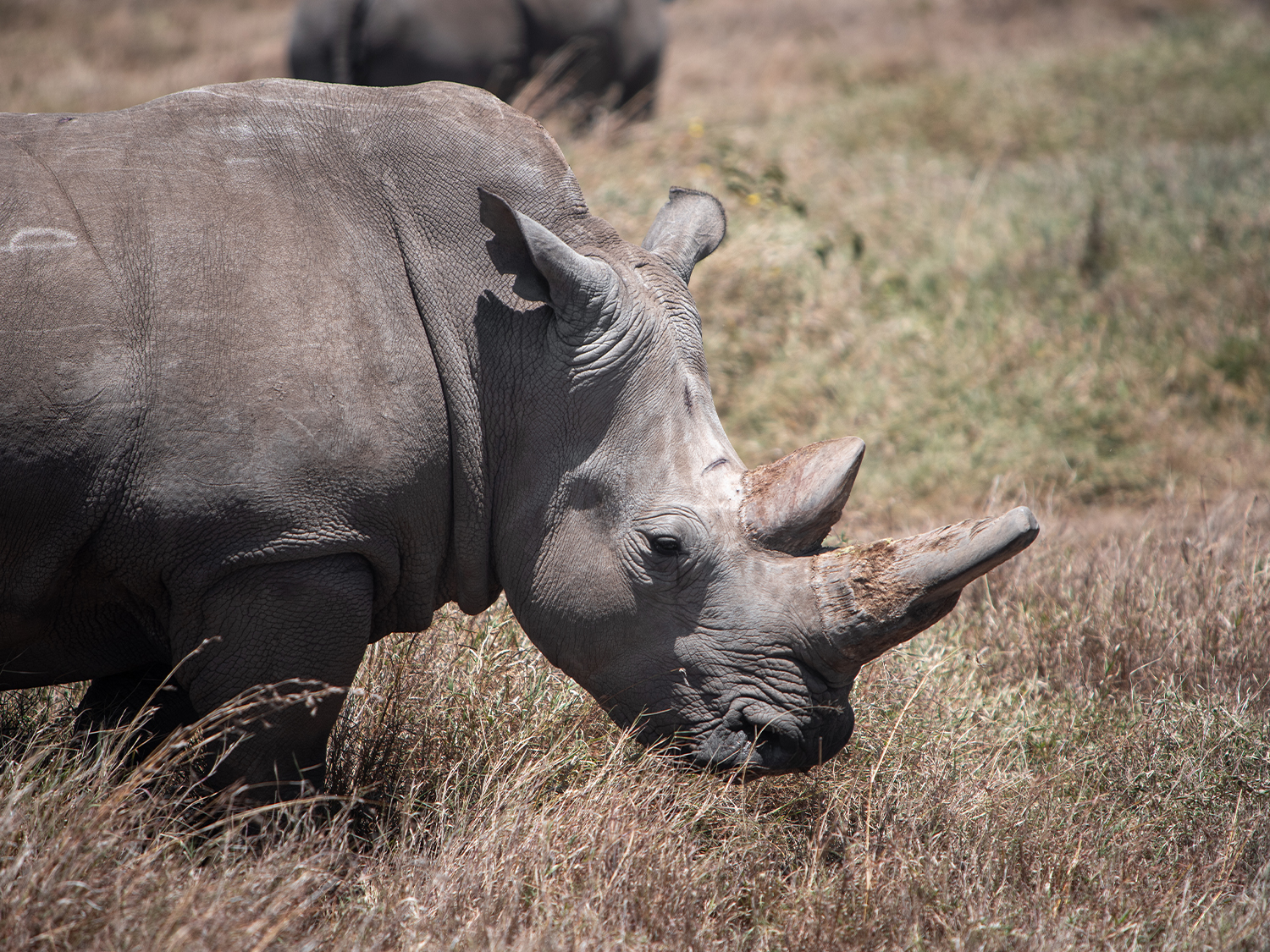
Top Image: White rhino in Kenya. © IFAW
October 2026