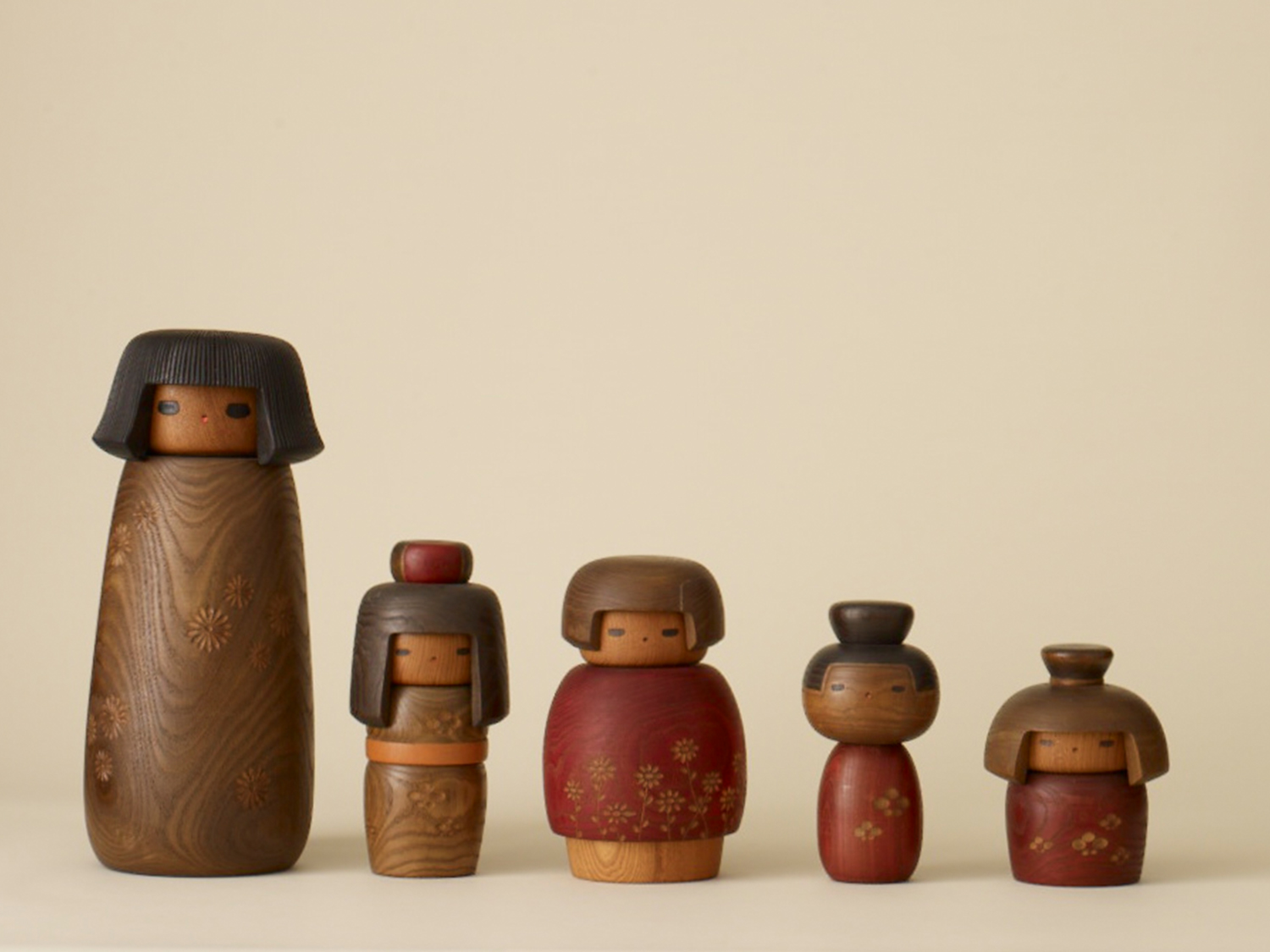
Kokeshi are sweet, simple traditional Japanese dolls, carefully crafted by hand out of local wood and painted with floral motifs, kimono patterns, or colourful rings before being sealed with wax. While they are mostly known as children’s toys, gifting kokeshi also symbolises wishes for happiness and good fortune. Here are five things you may not know about these charming dolls:
1. Kokeshi began as souvenirs for visitors to Japanese onsen towns.
The first kokeshi are said to have been produced by Japanese woodworkers, called “kijishi”, as early as the Edo period (1600–1868) as souvenirs for visitors to onsen towns in the north-east of Japan who would spend the cold winter months warming up in the healing waters of the ancient, natural springs. Over time, each town developed its own distinctive shapes and patterns.
2. Kokeshi were traditionally made from scraps of wood from other projects.
The Japanese philosophy of not letting things go to waste is exemplified in kokeshi. The kijishi who first made them were predominately working on trays, bowls, and other tableware, but not wanting to waste beautiful local wood, they would transform the scrap pieces into simple children’s toys.
3. Kokeshi generally come in two types: traditional and creative.
Traditional kokeshi (dento-kokeshi) dolls’ shapes and patterns follow specific regional styles and are classified under eleven types, with Naruko being the most dominant type.
Creative kokeshi (shingata-kokeshi) were developed after the second world war and really have no rules, giving the artisan complete freedom of expression with regards to the shape, design, and decoration.
4. The main street of the Naruko Onsen Village in northern Japan is known as “Kokeshi Street”.
It is here that the oldest kokeshi dolls were produced, and today, visitors can enjoy browsing in many local kokeshi shops operated by the craftsmen, try their hand at painting their own kokeshi, order custom pieces, and visit the Japan Kokeshi Museum.
5. From Snoopy to Nintendo, the art of kokeshi continues to inspire in the modern-day.
From kokeshi in the forms of Snoopy and Charlie Brown to raccoons and mythical creatures, modern-day makers create singular, hand crafted pieces that can be just as collectable as dolls in the traditional style. Kokeshi have even influenced popular culture, inspiring the distinctive style of Nintendo’s Mii avatars, which players can customise to match their own appearance.
Kokeshi have captured the hearts of collectors in Japan and far beyond, cherished for their craftsmanship, cultural significance, and humble charm.
By Chiara Curcio, Head of Decorative Arts, Design & Interiors
Top Image: Five Sosaku Kokeshi by leading artist Yamanaka Sampei. $500-700
November 2026