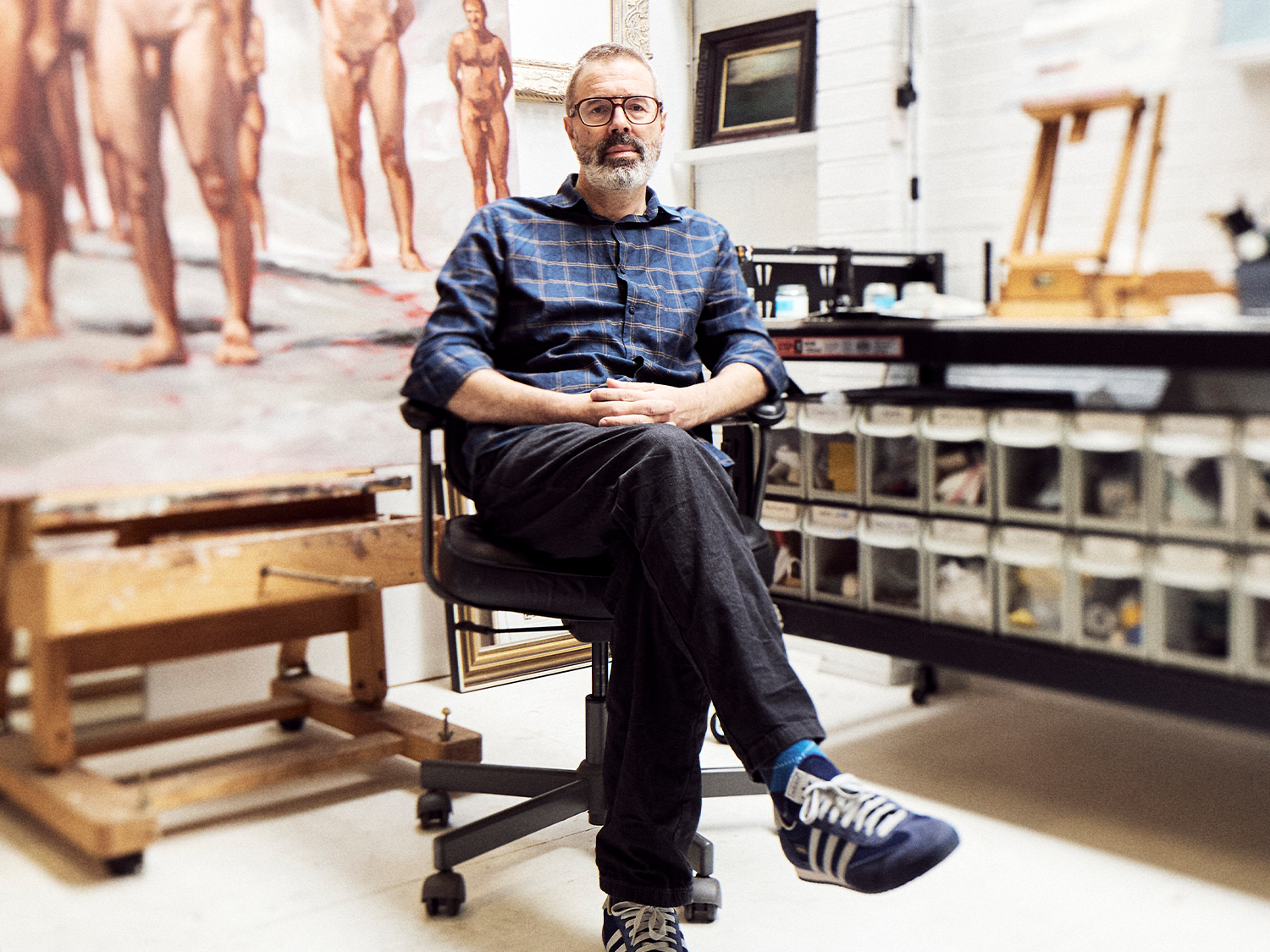
Andrew Dewhurst is a highly skilled art conservator based in Melbourne. Specialising in paintings and painted objects, Andrew has a comprehensive understanding of materials and techniques employed by contemporary and historical artists, having for many years worked in private practice, Sotheby’s Australia, and other institutions with clients including art galleries, auction houses and private collectors. Here, Andrew shares expert advice on ethical conservation, caring for your artwork, and understanding the best approach to restoration.
Many people imagine conservation as simply “repairing” artworks. How would you describe what conservation really involves, and where its ethical boundaries lie?
Obviously, repairing artworks is an integral part of conservation, however in reality it is also equally about caring for artworks, guided by ethics and one’s judgment rather than just manual skill. As a conservator, I spend a great deal of time looking, researching, and making decisions before ever touching a painting. A key role of conservation is reducing the deterioration of cultural materials and preventing further damage, allowing an artwork to be understood and appreciated without falsifying it. Furthermore, conservation recognises that wear and tear can carry meaning, for example, paint cracks over time and faded pigments are evidence of an artwork’s life, not a flaw. I suppose ethical boundaries are what distinguish conservation principles from the idea of repairing or restoration, as conservators adhere to minimum intervention, reversibility of treatments and materials, and respecting the historical honesty of the artwork and the artist’s intent.
 How do you balance preserving an artwork’s original intent with the practical need to stabilise or intervene, particularly in older works?
Conservators need to act with informed restraint regarding intent vs practical intervention. Older works have a particular set of issues, for example they have often passed through multiple collectors, environments, and restoration interventions for better or worse… this is an integral part of its history. As a conservator you need to study the materials and technique of the artist, written evidence, and comparable works. Interventions, such as stabilisation of flaking paint or other structural failures within the materials, is justified when deterioration threatens the survival of the artwork.
From your perspective, what is the biggest misconception collectors have about restoration and its impact on value?
Probably that restoration to make an artwork look flawless increases its value. Perhaps some collectors equate restoration with improvement, however I think the market rewards authenticity and integrity over visual perfection.
Are there certain materials or techniques that present particular conservation challenges today?
Yes, I’d say the most difficult challenges come from materials that are unstable and were never intended to last, as well as the application by the artist as some techniques resist conservation intervention. Modern materials are often industrial synthetic products and can be ephemeral, and unlike say historical oil paintings, these new materials are without long term testing. I suppose such problems arise from navigating material reality vs artistic intent… that is all materials age, react, and fail to their own chemistry and physics, and the intent informs decisions made by the conservator but does not override material realities.
 How has conservation science evolved over the past decade, and are there new technologies that are changing how you approach your work?
Over recent decades, conservation science has become more technical and evidence driven with advancements in non-invasive analysis and newer imaging technologies. For me, on a more personal and practical level, I’m always looking at material innovations such as cleaning gels and synthetic resins that improve on older materials, thus making treatments safer and more accurate.
When examining an artwork prior to sale, what are the key condition issues you look for that buyers should also be aware of?
Identifying condition issues that affect stability, authenticity, and long-term value. Many issues are not just visible on the surface but may be more subtle and overlooked, for example, structural integrity of the canvas support, past restorations, paint and varnish stability, insect damage, and other environmental damage. Ultimately, an artwork with visible age but that is stable and with minimal intervention is often a safer acquisition than one that is pristine after aggressive restoration.
What practical advice would you give collectors to ensure their artworks age well, particularly in Australian environmental conditions?
There are some basic practical things collectors can do in such a challenging environment. Firstly, try to aim for environmental stability as much as possible over fluctuations. Ideally display artworks within a room temperature of 18-24 degrees Celsius and a relative humidity between 45-55%. Furthermore, avoid hanging above fireplaces or below air-conditioning units and in direct UV sunlight. I’d also advise to be cautious of dusting artworks and above all to inspect artworks regularly for early signs of problems before they escalate.
With thanks to Andrew for his time.
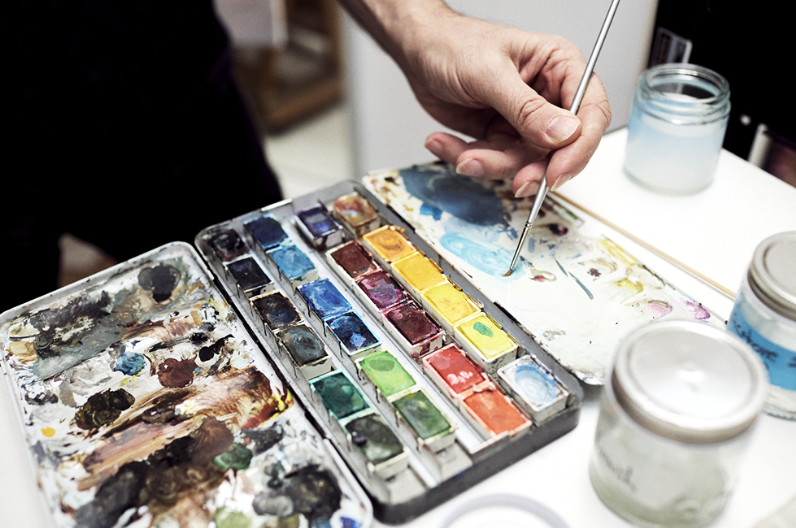
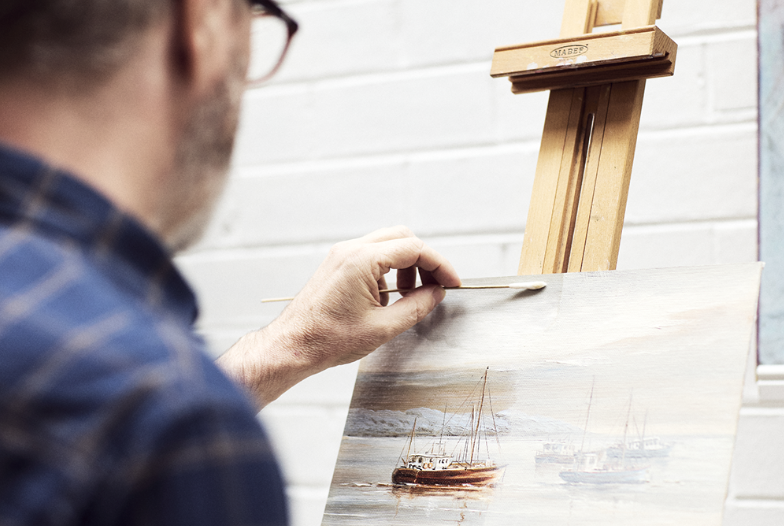
Top Images: Andrew Dewhurst in his studio
February 2026