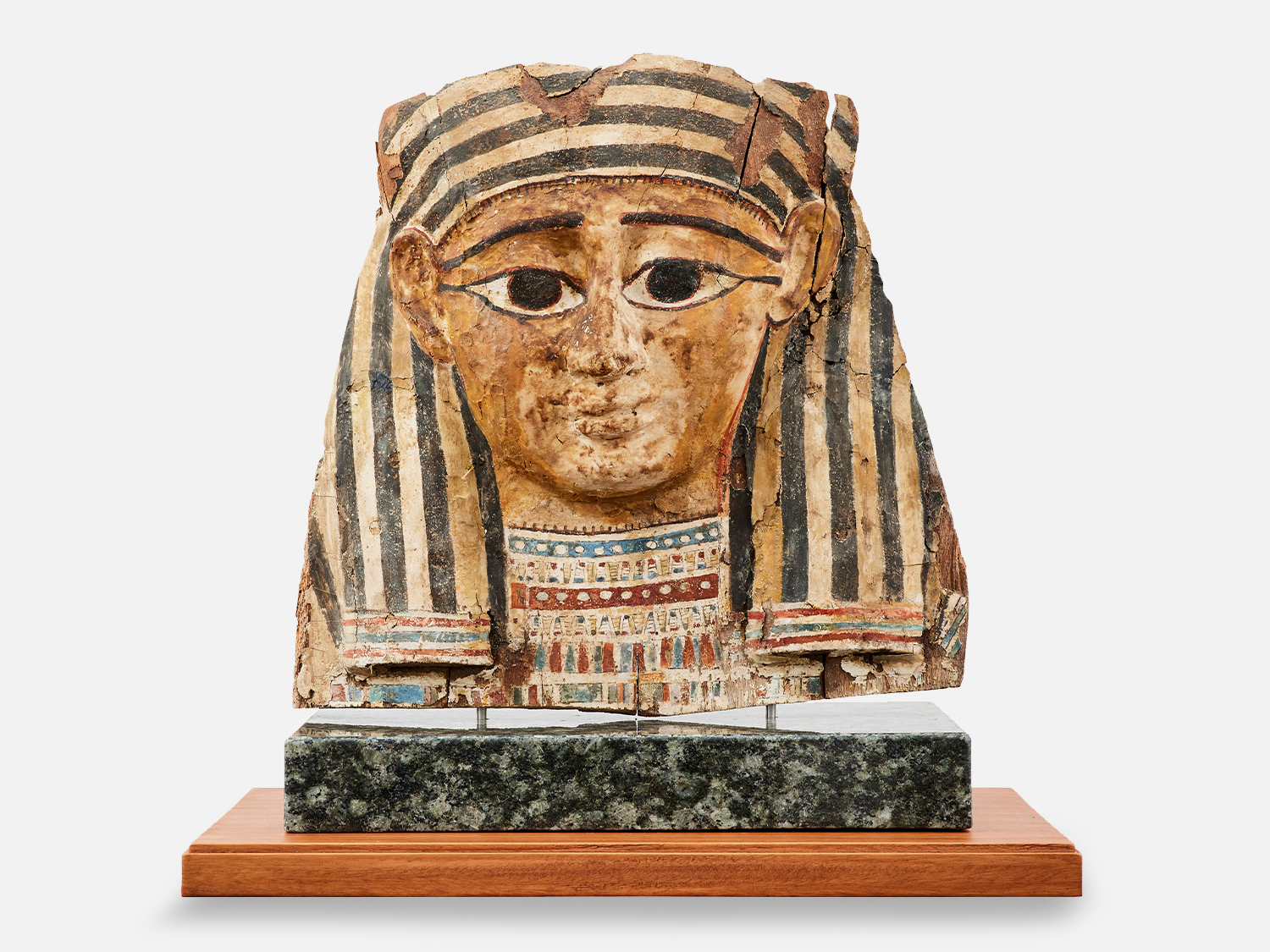
Across human history, funerary masks have appeared in societies where death rituals and beliefs about the afterlife were central to cultural identity. Anthropomorphic masks were commonly used to honour the dead, establish links with the spirit world, and preserve the likeness or essence of the deceased.1 Archaeological evidence shows their use in cultures as far reaching as Mycenaean Greece, ancient Rome, the Andes, Mesoamerica, Southeast Asia, and Egypt, where the tradition reached its most elaborate and enduring expression. While materials and meanings varied, funerary masks consistently acted as mediators between the living and the dead, ensuring recognition, protection, and continuity beyond death.2
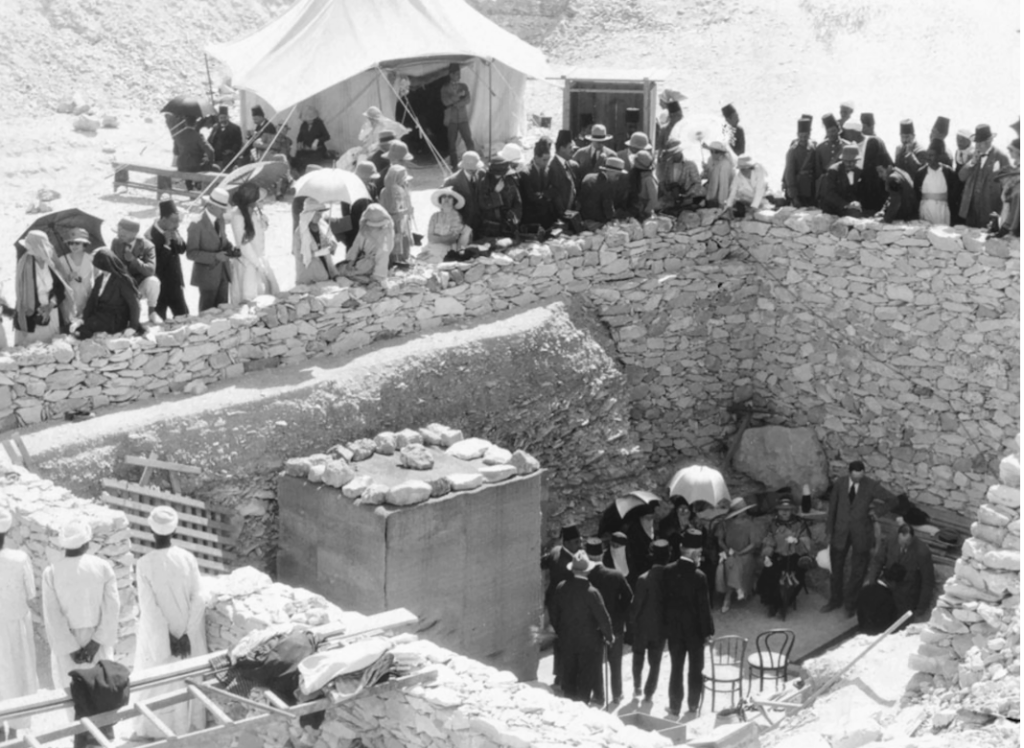
Few cultures placed as much emphasis on the face of the deceased as ancient Egypt. Egyptian funerary masks formed part of a complex religious system in which death was seen not as an end to life but rather an interruption, and eternal life depended upon the preservation and recognition of the body.3 Masks protected the head both physically and magically and ensured that the ba (spirit) could identify and reunite with its body in the afterlife.4
The earliest ‘mummy mask’ to be documented dates from the Old Kingdom (2686–2181 BCE), when wrapped mummy heads were shaped with plaster and painted to suggest facial features, as seen in the Medum Mummy of Ranofer, discovered in 1891.5 True sculptural masks developed later, becoming increasingly common during the First Intermediate Period (2181-2040 BCE) and Middle Kingdom (2040-1786 BCE), when separately formed masks were placed over the mummy’s head.6
Masks were not intended as true portraits. Instead, they presented idealised, youthful faces that associated the deceased with divine perfection and triumph over death.7 The materials used to create these masks varied widely including carved wood, gold, and silver, and some masks were decorated with gemstones, gold leaf and/or paint. However, the majority of masks were made from cartonnage, a composite of layered linen or papyrus stiffened with plaster and then painted, used from the First Intermediate Period through to Roman rule (30 BCE-337 CE).8 These masks, often manufactured by artisans in workshops, would not have been cheap to produce, the materials and labour would have been costly. However, the number of masks that have survived suggests that whilst they were initially presumed to have been only crafted for royalty or nobility they were likely produced for a larger percentage of the population. Dr Foy Salf, an Egyptologist at the University of Chicago, said “I don’t think it would be surprising if up to 35% of the population had the means to acquire them.”9
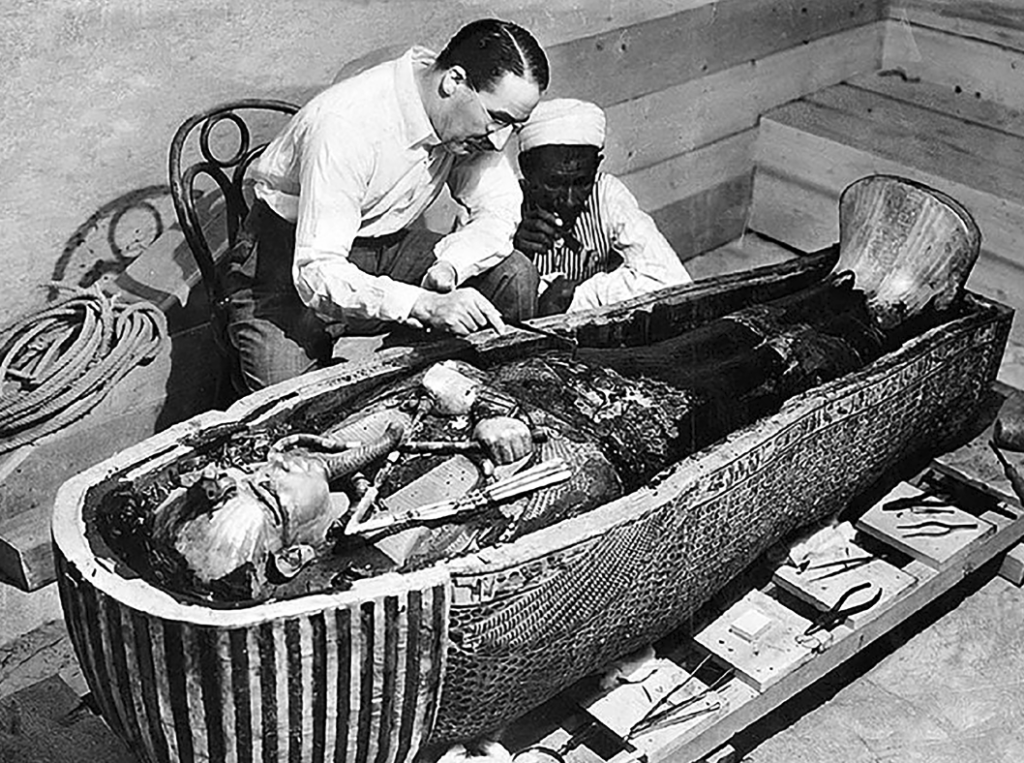
The most famous example of an Egyptian funerary mask is the gold mask of Pharaoh Tutankhamun (c.1350 BCE) discovered by British archaeologist Howard Carter in 1925. The mask is crafted from over 10 kilograms of solid gold, inlaid with lapis lazuli, carnelian, and other semi-precious stones. This exquisite craftsmanship represents the pinnacle of Egyptian funerary art.
Similar concerns with remembrance and spiritual transition appear in other parts of the world as well. Mycenaean Greece produced beaten gold burial masks, while Inca rulers and Southeast Asian kings were buried with golden face coverings. In ancient Rome, wax death masks preserved ancestors’ features for ceremonial display, a tradition revived in medieval and early modern Europe with royal effigy masks. From the 17th to 20th centuries, plaster and wax death masks of notable figures remained popular in Europe, reflecting the enduring fascination with preserving the human face at death.10
Together, these traditions highlight a universal human impulse: to give the dead a face that bridges mortality and eternity.
1. Britannica, Encyclopaedia. “Mask: Funerary and Commemorative Uses.” Accessed April 20, 2026. https://www.britannica.com/art/mask-face-covering/Funerary-and-commemorative-uses.
2. ibid
3. American Art Museum, Smithsonian Institution. “Mummy Mask.” Accessed April 20, 2026. https://americanart.si.edu/artwork/mask-31153
4. Art Institute of Chicago. “Funerary Mask.” Accessed April 20, 2026. https://www.artic.edu/artworks/64312/funerary-mask.
5. Kelsey Museum of Archaeology. Faces of Immortality: Mummy Masks of Roman Egypt. University of Michigan. Accessed April 20, 2026. https://lsa.umich.edu/content/dam/kelsey-as
sets/kelsey-publications/pdfs/Faces_of_Immortality.pdf.
6. Egypt at Manchester. “The Function of a Mummy Mask.” September 5, 2012. https://egyptmanchester.wordpress.com/2012/09/05/the-function-of-a-mummy-mask/.
7. American Art Museum, Smithsonian Institution. “Mummy Mask.” Accessed April 20, 2026. https://americanart.si.edu/artwork/mask-31153.
8. (Australian Museum; Britannica)
9. New York Times. “Archaeology Reveals New Insights into Egyptian Death Masks.” February 12, 2024. https://www.nytimes.com/2024/02/12/science/archaeology-egyptian-death-mask.html.
10. Britannica, Encyclopaedia. “Mask: Funerary and Commemorative Uses.” Accessed April 20, 2026. https://www.britannica.com/art/mask-face-covering/Funerary-and-commemorative-uses.
By Madeleine Mackenzie, Head of Decorative Arts & Art, Sydney
Top Image: An Egyptian Sarcophagus Mask, Third Intermediate Period (1075-663 BCE), plaster on wood and polychrome, the striped khat headdress framing the face with geometric patterned necklace, on later, marble plinth encased in perspex box. Height 50cm. $10,000-15,000
June 2026