When I read the story of A. Lange & Söhne’s dramatic decline and remarkable rebirth, I couldn’t help but think of the biblical miracle of Lazarus of Bethany. Raised from the dead by Jesus after four days, the Lazarus story seems an apt analogy for a company that returned from total obliteration to become one of the most highly regarded manufacturers of luxury mechanical watches in the world.
The ‘miracle’ of A. Lange & Söhne unfolds in two chapters in two vastly different periods of world history. The first begins with the birth of Ferdinand Adolph Lange, a visionary credited with transforming his town of Glashütte in the Eastern German state of Saxony into the centre of precision watchmaking in Germany.
Born in Dresden in 1815 to a gunsmith, Lange’s early life gave little hint that he would one day trade firearms for timepieces, however as a watchmaker-cum-entrepreneur, he shaped future horological practices and traditions. Lange initially headed to Switzerland, and then to Paris, where he trained under Joseph Thaddeus Winnerl, a former student of Breguet and the inventor of the split-seconds chronograph. Back in Dresden in 1840, Lange studied at the Technical College and apprenticed with court watchmaker Johann Christian Friedrich Gutkaes.
It quickly became apparent that Lange was good with his hands, but he was better still with ideas. Restless and ambitious, Lange returned to Paris, then the epicentre of precision watchmaking. By day, Lange ran Winnerl’s workshop, but by night his horizons would truly broaden through his study of astronomy and physics at the Sorbonne. It was this invaluable learning that would elevate and shape his innovations in timekeeping in years to come.
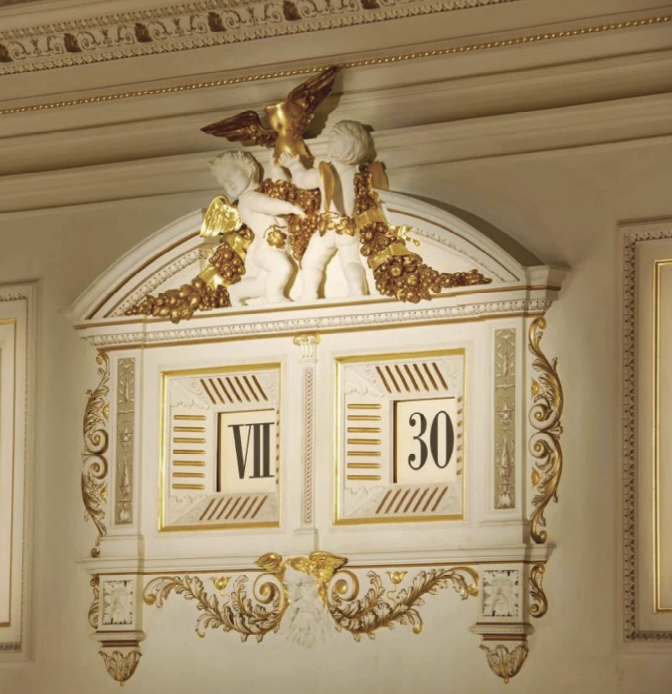
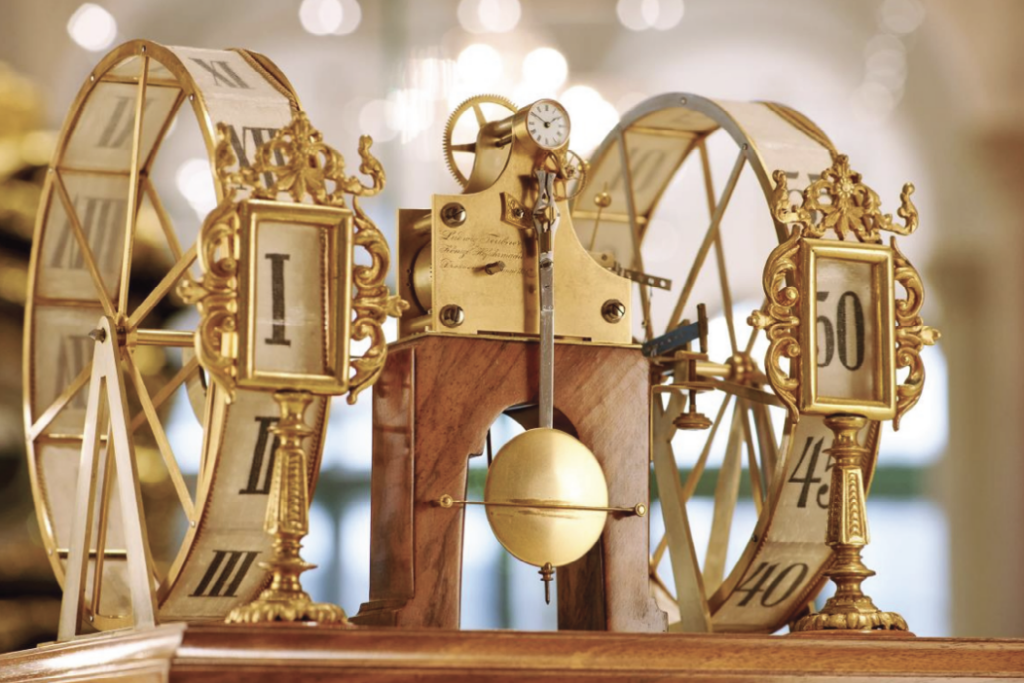
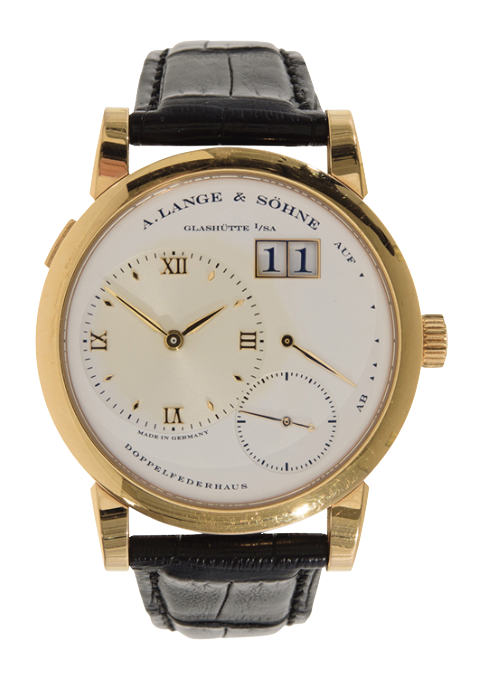
Lange replaced the traditional Parisian “lignes” measurement system with the more precise metric system, a decision that would improve consistency and accuracy in watchmaking. He also contributed to the construction of the famous five-minute clock in the Semper Opera House in Dresden. Displaying time through rotating numeral barrels, this clock later inspired the oversized date window that would become a signature characteristic of A. Lange & Söhne watches.
In 1854, with the support of the local government, Ferdinand Adolph Lange founded A. Lange & Cie in Glashütte. Truly a civic minded ideas man, Lange’s goal was to revitalise the town, which by the mid-19th century had fallen from its former silver mining prosperity into economic hardship, the depleted mines leaving behind a legacy of social and financial struggle. In this very town, over the following decades, Lange revolutionised fine watchmaking by introducing the division of labour, refining tools, and developing the iconic three-quarter plate, which would become a hallmark of Glashütte craftsmanship.
In the late 1860s, Lange’s sons Emil and Richard joined the firm, renaming it A. Lange & Söhne. After their father’s death in 1875, the brothers expanded on his legacy, crafting exquisitely decorated pocket watches, scientific chronometers, and the legendary Grand Complication no. 42500, considered one of the most technically complex timepieces ever produced. Leadership remained within the family for generations, yet this hard-won achievement and progress was about to grind to a halt.
The devastation of World War II would prove catastrophic for the watchmaker. Tragically, on the very last day of WWII in Europe, May 8, 1945, just hours before Germany’s unconditional surrender, the Soviet Air Force launched its bombs on the town of Glashütte. To further pour water on any embers of hope, in 1948, through Soviet nationalisation policies, the name A. Lange & Söhne too would be extinguished along with the factory. For over four decades, the brand was erased in both practice and in name.
The second chapter of the A. Lange & Söhne story begins with Walter Lange, born in 1924 and the great-grandson of Ferdinand Adolph Lange. Trained as a watchmaker and forced to flee from Glashütte in the Soviet-occupied zone, German Democratic Republic (East Germany), he took with him the dream of restoring his family’s incredible legacy. The fall of the Berlin Wall in 1989 presented the turning point he was waiting for. Now that Germany began reunification, Walter Lange could legally reclaim the brand and rebuild the manufacturing. On December 7, 1990, after 45 years, A. Lange & Söhne was officially ticking again.
Reduced to rubble and erased from history, surviving a Quartz Crisis would have seemed a cakewalk compared to the phoenix-like resurrection of A. Lange & Söhne. A narrative of resilience, masterful craftsmanship, visionary thinking, and an unbroken family legacy evokes the image of a Lazarus awakened, in this case to become the Teutonic timekeeper titan it is today.
By Patricia Kontos, Senior Timepieces & Jewels Specialist
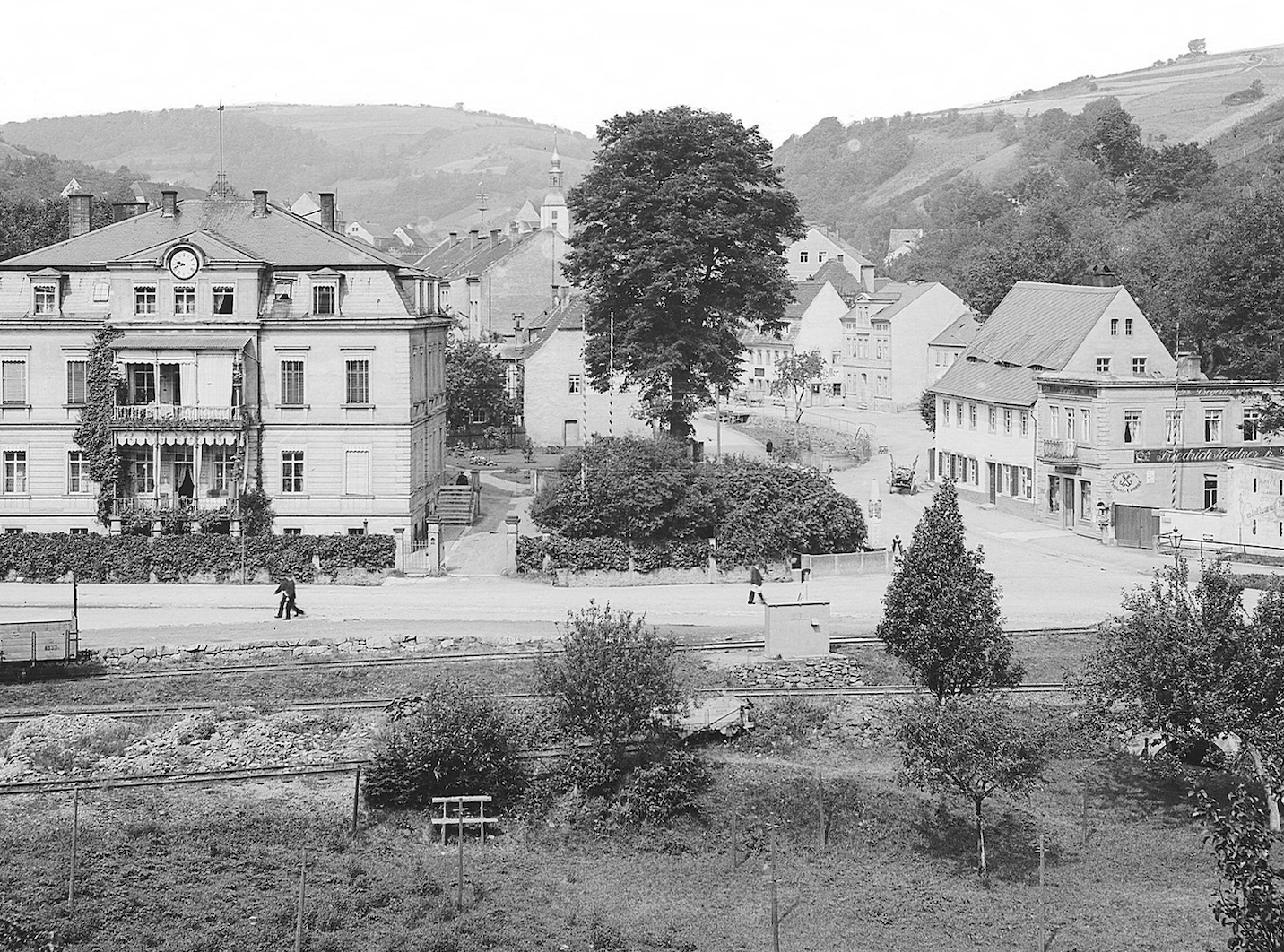
Top Image: A. Lange & Söhne, (seen to the left) in Glashütte, 1905 / Alamy
February 2026