In 1944, Bruno Munari published an essay in Domus that would become an enduring critique; ‘Seeking Comfort in an Uncomfortable Chair’. The opening line sets the scene and the mood, “One comes home tired after having worked all day and finds an uncomfortable chair.” Munari’s argument was that designers, obsessed with novelty and status, had abandoned the one thing a chair was actually for. In chasing originality, they had made comfort the collateral damage of taste. In the 80 years since its publication, it appears maybe nothing has changed, but thankfully so in my opinion as it would otherwise be difficult to curate a Modern Design auction. Some designers took the essay as a starting point and made discomfort itself the idea. Here are three – all functional – all uncomfortable.
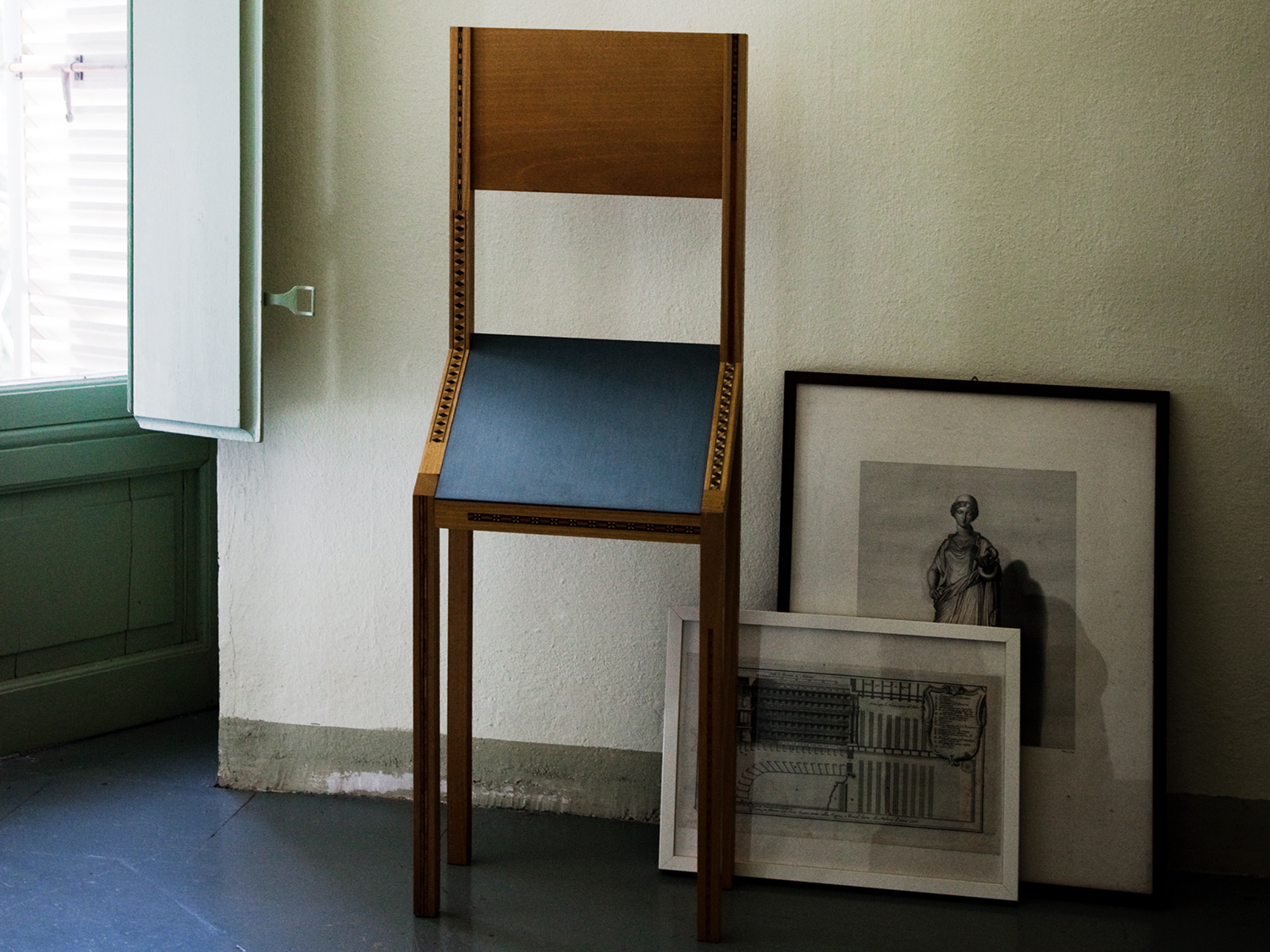
A year after his Domus essay, Munari designed a chair that appeared to confirm every fear it had articulated and then revealed itself as something stranger. The Singer Chair, produced by Zanotta in 1945, is set at a 45-degree angle. There is no comfortable position. Your body cannot settle nor perhaps can your mind. But this was not a failure of design. It was the design. His essay lamented that design had forgotten the body. His chair remembered it by putting the body under mild, constant duress. Munari conceived the Singer Chair for a very specific scenario: the visit of an unwanted guest. Sit here, it says, and you will not linger. The chair weaponises discomfort as a social instrument and is ironically functional.
Between 1983 and 1993, Rei Kawakubo designed a furniture collection that most people had no idea existed. Made in small quantities, the pieces were conceived not as domestic objects but as environmental extensions of the Comme des Garçons stores. Raw unfinished metal, chain backs, and a minimal and harsh aesthetic; Kawakubo described the pieces as “a kind of secondary furniture; furniture used in places of transit, which generate an image, an ambiance.” They were not designed to be sat in so much as to be felt. The effect is spatial and psychological. After a 2017 Paris exhibition brought the collection wider attention, individual pieces began selling for upwards of $10,000 at auction. Kawakubo herself was characteristically oblique: “It is an undeniable fact that design is reflective of the designer’s personality. Though I do not view myself as harsh and stark. If I must characterise the essence of my furniture design, it is: simplicity.”
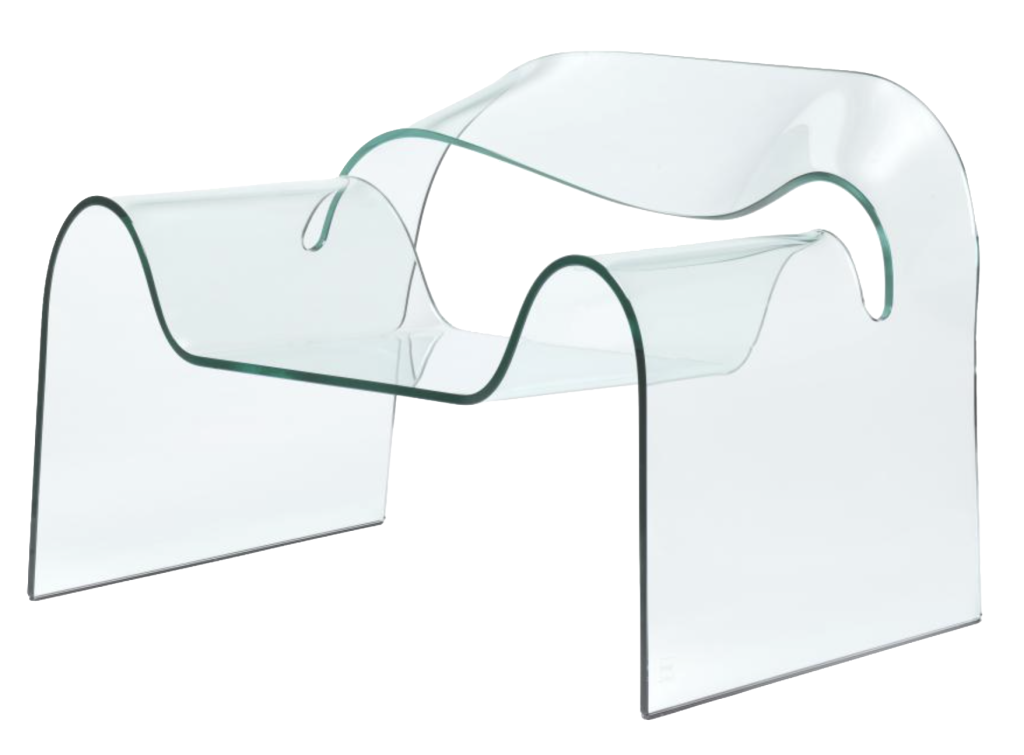
In 1987, another chair high on my wish list was conceived; Cini Boeri and Tomu Katayanagi’s Ghost Chair for FIAM. Where the Singer Chair makes discomfort explicit and the Kawakubo chairs make it atmospheric, the Ghost makes it perceptual. Debuted at the 1987 Salone del Mobile in Milan, the Ghost is cut from a single monolithic sheet of 12mm curved glass. The materiality of cold transparent glass creates a psychological experience of mild, persistent unease. You become acutely aware. The chair appears to float – but what if were to break? Boeri herself initially resisted the idea: “Glass is cold and gives a feeling of fragility. It does not guarantee comfort, and an armchair, on the other hand, must offer warmth, comfort, and security.” But what did Munari think? “The petrification of a water ribbon, almost like the abstract solidification of an idea where technology can rhyme with poetry.” There is a poetic duality and perhaps of the three examples the Ghost is the most structurally sound and comfortable? I will have to sit and think about it.
By Rebecca Stormont, Senior Modern Design Specialist
Top Image: Singer chair by Bruno Munari, 1945, Zanotta Edizioni collection / Image courtesy Zanotta
June 2026