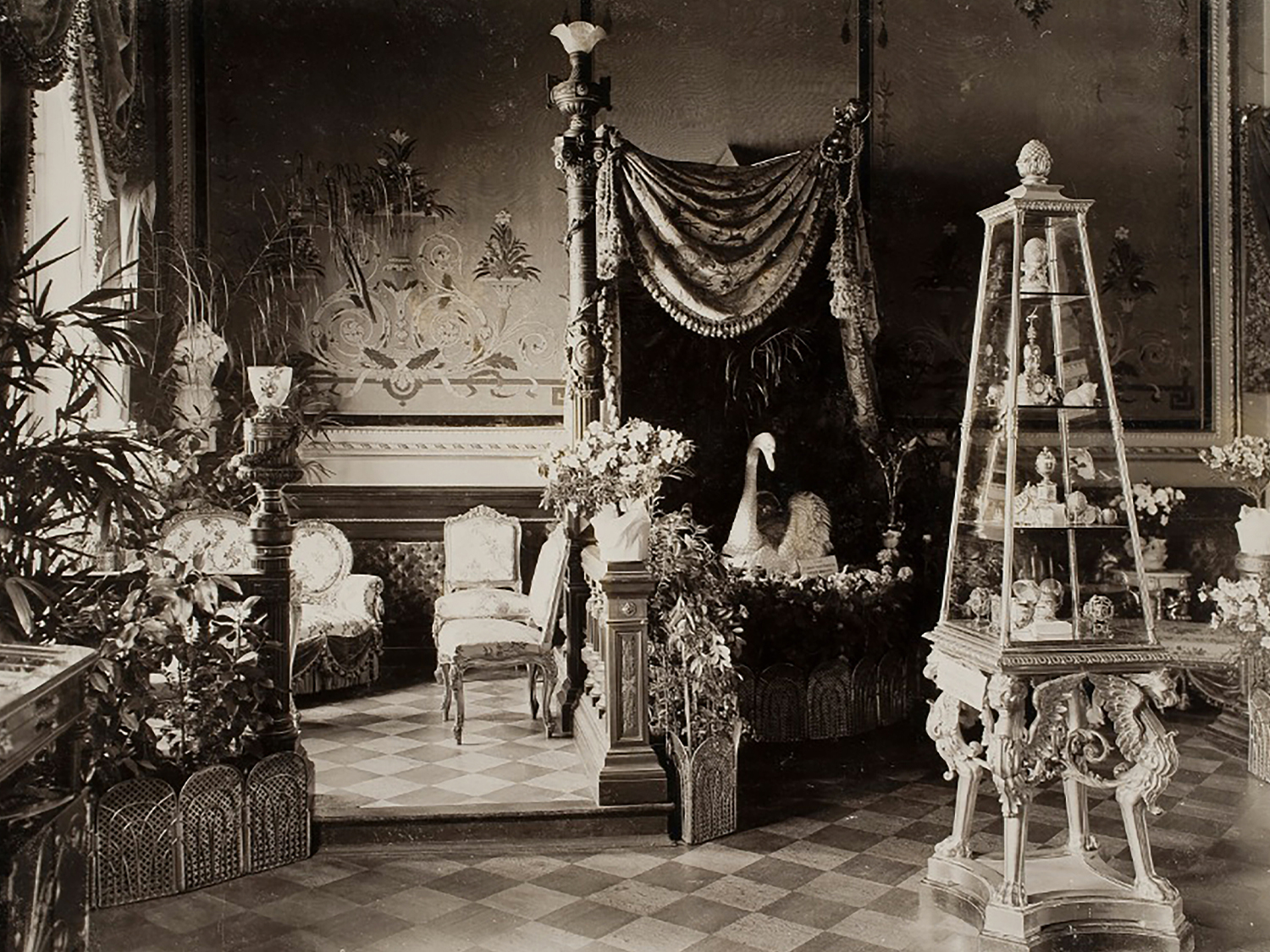
The alluring bygone era of Imperial Russia brings to mind the beauty and decadence of the Fabergé egg. Initially an idea of Tsar Alexander III of Russia as an Easter gift to his wife Maria Feodorovna and later continued by Tsar Nicholas II for both his mother and his wife, the tradition became one of the most extraordinary artistic commissions in history. In all, fifty exquisite eggs were made by the Maison de Fabergé for the Russian Imperial family to gift.
Under the direction of Peter Carl Fabergé, the Maison de Fabergé had full creative licence over the eggs. Just one instruction, ‘it must be a surprise’. These Imperial eggs were far more than just Easter trinkets. They were opulent ornaments, triumphs of enamelling, and symbols for a dynastic power. Concealed in each was the ‘surprise’, perhaps a miniature carriage, a portrait, a mechanical bird, or a jewelled treasure so intricate it bordered on a feat of micro engineering.
From 1885 until 1917, these masterpieces marked Easter at the Romanov court with breathtaking splendour. Then, revolution swept the empire away, and along with it a significant portion of the imperial jewellery collection including the Fabergé eggs. With the fall of the House of Romanov in 1917, the eggs were confiscated and stored in the Kremlin Armoury. In the 1920s and 30s, the Soviet government, eager for foreign currency, sold many abroad. With incomplete records and secret deals to unnamed buyers, over time, seven Imperial eggs slipped from view, leaving a tantalising mystery.
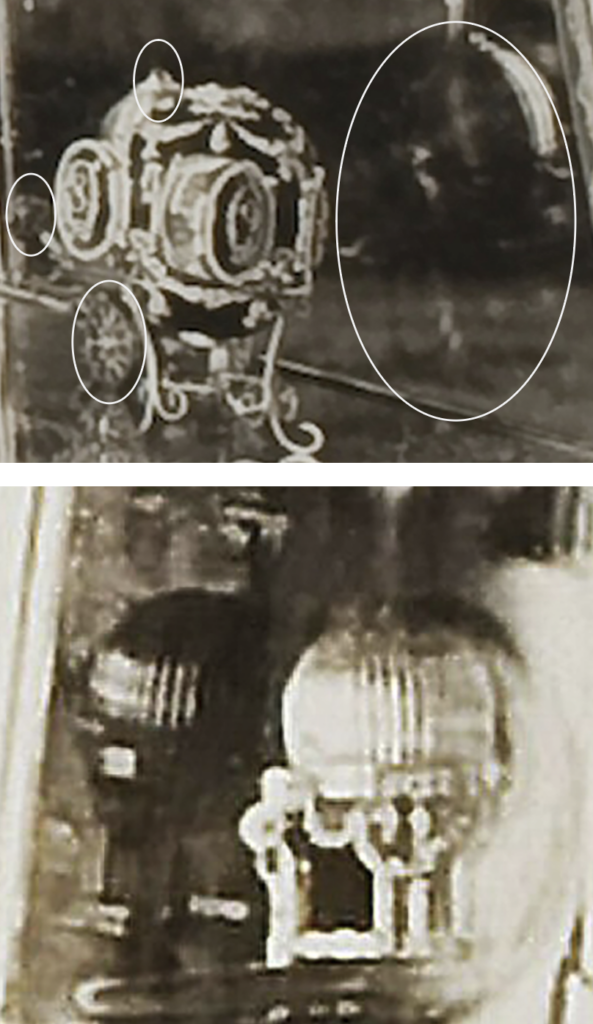
The Vanished:
The Hen with Sapphire Pendant Egg (1886). Created the year after the first Imperial egg, this piece followed the “hen” theme but introduced refined enamel work with a suspended sapphire pendant. Surviving descriptions exist, but there are no clues about its location.
The Cherub with Chariot Egg (1888). Believed to contain a miniature cherub driving a chariot, typical of the theatre of ingenuity. This egg is identifiable from a reflection in a single archival photograph and imperial records but has disappeared without a trace.
The Nécessaire Egg (1889). Beautifully executed in the style of a Louis XV étui, this egg reportedly contained tiny cosmetic implements. Its elegance lay in understatement rather than spectacle. It was last recorded in the mid-20th century but has since vanished into the shadows.
The Mauve Egg (1897). In delicate enamel work, the Mauve Egg was made to celebrate the birth of Grand Duchess Olga and contained a surprise of miniature portraits of the imperial children. The sentiment about this piece makes its absence particularly noteworthy.
The Royal Danish Egg (1903). Honouring Empress Maria Feodorovna’s Danish heritage, this egg, like several others, likely included family portraits and the historic symbol of Denmark, the elephant. As with other eggs, it is documented in imperial inventories but has not surfaced in decades.
The Alexander III Commemorative Egg (1909). Nicholas II commissioned this egg in memory of his father. It is believed to have featured a miniature portrait of Alexander III.
The Karelian Birch Egg (1917). Perhaps the most symbolic of all eggs and crafted from Karelian birch rather than gold and gemstones, reflecting humble wartime austerity echoed by the ‘flamed’ pattern of the Nordic birch wood, this unfinished egg was created in the final year of imperial rule. It stands as a reminder of, or farewell to, an era.
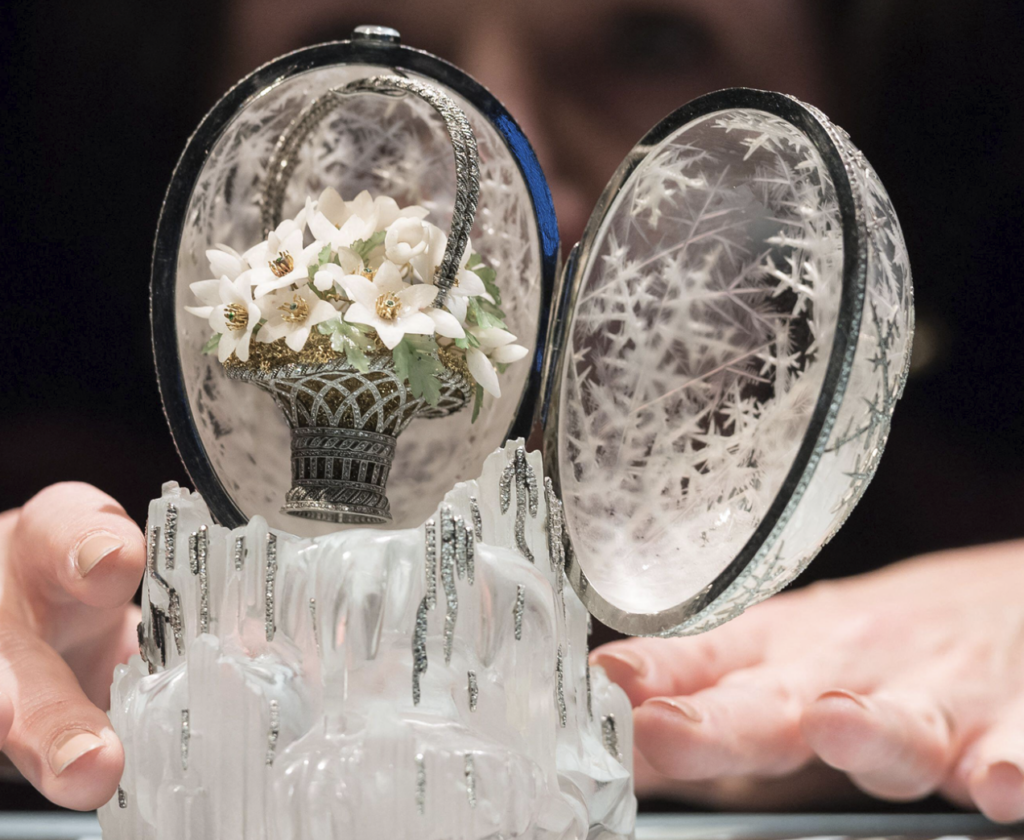
The thrill of this hunt is that re-discoveries have happened before. In 2014 in the United States, a scrap metal dealer unknowingly purchased a small gold egg at a flea market. Intending to melt it down, a secondary thought with an online search revealed it to be a lost Imperial Fabergé egg worth millions. Saved from the furnace, it re-entered the canon of known masterpieces. If one egg can reappear after decades of obscurity, why not others?
Each of the missing eggs matter. It’s not just the priceless financial value; each egg embodies the height of Imperial Russia’s artistry with historical developments in the flawless guilloché enamel techniques, the invisible ingenuity of hinges and tiny mechanical components, the perfectly balanced miniature proportions, and the joy of concealed surprises made for members of the Imperial family.
Somewhere, perhaps in a safe, a private vault, or an unassuming collection, one of these masterpieces rests quietly, waiting to astonish the world again.
By Annie Soust, Head of Fine Jewels & Timepieces, Melbourne
Top Image: Von Dervis Mansion Exhibition of the Russian Imperial Family’s Faberge Collection in St. Petersburg, 1902.
March 2026