Fashion rarely stands still, yet lately the industry seems to be moving in a distinctly circular direction, revisiting its own history as a new generation of designers takes the helm. Over the past year an extraordinary number of luxury houses, from Gucci and Balenciaga to Celine, Givenchy, and Bottega Veneta, have appointed new creative directors. Normally such moments suggest dramatic reinvention. This time, something rather more interesting appears to be happening; many of these designers are looking backwards.
Fashion has always moved in cycles, but what feels notable now is the industry’s willingness to acknowledge those cycles openly. Designers are no longer pretending the past does not exist. At Gucci, where Demna has taken the helm, the early signals suggest an unusually self-aware relationship with the house’s past. Speaking about his approach, Demna recently remarked, “Gucci is so many things. It went through many different aesthetic eras, so I needed to identify what meant Gucci for me the most and put it into my vision.” The sentiment feels telling. The appearance of Kate Moss on the runway, a figure closely associated with Gucci’s Tom Ford era, felt less like nostalgia than a deliberate reference point. These gestures remind us that a house’s most powerful visual language often emerges when its past and present meet.
A similar dialogue between heritage and reinterpretation can be seen at Balenciaga, where Pierpaolo Piccioli now leads the house. Piccioli inherits a maison founded by Cristóbal Balenciaga, whose influence
on twentieth century fashion was so profound that Christian Dior famously referred to him as “the master of us all.” Known for sculptural silhouettes and architectural precision, Cristóbal Balenciaga established a design language rooted in discipline and proportion. Piccioli’s reputation for refined couture and poetic structure suggests a renewed conversation with that legacy.
Elsewhere, new creative leadership is navigating equally rich histories. At Celine, Michael Rider steps into a house shaped by some of fashion’s most distinctive voices. His challenge will not be to erase those chapters, but to determine which elements of Celine’s restrained Parisian identity resonate most strongly today.
At Bottega Veneta, Louise Trotter inherits a brand that has quietly become synonymous with material intelligence and understated luxury. Bottega’s woven leather, sculptural accessories, and subtle design language reward close attention rather than overt spectacle. Those qualities feel increasingly appealing in today’s luxury landscape.
Meanwhile, Givenchy welcomes Sarah Burton, whose reputation for technical mastery and emotional precision positions her as a thoughtful custodian of the house’s couture heritage. Burton’s work has long balanced romance with structure, qualities that resonate strongly with Givenchy’s historical identity.
Even Versace, perhaps the most recognisable symbol of Italian glamour, has entered a new chapter with Dario Vitale stepping into the role of creative director. Versace’s visual language is bold, sensual, and unmistakable. It remains deeply embedded in fashion culture. Vitale’s appointment suggests not a departure from that legacy but an opportunity to reinterpret it for a new generation.
Taken together, these appointments reveal something interesting about the current mood in luxury fashion. Designers are no longer racing to erase what came before them. Instead, they are revisiting archives, re-examining silhouettes, and rediscovering the elements that gave each house its original authority.
This shift reflects a broader evolution within the luxury market. As global demand for luxury goods expanded over the past two decades, production inevitably scaled with it. Collections multiplied, markets widened, and the pace of fashion accelerated. In such an environment novelty often became the dominant currency. Today, the most compelling work frequently comes from designers who understand that innovation does not necessarily mean abandoning the past. When designers revisit archival ideas on the runway the original expressions of those ideas, whether a silhouette, material or handbag design, often attract renewed attention.
Few houses illustrate this continuity more clearly than Chanel. When Gabrielle Chanel introduced the 2.55 handbag in 1955 the concept was radical in its practicality. It was a shoulder bag designed so women could keep their hands free. Nearly seventy years later the design language she established continues to define the house. It is perhaps no coincidence that collectors continue to gravitate toward pieces whose identity remains unmistakable, regardless of the season in which they were produced.
Fashion may move quickly, but its strongest ideas rarely disappear. They simply return, reinterpreted for a new moment.
By Julia Gueller, Luxury Specialist
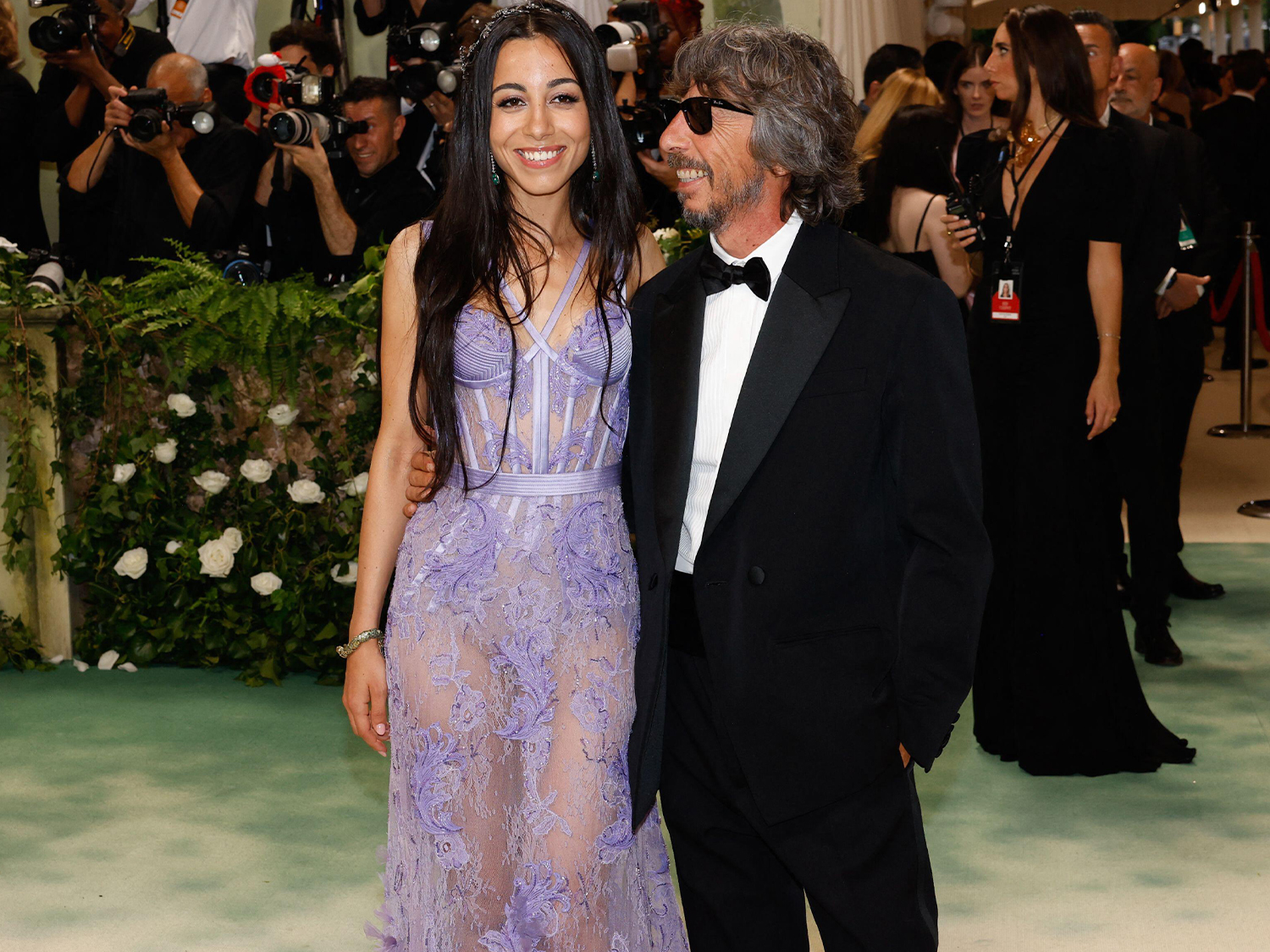
Top Image: Pierpaolo Piccioli and his daughter Benedetta Piccioli arrive on the red carpet at the 2024 Met Gala at the Metropolitan Museum of Art, New York / Alamy, photo by John Angelillo
March 2025