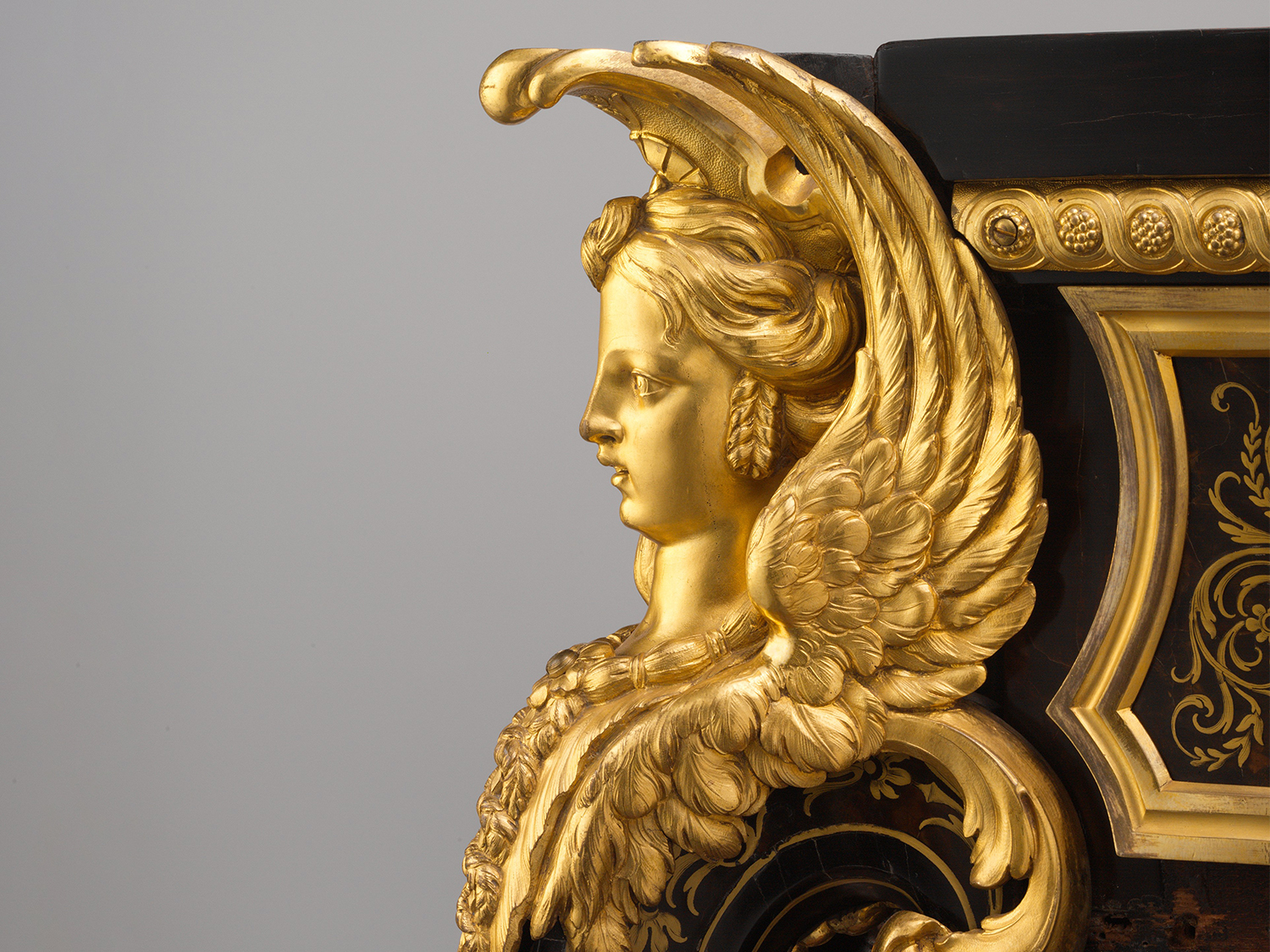
How Regulation and Patronage Shaped 18th Century French Furniture.
Considered one of the supreme examples of western civilisation, furniture made in the 18th century in Paris has always been regarded as the ultimate in cabinet and chair making; desired and collected for hundreds of years. How did these craftspeople reach such a zenith in quality, luxury and design? The patronage and influence of the court and nobility provided the milieu and the money to commission the interior schemes that these decorative arts formed a part of, and the guild system, which had been in operation since the middle ages, regulated the quality and provided the framework of training and control which maintained the very high standard. French furniture of this period was the collaborative effort of various artists and craftsmen who worked according to strictly enforced guild regulations.
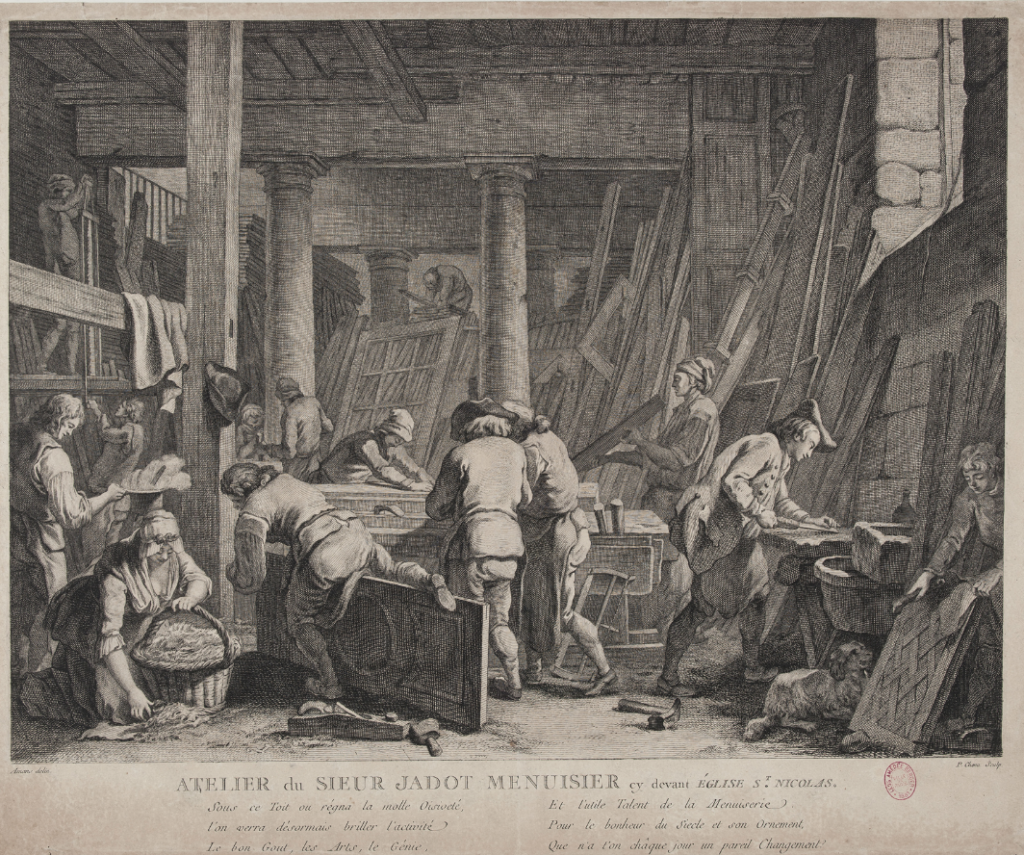
The Parisian guild to which the furniture makers belonged was called the Corporation des Menuisiers. It required apprentices to undergo at least six years of training that resulted in an incredible degree of technical specialisation and ensured a high standard of work. On commencement, a novice spent three years or more in the workshop of a master furniture maker, followed by at least three more years as a journeyman. In order to become a master, a journeyman had to prove his competence by making a chef-d’oeuvre, or masterpiece. Once that was successfully completed, he could open his own workshop only if a vacancy existed (the number of masters allowed to practice at one time was strictly controlled by the guild, as was the size of their workshops) and he had paid the necessary fees. From 1743 onward, it became the rule to stamp every piece of furniture that was offered for sale with the maker’s name. An additional stamp, JME (for jurande des menuisiers-ébénistes), would be added once a committee, made up of elected guild members who inspected the workshops four times a year, had approved the quality.
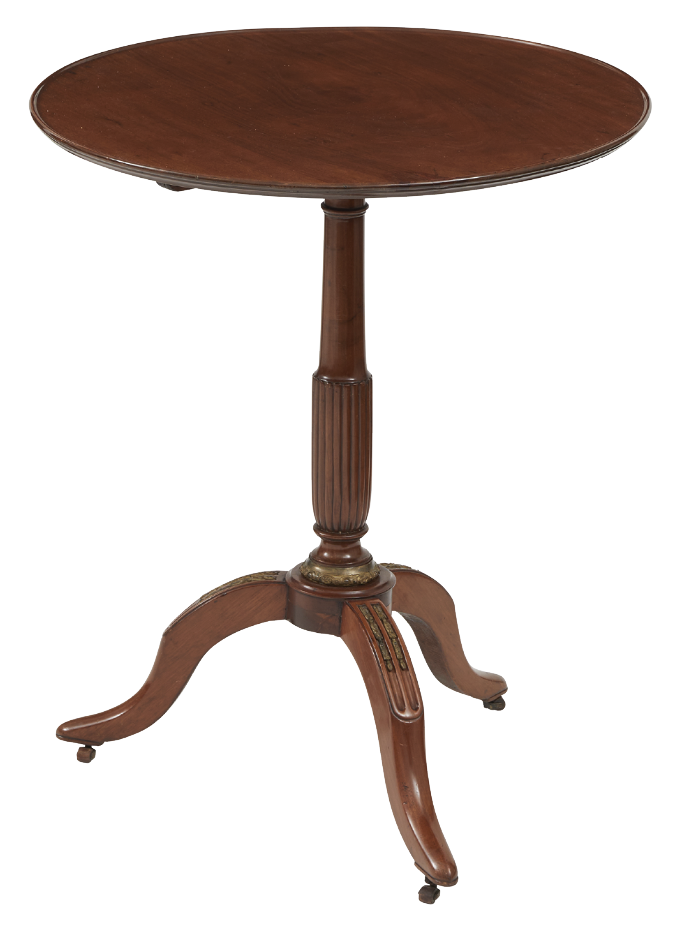
This Corporation des Menuisiers was divided into two distinct trades comprising the woodworkers, who made architectural paneling (boiserie), and that of the actual furniture makers. These makers were then divided into two categories; menuisiers (joiners) who exclusively made solid wood furniture such as console tables and chairs, and the ébénistes (from the French word for ebony, ébène) who specialised in the making of veneered case furniture such as commodes, cabinets and bureaux plats. Most of the menuisiers were French born, often members of well-known families of chair makers, and mainly had their workshops in or near the rue de Cléry in Paris. By contrast, many of the Parisian ébénistes were foreign born, and the many German and Flemish names such as Vandercruse, Gengenbach, and Holthausen, attest to the large numbers of foreigners attracted to Paris and the Faubourg Saint-Antoine where they had their workshops.
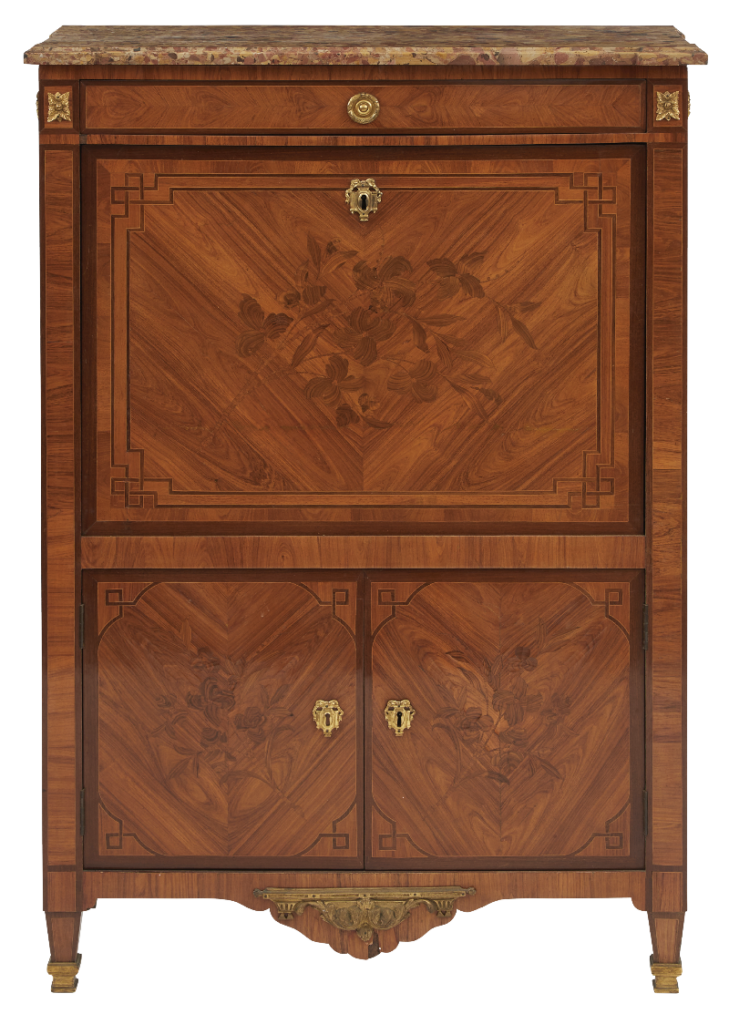
A very similar example also by Lacroix can be found in the collection of the Louvre, Paris, OA 8171.
The guilds also controlled the myriad of processes involved in the creation of a piece of furniture at the time. From the gilding and decoration of a fauteuil to its upholstery and passementerie, a specific tradesman under guild conditions was employed for each step of its creation. The ormolu mounts used on a piece of case furniture had a bronzier who designed the mount in wax, then cast it in metal, which was then handed on to the gilder who would work with a gold and mercury amalgam usually at the cost of his health. Each one of these specialised workers had his own guild.
The relatively informal way of life in Paris during the 18th century, in contrast to the strictness of the court of Louis XIV at Versailles, led to the creation of smaller, more portable pieces of furniture, such as writing tables, occasional tables with small drawers and even the chairs were lighter and ambulante. It was these systems of patronage, regulation, and craftsmanship that resulted in the level of excellence found in 18th century French furniture, a legacy that makes the pieces still highly sought after today.
By Ronan Sulich, Senior Adviser, Sydney
Top Image: Commode (detail), André Charles Boulle (French, Paris 1642–1732), ca. 1710–20 / The Metropolitan Museum of Art, The Jack and Belle Linsky Collection, 1982
February 2026